

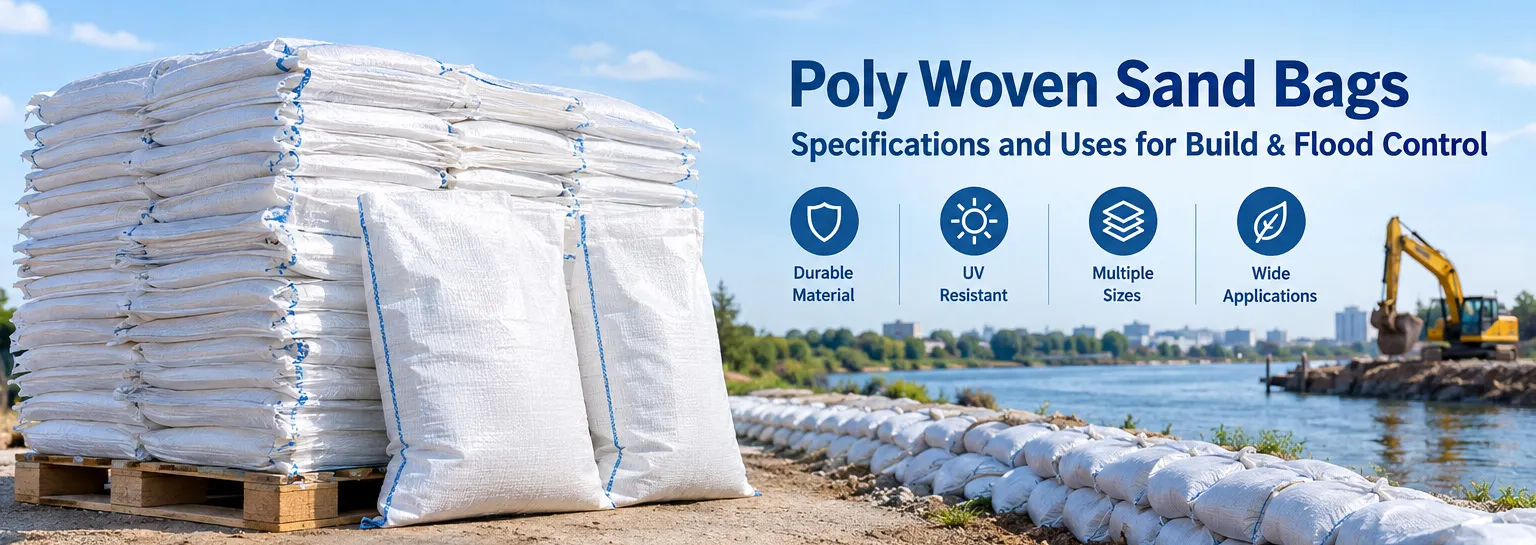
Poly woven sand bags are a practical application of polypropylene woven bags for flood control, construction, roadwork and landscaping. Made from woven polypropylene tape fabric, they can be specified with UV stabilization when bags remain outdoors before or during use. Search data shows “poly woven sand bags” at about 480 US volume with KD 10, a high-volume, low-difficulty term within the PP woven bag cluster. This guide covers the specifications buyers should specify and how sand bags compare with related formats.
Poly Woven Sand Bags at a Glance
- Search demand: “poly woven sand bags” about US 480 volume, KD 10
- Material: woven polypropylene tape fabric, with UV stabilization specified as required
- Common uses: Flood control, construction, road base, landscaping
- Typical extras: Tie rope, heat-cut or sewn top, printed option
- Related terms: woven poly sandbags (170/3), jumbo sand bags (140/2), 1 ton sand bags for sale (140/7)
What Are Poly Woven Sand Bags
A poly woven sand bag is made from woven polypropylene tape fabric and is commonly supplied empty for filling with sand, soil or other suitable materials on site. The woven structure provides mechanical strength, while UV stabilization can be added when bags require extended outdoor exposure. They are lighter and cheaper than hessian and resist rot better outdoors.
Specify the GSM and UV level, not just the size. A sand bag that sits in sun for weeks before use lives or dies by its UV stability.
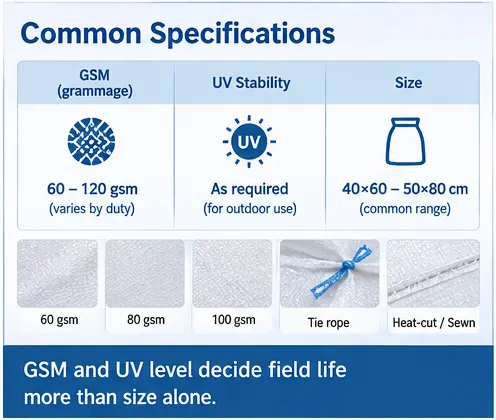
Common Specifications
| Spec | Typical range | Why it matters |
|---|---|---|
| GSM (grammage) | 60 to 120 gsm, depending on duty | Higher fabric weight can improve resistance to tearing and abrasion |
| Size | 40×60 cm to 50×80 cm | Matches fill weight and handling |
| UV stability | Specified according to exposure | Helps reduce degradation during outdoor storage and use |
| Top finish | Heat-cut or sewn, with/without rope | Closure and handling speed |
| Plain or custom | Brand, warning or municipal marking |
Key takeaway: For poly woven sand bags, For poly woven sand bags, fabric weight and UV stabilization are important specifications, but they should be considered together with tape strength, weave density, seam construction, bag dimensions and expected handling conditions.
Uses: Flood Control, Construction and More
| Use | Why woven PP fits |
|---|---|
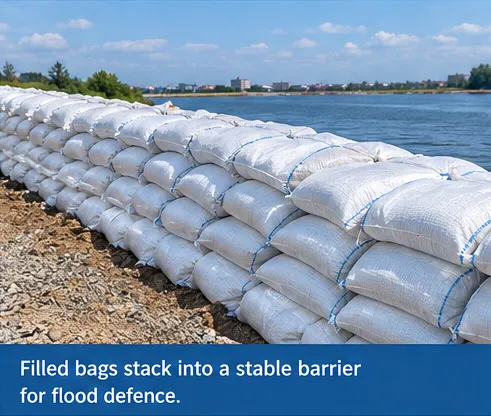
| Flood control | Fast to fill, stack into barriers, easy to position |
| Construction / road base | Erosion control, temporary retaining, site drainage |
| Landscaping | Garden edging, slope stabilisation, planters |
| Emergency response | Light, stackable, pre-positioned ahead of season |
Sand bags are a practical application of polypropylene woven bags in construction, flood protection, landscaping and emergency response. Demand is often project-driven and price-sensitive, so buyers focus on consistent fabric quality, required fill weight, outdoor durability, closure method and reliable delivery.
Sand Bag vs Woven Poly Sandbags vs Jumbo
“Woven poly sandbags” (about 170 US volume, KD 3) is the same product described differently; “jumbo sand bags” (about 140 volume, KD 2) are larger bulk bags, often based on FIBC construction, for major earthworks; “1 ton sand bags for sale” (about 140 volume, KD 7) targets the transactional bulk buyer. The right format depends on the scale: For temporary barriers and general site work, smaller woven sand bags are easier to position and stack manually, while major earthworks may use jumbo sand bags or FIBC filled with soil.
Buying Tips
- GSM for duty: Use 80 to 120 gsm for heavy or abrasive fill and stacking.
- UV for storage: Specify UV level matched to how long bags sit exposed.
- Finish: Heat-cut tops reduce fray; a tie rope speeds closure on site.
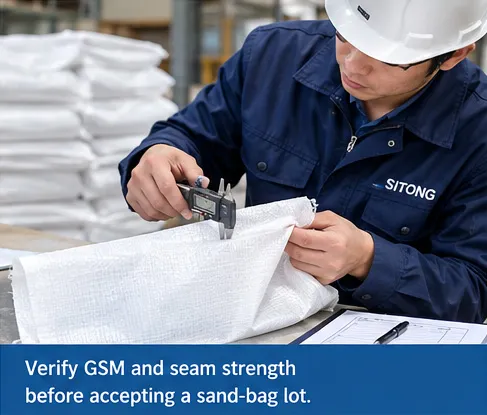
- Quality check: Verify weave density and seam strength at incoming inspection.
Sourcing Poly Woven Sand Bags
Distributors and contractors should specify GSM, UV, size and finish, then verify at incoming inspection. The construction PP woven bags page covers the wider building and protection range, while the PP woven bags hub lists the product families this fabric supports. For lighter high-strength options suited to export, the lightweight high-strength PP woven bags article shows where the spec is heading.
How to Choose Poly Woven Sand Bags
Choose by duty and exposure. GSM and UV stabilization matter, but they are not the only factors, so confirm the full list with the supplier before ordering.
Specification Checklist
Use this checklist when briefing a supplier or comparing options. Confirm each point against the actual product and supply chain rather than a single headline claim.
| Spec to confirm | What to verify | Why it matters |
|---|---|---|
| GSM | GSM suited to the duty | Higher GSM is more robust, not the sole strength factor |
| Weave | Flat or twisted tape | Affects tear resistance and feel |
| UV stability | UV stabilization for season stock | Outdoor exposure drives degradation |
| Size | Dimensions and tie option | Match fill and use |
| Coating | Coated or uncoated | Coated resists seepage |
| Documents | Lot test records | Verify batch consistency |
Frequently Asked Questions
They are made from woven polypropylene tape fabric, supplied empty for on-site filling with sand or soil. The weave gives tear resistance.
For typical flood and construction use, 60 to 120 gsm is a common commercial range; choose higher GSM for heavy or abrasive fill and stacking, subject to testing.
Sand bags often sit in sunlight for weeks before use, so specify UV stabilization matched to the expected outdoor exposure rather than assuming one treatment fits all conditions.
Yes, the terms describe the same woven polypropylene product; “woven poly sandbags” is simply a common alternative search phrase.
For large earthworks or levees, jumbo or 1-tonne sand bags (often FIBC) handle major volume; standard 20 to 50 kg woven bags suit barriers and site work.
A tie rope speeds closure on site, but heat-cut or sewn tops without rope are fine where bags are stacked wet or weighted. Specify by handling method.
Yes. Custom print supports brand, warning or municipal marking; it is a low-cost option at the converting stage.
Verify weave density, GSM, UV level and seam strength at incoming inspection, and confirm the bag matches the specified size and finish.
Confirm GSM, weave, UV stabilization, dimensions, tie option, coated or uncoated, and print. Ask for lot test records so repeat orders stay consistent across shipments.
Conclusion
Poly woven sand bags provide a practical woven polypropylene solution for temporary flood barriers, construction sites, landscaping and emergency response. Buyers should specify GSM and UV level, not just size, verify the lot at incoming inspection, and choose standard woven bags for barriers or jumbo bags for major earthworks.