


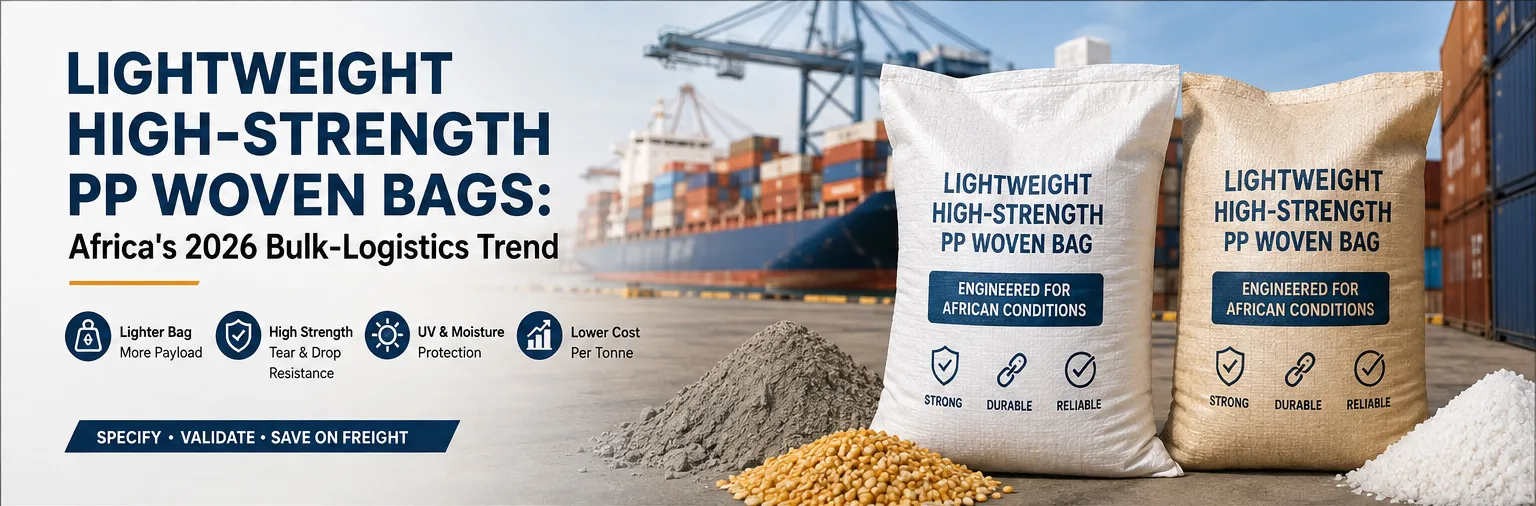
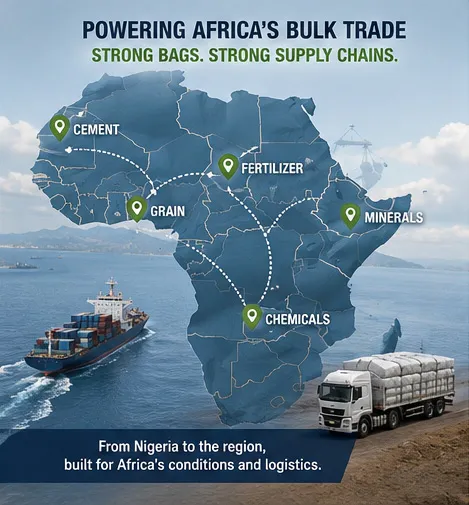
African bulk trade — cement, fertilizer, grain, minerals and chemicals — keeps growing, but importers have long lived with a twin problem: heavy bags inflate ocean freight while thin bags split and leak. A sourcing approach increasingly considered by African buyers in 2026 is lightweight high-strength PP woven bags: engineered reductions in bag mass achieved together with defined tear, drop and tensile performance. For Africa, where logistics cost is a decisive part of landed price, this is less a premium feature and more a total-cost lever — provided buyers specify and validate performance rather than simply chase the lowest gram. This article explains the trend, the Nigeria case, and what buyers should specify.
In practice: lightweight high-strength PP woven bags help African buyers cut freight per tonne where container weight is the binding constraint, without sacrificing validated tear, drop and tensile performance — provided the bag is specified and tested at SKU level rather than bought on gram alone.
Lightweight high-strength PP woven bags are PP woven bags engineered to achieve a lower bag mass while meeting defined tensile, burst, tear, drop and application-specific durability requirements. “Lightweight” refers to bag mass per unit area (GSM); “high-strength” refers to validated mechanical performance, not GSM alone.
The African Pain Point: Weight vs Durability
Two failure modes have dominated African import experience:
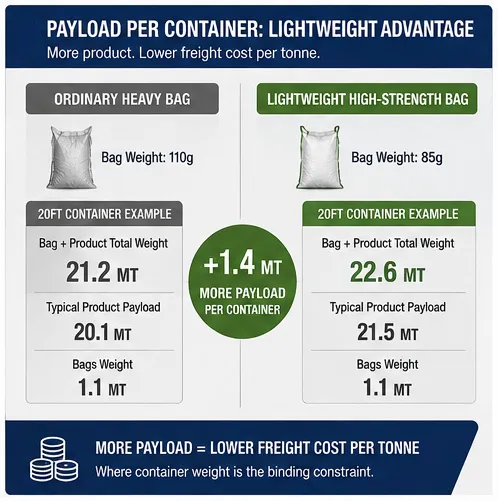
- Heavy bags add to cargo weight. At typical bulk fill weights moved at container scale, bag weight contributes to the total cargo weight, so buyers should model bag weight alongside product weight, container payload limits and freight terms — rather than assume bag weight creates a second freight charge.
- Thin bags fail in the field. Untreated or inadequately UV-stabilised PP sacks can degrade during prolonged outdoor exposure in tropical humidity and sun, causing splits, siftage and claims; actual service life depends on UV stabilisation, formulation, climate and storage conditions.
The 2026 shift many buyers are exploring is to break that trade-off with engineered light-weighting rather than simple down-gauging.
How Lightweight High-Strength Works
The route is material and weave engineering, not just less plastic:
- Controlled PP tape orientation. Orientation can improve tensile efficiency by mass when validated on the finished tape and bag; specify the resin formulation and finished-bag tensile requirement at SKU level.
- Optimised warp/weft density. Density can be adjusted to balance bag mass and load-bearing performance for the intended construction; validate the finished SKU through the agreed tensile, tear and drop requirements.
- UV stabilisation. UV stabilisation can improve resistance to outdoor exposure; specify the expected exposure conditions and required service period, then validate the finished SKU against an agreed UV-aging method and acceptance criterion.
- Moisture and dust sealing. PP film lamination, BOPP lamination or an internal liner protects cement, fertilizer and food during long transit and open-yard storage, depending on the required moisture, dust-barrier, printing and filling performance.
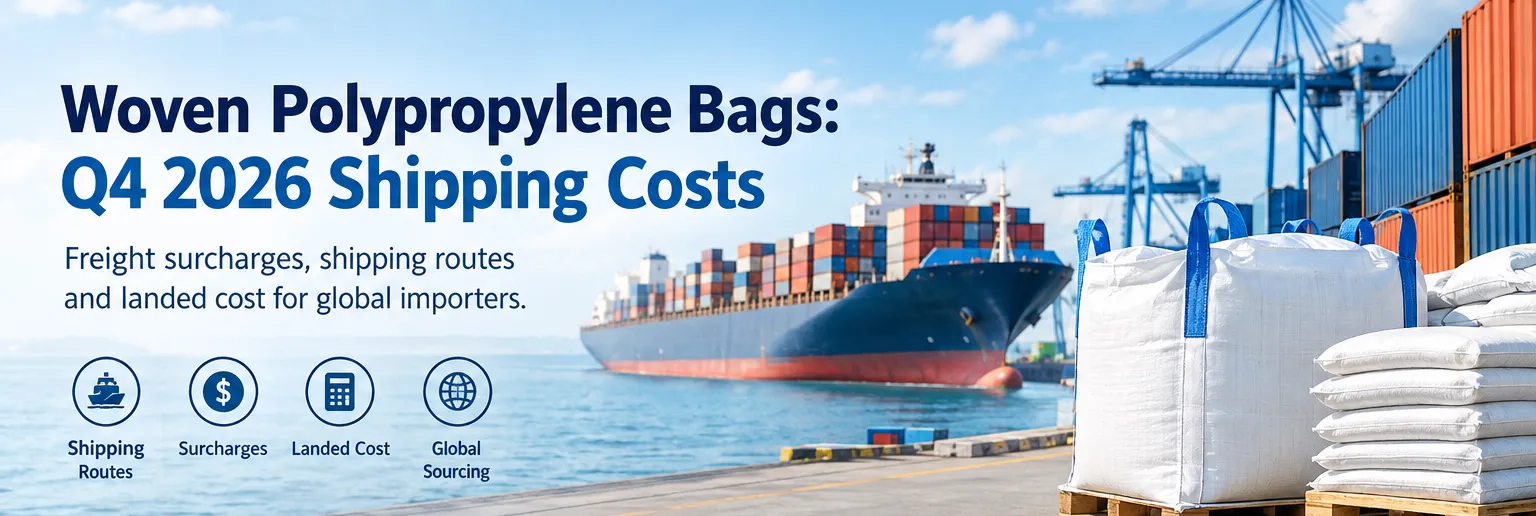
Where cargo weight is the binding constraint, reducing bag weight can increase product payload per container and may reduce freight cost per tonne; buyers should model the actual container constraint rather than assume every lighter bag lowers landed cost.
The Nigeria Case: Import Dependence and China Supply
Nigeria is a clear example. Imported PP woven sacks are an important part of Nigeria’s supply mix, and China is among the international supply sources Nigerian buyers consider; the exact import share varies by product definition and reporting period. Because PP resin is a major component of woven-bag production cost, changes in resin prices can materially affect supplier pricing and landed cost — another reason buyers weigh total cost and logistics adaptation, not just unit price.
Across West Africa more broadly, for specification-led procurement, buyers can evaluate total value alongside unit price, including validated performance and logistics cost — a bag that arrives intact, stacks in the sun, and maximises container payload wins even at a small unit premium.
Why This Fits African Conditions
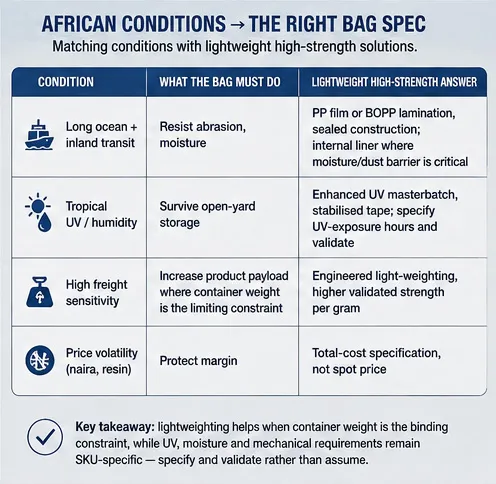
| Condition | What the bag must do | Lightweight high-strength answer |
|---|---|---|
| Long ocean + inland transit | Resist abrasion, moisture | PP film or BOPP lamination, sealed construction; internal liner where moisture/dust barrier is critical |
| Tropical UV / humidity | Survive open-yard storage | Enhanced UV masterbatch, stabilised tape; specify required UV-exposure hours and validate |
| High freight sensitivity | Increase product payload where container weight is the limiting constraint | Engineered light-weighting, higher validated strength per gram |
| Price volatility (naira, resin) | Protect margin | Total-cost specification, not spot price |
Key takeaway: lightweighting helps when container weight is the binding constraint, while UV, moisture and mechanical requirements remain SKU-specific — specify and validate rather than assume a generic benefit.
For agricultural PP woven bags moving grain, seeds and fertilizer, and for construction PP woven bags moving cement and building materials, these same levers apply directly.
What Buyers Should Specify
To capture the benefit without sacrificing durability, African importers should define:
- Target bag weight (GSM) and burst strength together — GSM measures fabric mass per unit area; burst and tensile tests measure mechanical performance. “High-strength/lightweight” is a commercial positioning claim that must be supported by SKU-level test data.
- UV stabilisation matched to expected outdoor exposure conditions and required service period, validated by an agreed UV-aging test and acceptance limit.
- Lamination and liner for moisture/dust-sensitive contents — specify PP or BOPP lamination and/or an internal liner according to the required moisture, dust-barrier, printing and filling performance.
- Drop and tear specifications defined by named test method, sample configuration and SKU-level acceptance limits, then verified by supplier QC records.
- Total-cost model including freight per tonne, not just ex-works price.
The Manufacturer Perspective
For a PP woven bags manufacturer serving Africa, lightweight high-strength is a differentiation path rather than a race to the lowest GSM. GSM measures fabric mass per unit area; tensile and burst tests measure mechanical performance; “high-strength/lightweight” is a commercial performance-positioning claim that must be supported by SKU-level test data. Tape orientation affects tensile efficiency; warp/weft density affects fabric mass and load distribution; UV formulation affects resistance to outdoor exposure. Each should be validated on the finished SKU against its agreed acceptance criteria. These capabilities are useful indicators when buyers evaluate a specification-led supplier. Suppliers that can document origin, support multi-country manufacturing (for example plants in China and Cambodia) and ship from a port such as Dalian give African buyers more routing and qualification options.
Key Takeaways
- Lightweight high-strength PP woven bags are an approach African buyers can consider when container weight is the binding constraint — cutting freight per tonne while holding durability.
- The engineering is controlled tape orientation + optimised weave + UV stabilisation, not simple down-gauging; validate performance at SKU level.
- Nigeria relies on imported PP woven sacks, and China is among the international supply sources buyers consider; resin price volatility drives landed price.
- For specification-led procurement, buyers can evaluate total value alongside unit price, including validated performance and logistics cost.
- Specify GSM and burst strength together, UV exposure and acceptance, lamination/liner and drop-test — and model freight per tonne.
For African importers, the move is to buy lightweight high-strength PP woven bags as a logistics component: specify performance, validate it, and compare suppliers on cost per tonne delivered and survived — not cost per empty sack.
Frequently Asked Questions
Because bag weight adds to cargo weight at container scale, engineered light-weighting can cut freight per tonne while holding strength — but only where weight is the binding constraint; buyers should model the actual container limit.
Through controlled PP tape orientation, optimised warp/weft density and UV stabilisation — engineering, not just less plastic — so tear, drop and tensile are validated at SKU level, not assumed from GSM.
Nigeria relies on imported PP woven sacks, and China is among the international supply sources buyers consider; the exact import share varies by product definition and reporting period, and resin price volatility drives landed price.
Untreated or inadequately UV-stabilised sacks stored outdoors in tropical sun and humidity can degrade during prolonged exposure; actual service life depends on UV stabilisation, formulation, climate and storage — there is no single universal number.
Define target GSM and burst strength together, UV stabilisation with exposure conditions and acceptance limit, lamination/liner, drop-test method and SKU acceptance, and a freight-per-tonne total-cost model.
A lightweight bag may have a similar or higher unit price when additional tape, weave or UV engineering is used. Whether it reduces delivered cost depends on the actual bag specification, shipment constraint, freight terms and validated field performance.
Applications with significant product weight, long transport distances or outdoor exposure may benefit when container weight is binding and the bag requires validated UV and mechanical performance — for example cement, fertilizer and grain in agricultural and construction supply chains.
Compare on cost per tonne delivered and survived, validated by drop/tear/UV test data and documented specification, not on ex-works price per empty bag.