

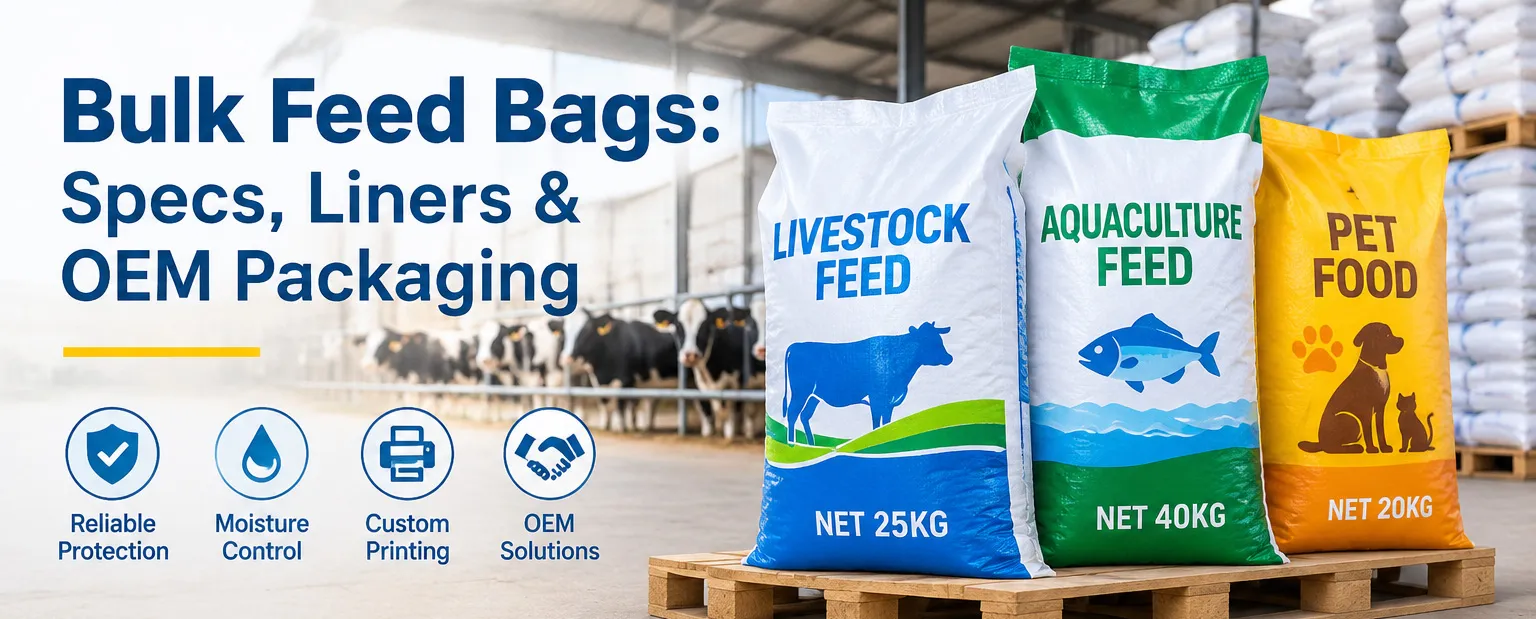
Bulk feed bags are used to package livestock feed, aquaculture feed, pet food and premixes. Common options include PP woven sacks, BOPP laminated bags and woven bags with an inner PE liner, available in different capacities, print formats and closure styles. The right specification depends on product sensitivity, filling equipment, storage conditions and transport requirements. This guide explains how to select bulk feed bags, compare barrier and closure options, and establish consistent OEM specifications for repeat orders.
Why Feed Bags Are a Repeat-Driven Category
Animal nutrition packaging is bought on fixed formulations and steady volumes. A 25 kg or 40 kg feed bag is specified once, sampled, approved, then reordered against forecast. The buyer’s real question is not “what is the cheapest bag” but “will this bag hold spec across every reorder without print drift, liner failure or contamination.”
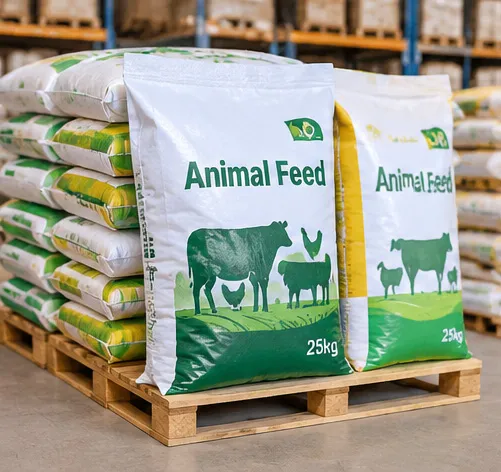
Bulk feed bags are typically made from PP woven fabric, with optional BOPP printing, lamination or an inner PE liner. Buyers should specify bag capacity, dimensions, fabric strength, barrier requirements, filling and closure method, printing details and applicable hygiene requirements. For repeat orders, approved samples, documented specifications and consistent quality checks help reduce variation between production batches.
Feed Bag Specifications by Application
The best bag construction depends on the feed formulation, filling process, storage environment and distribution requirements. The options below are starting points for specification discussions rather than fixed requirements for every product.
| Application | Packaging options | Main considerations |
|---|---|---|
| Livestock compound feed | PP woven sacks, coated or laminated woven bags | Bag strength, moisture exposure, print durability and filling-line compatibility |
| Aquaculture feed | Woven bags with suitable liners or barrier layers, depending on the product | Moisture control, product sensitivity and protection during storage |
| Pet food | BOPP laminated PP woven bags or other approved packaging structures | Brand graphics, abrasion resistance, barrier requirements and applicable food-contact requirements |
| Premixes and feed additives | Smaller woven bags, lined bags or alternative multilayer packaging | Powder containment, moisture sensitivity, dosing accuracy and contamination control |
Confirm the required capacity, bag dimensions, material structure, closure and storage conditions with the packaging supplier before approving a sample.
Moisture Control and Micro-Perforation
Feed packaging should be selected according to the product’s moisture sensitivity, storage conditions and filling process. Depending on the required performance, options may include coated or laminated PP woven fabric, an inner PE liner, or a combination of materials. These structures serve different purposes and should be evaluated against the actual product and distribution environment.
Micro-perforation can provide controlled air release during filling when the bag structure and filling process require it. Its performance depends on the perforation size, pattern and overall packaging construction. Because perforations can also affect moisture and particle containment, they should not be assumed to provide an insect barrier or moisture protection without supporting test data.
For moisture-sensitive feed or fine powders, confirm the required barrier level, dust containment, closure integrity and compatibility with the filling equipment before selecting a vented structure.
Bag Closure: Heat-Sealed, Sewn or Valve
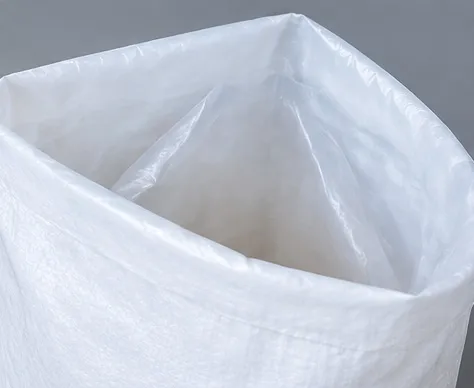
The appropriate closure depends on the bag construction, product characteristics and filling equipment. Heat sealing is suitable for compatible thermoplastic layers, including certain PE liners. Sewing is commonly used to close PP woven sacks, while valve bags are designed for compatible filling systems. These formats are not interchangeable in every application.
| Closure or construction | When to consider it | What to confirm |
|---|---|---|
| Sewn closure | Conventional PP woven sacks for feed and other dry products | Seam strength, dust containment and compatibility with any liner |
| Heat-sealed liner or compatible bag layer | Applications requiring a sealed thermoplastic layer | Seal compatibility, seal integrity and filling-line capability |
| Valve construction | Filling systems designed for valve bags | Valve dimensions, filling equipment and product flow |
| Liner combined with an outer woven bag | Products requiring additional containment or a defined barrier | Liner material, fit, sealing method and required barrier performance |
For automated filling, confirm the complete bag design with the equipment supplier. A heat-sealed liner does not automatically make the outer woven bag airtight or moisture-proof.
Regional Supply and Sourcing Considerations
Regional packaging capacity can affect freight costs, delivery schedules, inventory planning and supplier response times. For buyers in the Americas and other export markets, compare local and overseas suppliers using the same bag specification and order assumptions.
A meaningful comparison should include product quality, production capacity, minimum order quantities, sample approval, lead time, shipping terms and landed cost. Supplier location alone does not establish better value; the decision should reflect the buyer’s delivery requirements and the supplier’s ability to maintain consistent specifications across repeat orders.
OEM and Private-Label Feed Bag Manufacturing
OEM feed bags can be customised for livestock feed, aquaculture feed, pet food and premixes. Options may include bag dimensions, fabric weight, lamination, inner liners, closure formats and custom-printed woven bag designs. The appropriate combination depends on product requirements, filling equipment and the intended distribution environment.
For repeat orders, buyers should approve a reference sample and document the agreed specifications before mass production. Artwork version control, print colour consistency, batch inspection and packaging records help maintain consistency across orders.
Explore our OEM and custom packaging service for the customisation process, and our custom-printed PP woven bags OEM service for printing and artwork requirements. Buyers evaluating production capabilities can also review our PP woven bag manufacturer information.
Bulk Feed Bag Specification Checklist
| Specification | Details to confirm |
|---|---|
| Application | Livestock feed, aquaculture feed, pet food or premix |
| Bag capacity | Net filling weight and required safety margin |
| Bag dimensions | Width, length, gusset and any required valve dimensions |
| Material structure | PP woven fabric, coating, BOPP lamination or inner liner |
| Fabric specification | GSM, weave and strength requirements |
| Barrier and containment | Moisture protection, dust containment and product compatibility |
| Closure | Sewn, heat-sealed compatible layer, valve or another approved format |
| Printing | Artwork, colour requirements, lot coding and applicable label information |
| Order details | Initial quantity, forecast volume, delivery destination and packing method |
| Quality requirements | Approved sample, inspection criteria and any applicable test standards |
| Repeat-order control | Artwork version, retained reference sample and agreed production specifications |
Providing these details helps suppliers recommend a suitable bag construction, prepare an accurate quotation and maintain consistency across repeat orders. For related agricultural packaging applications, explore our feed and fertilizer PP woven bags page. You can also review our PP woven bags for general product options and specifications.
Request a Quote for Bulk Feed Bags
To help us assess your packaging requirements, share the feed type, bag capacity, dimensions, preferred material structure, closure style, printing artwork, estimated order quantity and delivery destination. If you use an automated filling line, include the relevant equipment requirements. These details help establish a suitable specification for sampling, quotation and repeat production.
Contact our team through our OEM and custom packaging service to discuss your feed bag specifications, printing requirements and quotation needs.
Conclusion
Bulk feed bags for livestock feed, aquaculture feed, pet food and premixes should be specified around product requirements, bag strength, barrier performance, closure compatibility and printing needs. For repeat orders, approved samples, documented specifications and consistent quality checks are essential to maintaining packaging consistency.
When requesting a quotation, provide the intended filling weight, bag dimensions, material structure, closure format, artwork, order quantity and delivery destination. Explore our PP woven bags and OEM custom packaging service to discuss suitable packaging options for your application and repeat-order requirements.
Frequently Asked Questions
Feed bags must meet the hygiene, containment and material requirements appropriate to the animal-feed application. Fertilizer bags are generally specified around the product’s weight, moisture sensitivity, chemical compatibility and transport conditions. Both may use PP woven fabric, but the required material structure and quality controls should be determined separately for each product.
Pet-food bags often use BOPP laminated PP woven structures when durable, high-quality graphics are required. Additional barrier layers or liners may be appropriate depending on the formulation, shelf-life target and distribution conditions. Confirm applicable material and food-contact requirements for the intended market and whether the packaging directly contacts the product.
Micro-perforation creates small openings that can help release air during filling. The results depend on hole size, pattern, bag construction and filling conditions. Perforations should not be assumed to prevent insect entry, control moisture or preserve feed without application-specific testing.
The choice depends on the bag material, filling equipment and product requirements. Sewing is common for conventional PP woven sacks, while heat sealing is suitable for compatible thermoplastic layers or liners. Confirm seal integrity, dust containment and equipment compatibility before approving the final bag specification.
Yes. OEM feed bags can be customised with brand artwork, bag dimensions, material structure, liners and compatible closure options. For consistent repeat orders, approve a reference sample, control artwork versions and document the agreed specifications before mass production.
Compare suppliers using the same bag specification, order quantity and delivery assumptions. Review material quality, production capacity, minimum order quantity, sample approval, lead time, shipping terms and landed cost. A supplier’s location alone does not establish better value; consistent specifications and reliable delivery are also important.