

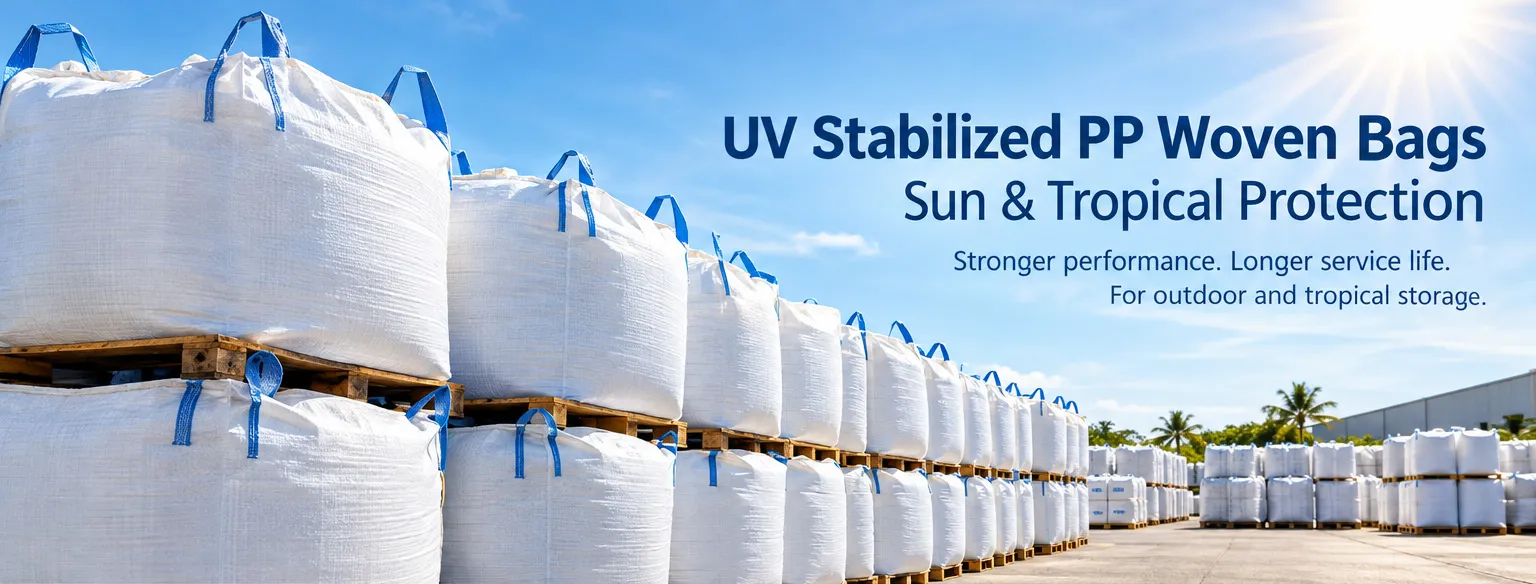
Polypropylene is lightweight, strong and cost-effective, but prolonged exposure to ultraviolet (UV) radiation can gradually reduce its mechanical performance. In PP woven bags, UV exposure can trigger photo-oxidation and polymer-chain degradation, leading to lower tensile strength, embrittlement and a higher risk of fabric splitting over time. UV stabilized PP woven bags use a stabilizer system incorporated into the polypropylene tape during extrusion to slow this degradation and extend performance under outdoor exposure. The required protection depends on UV intensity, temperature, exposure duration, bag construction and the stabilizer formulation.
Quick answer: UV-stabilized PP woven bags carry a light-stabilizer package—hindered amine light stabilizers (HALS) are commonly used for polypropylene, while the exact formulation may also include other stabilizers or UV-protective pigments. Specify UV stabilization when bags may remain exposed to direct sunlight during outdoor storage, open-yard handling or other unprotected transit conditions.
Definition: A UV stabilized PP woven bag is a woven polypropylene sack produced from tape yarn containing a UV-light stabilizer system, specified against defined exposure conditions and acceptance criteria, such as retained tensile strength after accelerated weathering, rather than by an unspecified UV grade alone.
Like other woven polypropylene bags, UV-stabilized versions are specified according to the material construction, intended application and required mechanical performance. The difference is that the polypropylene tape includes a stabilizer system designed to slow UV-induced degradation.
How UV Damages Polypropylene
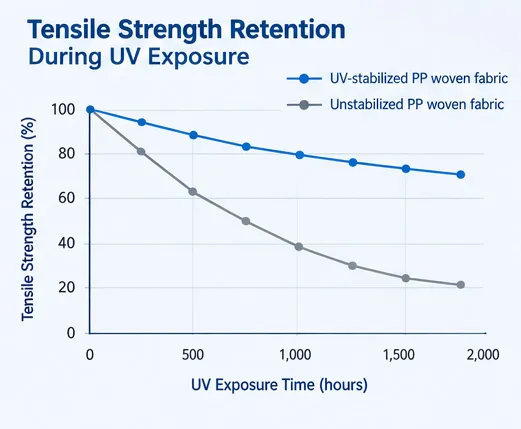
UV radiation can initiate photo-oxidation in polypropylene, causing polymer-chain scission and other chemical changes that gradually reduce molecular weight and mechanical performance. In woven fabric, prolonged exposure can lead to lower tensile strength, reduced elongation and increasing brittleness. Fading, chalking or other surface changes may occur, but appearance alone is not a reliable measure of remaining strength. The rate of degradation depends on the polymer formulation, stabilizer system, UV intensity, temperature, exposure duration and weathering conditions.
What UV Stabilization Does
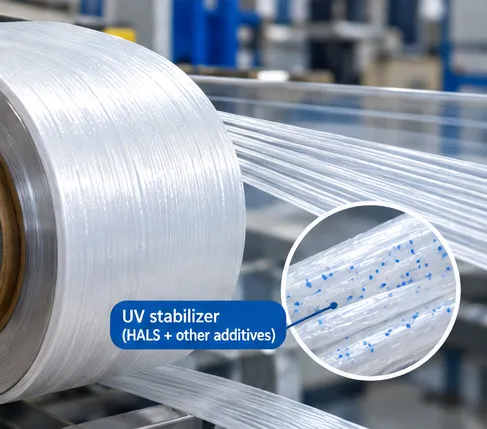
A UV stabilizer system can be incorporated into the polypropylene material during tape extrusion, providing protection within the tape rather than relying only on a surface treatment. Hindered amine light stabilizers (HALS) are commonly used in polypropylene because they help interrupt the free-radical reactions associated with photo-oxidation. Depending on the formulation, other stabilizers or UV-protective pigments may also be used. The objective is to slow UV-induced degradation and improve retention of tensile and elongation properties during defined outdoor exposure.
| Property | Unstabilized PP bag | UV-stabilized PP bag |
|---|---|---|
| Tensile retention in sun | Drops rapidly | Higher retention can be achieved with an appropriate stabilizer system |
| Outdoor service life | Short; may split | Can be extended when the stabilizer system is matched to the specified exposure |
| Appearance | Fades, chalks | Appearance and colour retention may improve depending on formulation |
| Best use | Indoor / short transit | Outdoor / tropical / long transit |
When Do PP Woven Bags Need UV Stabilization?
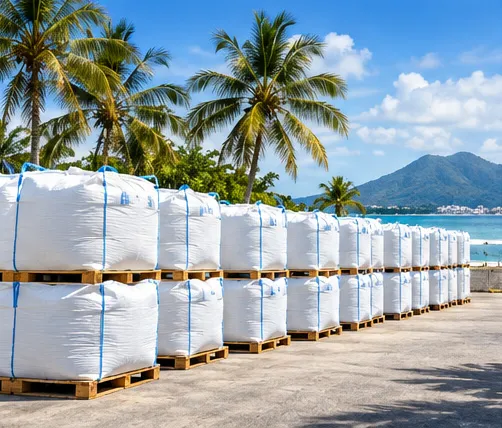
UV stabilization is most relevant when bags will see direct or prolonged sunlight during storage, transit or handling. Typical cases include outdoor depots, open-yard waiting areas, sunny port dwell and export corridors with extended sun exposure. For PP woven bags for African markets, buyers can specify UV stabilization together with fabric GSM, tensile strength, coating or lamination, liner requirements and the expected outdoor exposure period. The lightweight high-strength PP woven bags for Africa line can be configured for applications where both mechanical performance and outdoor UV exposure need to be considered.
How to Specify UV Protection
UV protection is not one universal setting. Buyers should ask the supplier to state the weathering test method, exposure conditions, exposure duration and the property used for acceptance, such as tensile-strength retention. ISO 4892-3:2024 specifies methods for exposing plastic specimens to fluorescent UV radiation, heat and water, while ASTM G154-23 covers the operation of fluorescent UV lamp exposure apparatus. Test results should be interpreted together with the stated lamp, cycle, temperature, moisture and exposure conditions rather than compared by a test-hour number alone.
| Spec line | What the buyer defines |
|---|---|
| Exposure environment | Outdoor storage, open yard, sunny port dwell, transit corridor |
| Weathering method | ISO 4892-3:2024, ASTM G154-23 or equivalent, with stated cycle conditions |
| Exposure duration | Expected hours or months of UV exposure for the project |
| Acceptance criterion | Agreed tensile-strength retention or another defined mechanical-performance limit |
| Evidence | Weathering / tensile-retention test report matching the above |
Common Misconceptions
- UV protection is just a surface coating. For resin-level UV stabilization, the stabilizer system is incorporated into the polypropylene material during tape extrusion. A later surface treatment is a different approach and should not automatically be treated as equivalent.
- A thicker bag is automatically UV-resistant. Higher GSM can contribute to mechanical strength, but it does not by itself provide UV stabilization. The polymer formulation and stabilizer system remain important.
- Indoor storage always needs UV stabilization. Fully enclosed storage with little or no direct sunlight generally creates much less UV exposure, but outdoor handling, port dwell and exposed transit can change the requirement.
A Manufacturing Note
SITONG PACKAGING has manufactured woven polypropylene packaging since 1998, with plants in Haicheng (Anshan), Liaoning and in Cambodia, around 20 production lines at roughly 100 tonnes per day, and shipments to more than 70 countries from the port of Dalian. Tape extrusion, weaving, coating and sewing are held in-house, allowing UV stabilization and other fabric specifications to be incorporated into the product design according to the customer’s application requirements. Buyers can discuss the expected outdoor exposure, fabric construction and required test evidence when requesting a quotation. The polypropylene woven bag production process at SITONG shows where stabilizer addition sits in the line.
Conclusion
UV stabilized PP woven bags protect the bag’s strength where the sun is the enemy: outdoor depots, sunny transit corridors and tropical markets. The stabilizer—commonly HALS, with other stabilizers or pigments depending on formulation—is built into the tape yarn and must be matched to the expected exposure. The required protection depends on exposure intensity, duration, fabric construction and the stabilizer formulation. For outdoor storage, open-yard handling or exposed transit, buyers should specify the expected exposure conditions and request supporting weathering or tensile-retention data instead of relying on an unspecified UV grade.
Key takeaway: UV degradation affects the polymer itself, not just the bag’s appearance. The appropriate stabilizer system should therefore be selected for the expected exposure conditions and verified against defined weathering and mechanical-performance criteria.
Frequently Asked Questions
UV radiation triggers photo-oxidation that breaks polypropylene chains (chain scission), lowering molecular weight and tensile strength until the fabric becomes brittle and can split under load.
A UV-stabilizer system is incorporated into the polypropylene material used to make the tape yarn. Hindered amine light stabilizers (HALS) are commonly used because they help interrupt the free-radical reactions associated with photo-oxidation. Depending on the formulation, other stabilizers or UV-protective pigments may also be used. The purpose is to slow UV-induced degradation and improve retention of mechanical properties during defined exposure.
It is built into the yarn during tape extrusion, not a surface coating. For tape-level UV stabilization, the stabilizer is incorporated during production rather than applied later as a separate surface treatment.
UV stabilization is particularly relevant in markets and applications where bags remain exposed to strong sunlight for extended periods. This includes tropical and subtropical regions, outdoor agricultural and industrial storage, open-yard handling and long periods of exposed transit. Sub-Saharan Africa is one example, but the specification should be based on the actual exposure conditions rather than geography alone.
Not by itself. A higher GSM can contribute to mechanical strength and fabric durability, but it does not automatically make a bag UV-resistant. UV performance depends on the polypropylene formulation, stabilizer system, fabric construction and exposure conditions.
UV performance should be described together with the applicable weathering method, exposure conditions, exposure duration and acceptance criterion. Methods such as ISO 4892-3:2024 and ASTM G154-23 are used for controlled fluorescent-UV exposure of plastics and nonmetallic materials, but the test conditions and the property used for acceptance need to be stated. A number or label without the test method and conditions is difficult to compare between suppliers.
Yes. BOPP lamination and printing sit on top of the woven fabric and should not be assumed to replace UV stabilization of the polypropylene tape when the woven fabric itself will be exposed to sunlight.
Usually not, if the bag stays enclosed end-to-end. But transit, port dwell and depot handling often involve sun exposure, so many exporters specify it as insurance.
UV Stabilization Specification Checklist
- Exposure environment—describe storage, handling and transit conditions, including expected sun exposure.
- Weathering method—name the test standard (ISO 4892-3:2024, ASTM G154-23 or equivalent) and the cycle conditions.
- Exposure duration—state the hours or months of expected UV exposure for the project.
- Acceptance criterion—define the property and threshold (for example an agreed tensile-strength retention or another defined mechanical-performance limit).
- UV stabilization: state that the tape is UV-stabilized and define the required performance or test evidence rather than relying only on a formulation name.
- Fabric construction—specify GSM, weave and any coating or lamination interacting with UV.
- Evidence—request a weathering or tensile-retention test report matching the above.
- Documentation: request a weathering or tensile-retention test report that matches the agreed exposure method, conditions and acceptance criterion.