
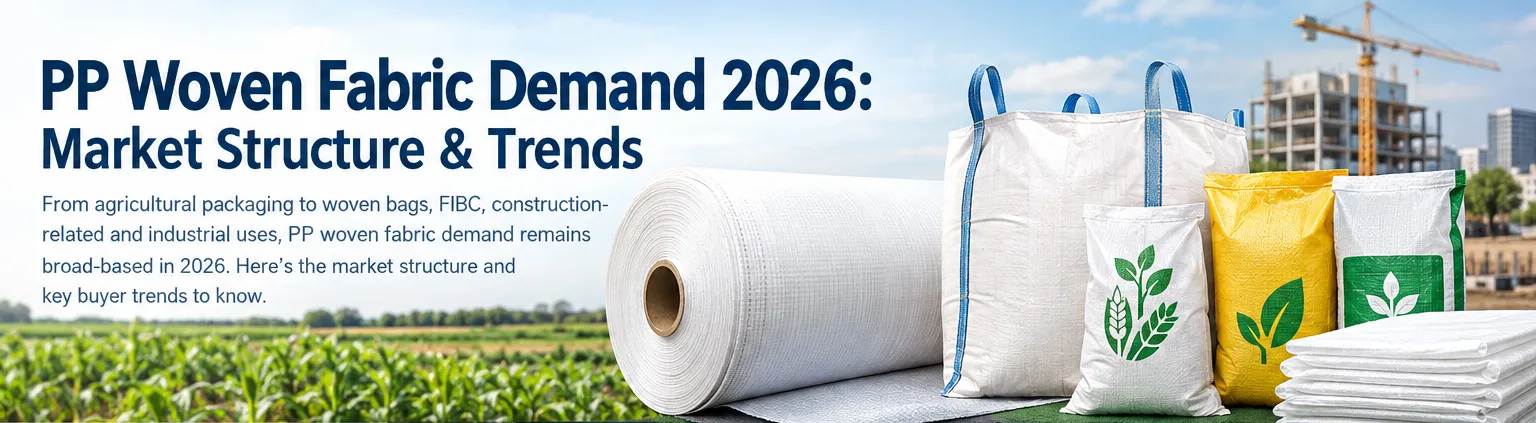
PP woven fabric demand in 2026 remains linked to packaging, agriculture, construction-related applications and industrial uses in China. Public industry research tracks production, demand and application segments separately, so estimates vary by definition. This article covers the main demand drivers, application segments and specifications buyers of PP woven fabric rolls should consider.
Demand Structure at a Glance
- Market scope: PP woven fabric is used across packaging, agriculture, construction-related and industrial sectors
- Major demand driver: packaging applications stay closely linked to PP woven bags, FIBC and other woven products
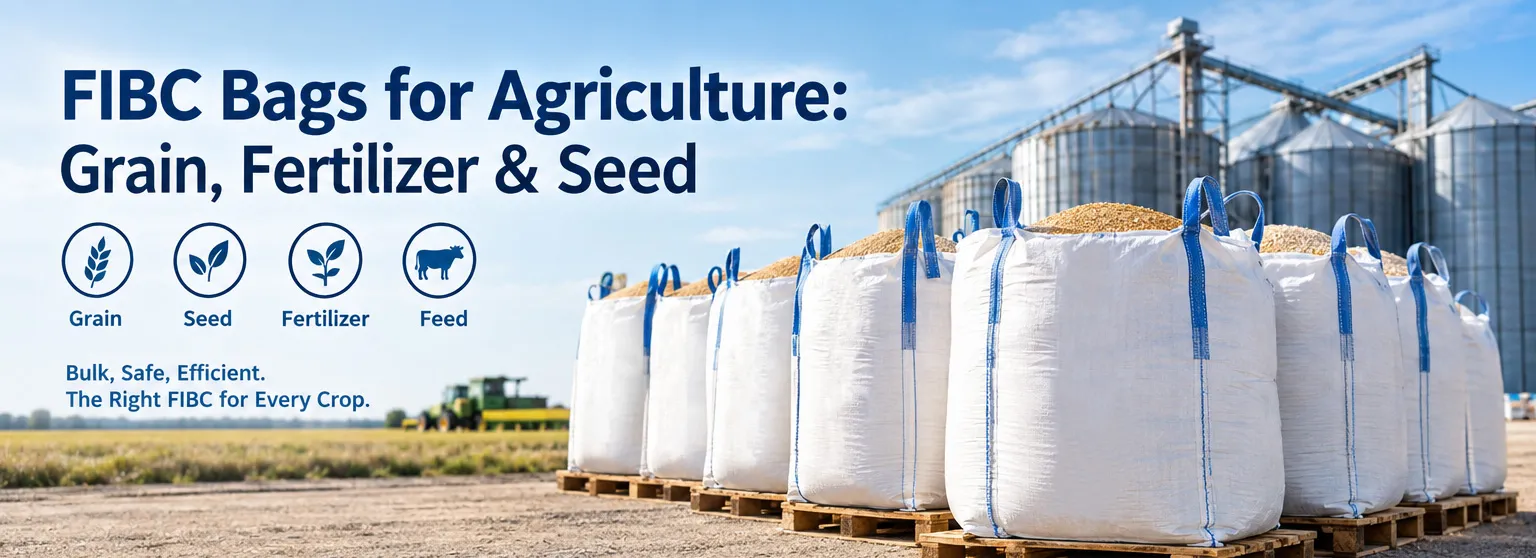
- Agricultural applications: grain, feed, fertilizer and other agricultural packaging are important end uses
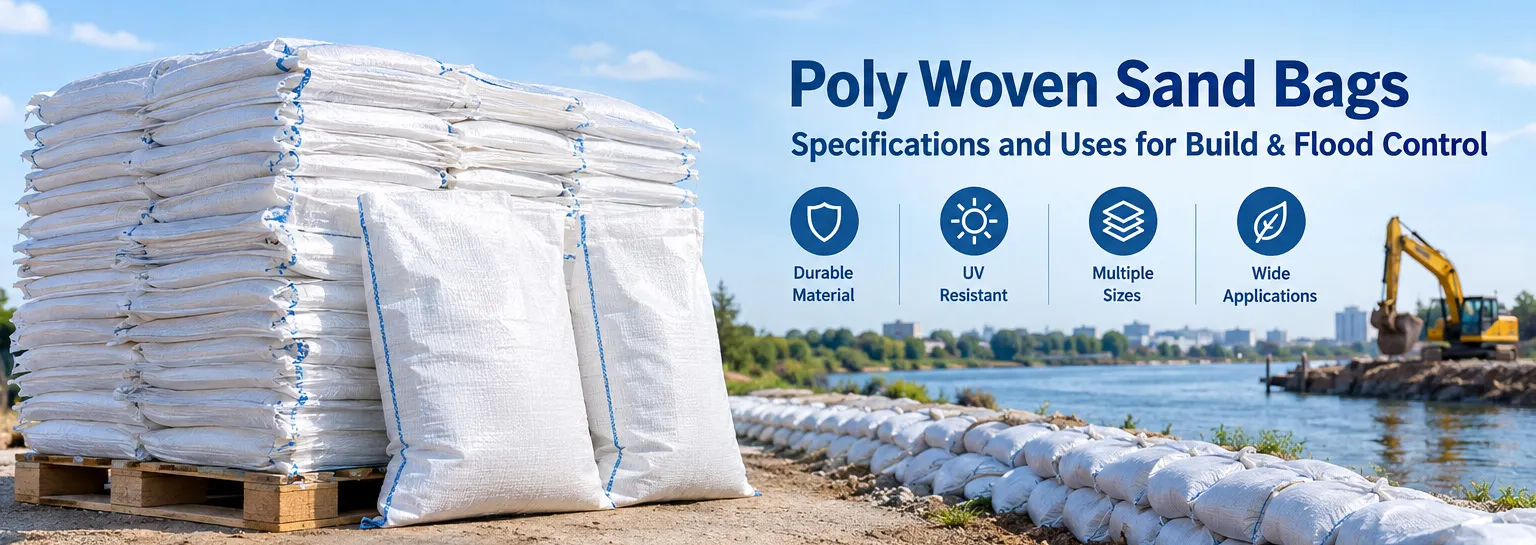
- Construction-related applications: sand bags, selected geotextile and protection products add demand
- Industrial applications: chemical, mineral, logistics and other packaging add further demand
What Is PP Woven Fabric
PP woven fabric is a woven polypropylene material made from extruded PP tapes and supplied in flat or tubular forms. It is widely converted into PP woven bags, FIBC bodies and other industrial packaging, and selected woven PP fabrics are also used in agricultural and geotechnical applications. Fabric performance depends on tape strength, weave density, grammage, width, coating or lamination, UV stabilization and the final application.
PP woven fabric is a key intermediate material for many woven packaging products. Understanding its major applications helps buyers identify which specifications and end-use markets are driving demand.
Demand by End-Use
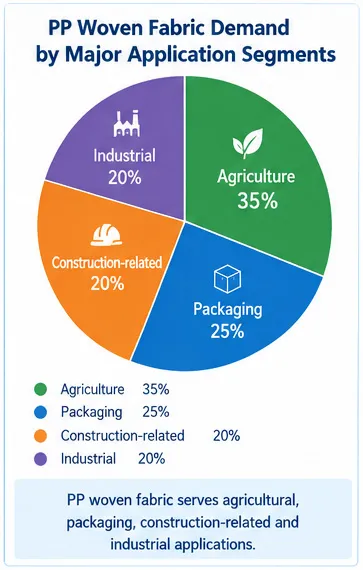
| Segment | Share | Typical products |
|---|---|---|
| Agriculture | the largest share | Fertilizer, grain, feed bags; crop protection mesh |
| Construction and engineering | a sizable share | Dust nets, safety nets, geotextiles, sand bags |
| Logistics and warehousing | a steady share | E-commerce packaging, transit wraps |
| Other | a steady share | Fishery, mining, temporary structures |
Key takeaway: pp woven fabric demand 2026 is broad-based, not dependent on one sector, which is why woven packaging stays a stable procurement category through cycles.
Price Elasticity by Segment
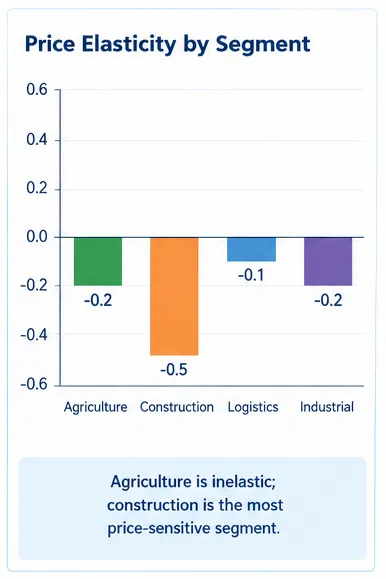
PP woven fabric buyers do not respond to price changes identically across applications. Agricultural and industrial packaging buyers may emphasise consistent strength, delivery reliability and specification stability, while construction-related applications can be more project-driven and cost-sensitive. Logistics and retail applications may prioritise weight, printability and conversion efficiency. The practical issue is how fabric cost interacts with performance and order volume, not a fixed elasticity coefficient.
Agriculture Demand and Emerging Markets
Agriculture is the largest segment and is growing in industrialising economies. Nigeria, Kenya and Ethiopia, among others, show rising demand for packaging materials as peanut, coffee and cocoa crops rely heavily on PP woven bags and fabric. Belt and Road trade flows add volume. For converters, this means steady export roll and bag demand into Africa and South Asia.
Construction and Geosynthetic Demand
Construction takes about a quarter of output as dust-control nets, safety nets, geotextiles and sand bags. This segment is price-sensitive and tracks infrastructure and property cycles, the Middle East rebuild and flood-control programs all add baseline volume even when property slows.
Logistics and E-Commerce
Logistics and industrial packaging represent another application area for woven polypropylene materials. Depending on the product, buyers may prioritise lightweight construction, printability, abrasion resistance or coating performance.
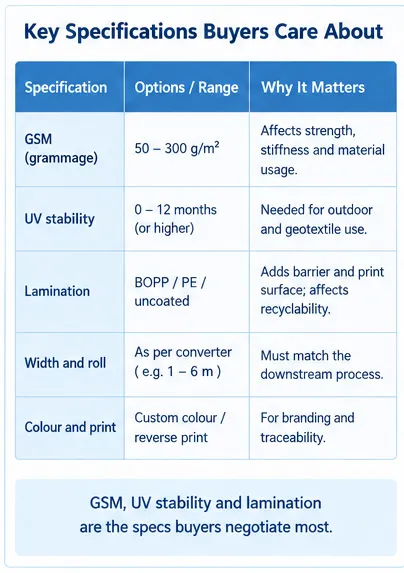
Specifications Buyers Care About
- GSM (grammage): Determines fabric weight per unit area and is one factor affecting stiffness, material usage and overall performance; higher GSM may be selected for heavier or abrasive fill.
- UV stability: Required for outdoor construction and agriculture exposure; measured by retention after accelerated weathering.
- Lamination: BOPP or PE coating adds barrier and print surface; where recyclability is a priority, evaluate the full packaging structure for material compatibility rather than assuming one coating determines recyclability.
- Width and roll: Tubular or flat width must match the converting line and the final bag size.
- Colour and print: Custom colour and reverse print for brand and traceability.
Sourcing PP Woven Fabric
Buyers of rolls or converted fabric should specify GSM, UV level, lamination and width, and verify them at incoming inspection. The tubular PP woven fabric market article covers the tubular segment specifically, while the PP woven bags hub shows the converted products this substrate becomes. For regional demand context, the PP woven bags Africa market piece tracks where agricultural and construction fabric demand is growing fastest.
How to Choose PP Woven Fabric for Your Process
Match the fabric to the downstream conversion and the end environment. A higher GSM is not automatically stronger, and coating changes both barrier and recyclability, so confirm the points below with the mill.
Specification Checklist
Use this checklist when briefing a supplier or comparing options. Confirm each point against the actual product and supply chain rather than a single headline claim.
| Spec to confirm | What to verify | Why it matters |
|---|---|---|
| Construction | Tubular or flat weave and GSM | Affects strength and conversion |
| Coating | Coated or uncoated, and lamination type | Coating changes barrier and recyclability |
| UV stability | UV stabilization if used outdoors | Needed for agriculture and geotextile use |
| Width and roll | Width and length per converter | Must match the downstream process |
| Color and print | Masterbatch and print method | For branding and identification |
| Documents | Specification and test records | Supports incoming QA |
Frequently Asked Questions
Public industry research tracks China’s PP woven fabric production, demand and application structure separately, so reported market size varies by definition and year.
Agriculture is an important application area, particularly grain, feed and fertilizer packaging, but a precise percentage ranking should be based on a defined market dataset.
Agricultural packaging demand can be relatively resistant to small material-price changes when the fabric is required for a specific product, but the degree of sensitivity varies by commodity and specification.
Construction-related applications can be particularly sensitive to total project cost, though sensitivity varies by application.
Specify GSM, UV stability, lamination type, width or tubular size, and colour or print, then verify them at incoming inspection before converting.
Industrialising markets, Nigeria, Kenya, Ethiopia and South Asia, show rising demand for agricultural and construction fabric, supported by Belt and Road trade flows.
Tubular fabric is woven as a continuous tube for seamless bags and FIBC bodies; flat fabric is woven as sheet and cut or sewn, offering width flexibility for converted products.
A PE or BOPP laminate adds barrier and print surface but can complicate recycling unless a single-material PP structure is used; mono-material laminates address this trade-off.
Provide the weave type, GSM, coated or uncoated, width and roll length, UV requirement, color or print, and the intended end-use. Mills quote against a specification, so clear specs return a comparable quote.
Conclusion
PP woven fabric demand 2026 is supported by a broad range of applications, including agricultural packaging, woven sacks, FIBC, construction-related products and industrial packaging. Because demand spans inelastic agriculture, cyclical construction and growing logistics, woven packaging stays a resilient procurement category. Buyers should specify GSM, UV, lamination and width, and verify them at incoming inspection to match the segment they serve.