

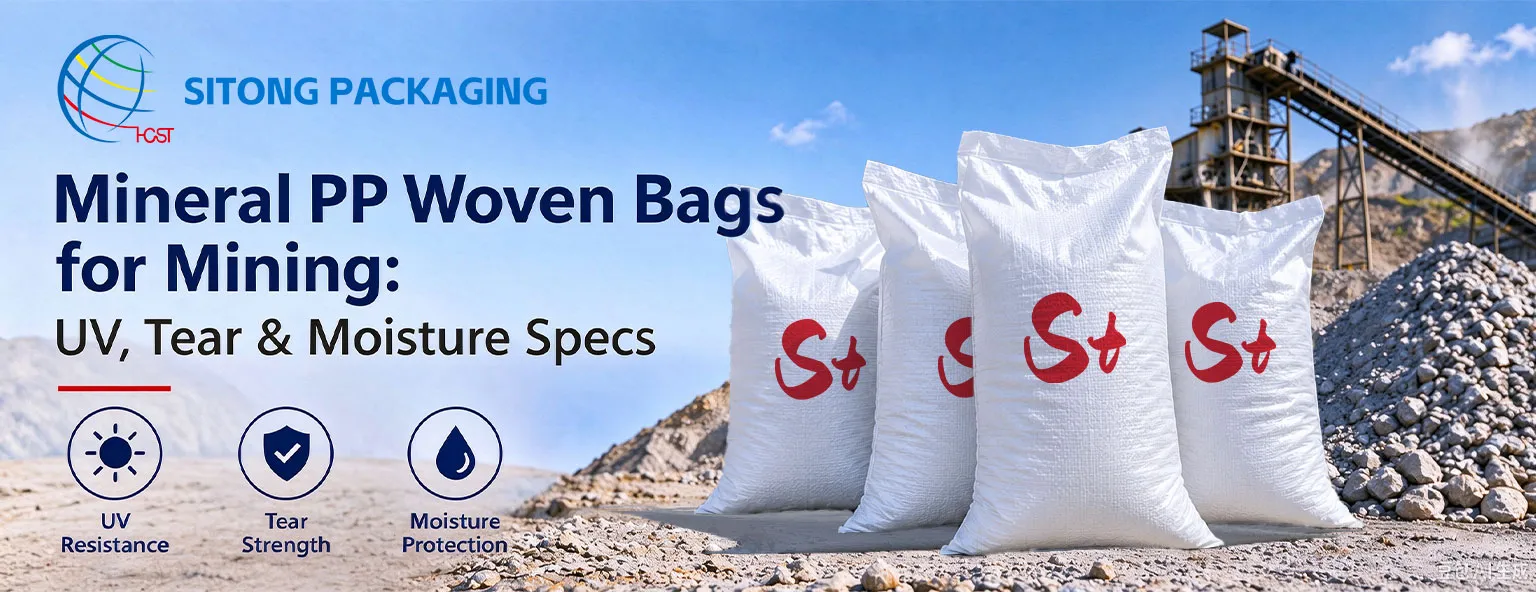
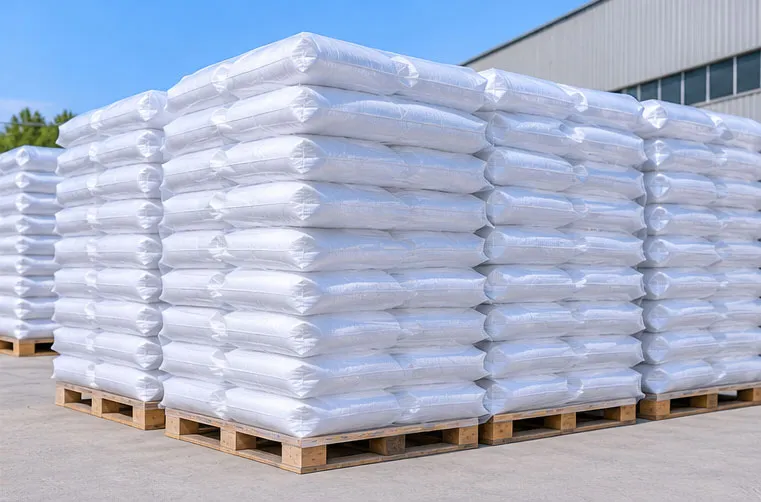
Mineral PP woven bags are used to package sand, aggregates, mineral concentrates, industrial salts, gypsum and other processed mineral products, typically in bag sizes ranging from 5 to 50 kg. Unlike many agricultural products, mineral materials can have sharp edges, abrasive surfaces or fine particles that place additional demands on sack construction. Outdoor storage and long-distance transportation may also expose bags to sunlight, rain and humidity. Choosing the right fabric weight, UV stabilization, seam construction and moisture barrier helps buyers match packaging performance to the product and its handling conditions.
For a general overview of sack constructions, fabric specifications and sourcing options, see our PP woven bags guide.
What Mineral Loads Do to a Woven Sack
Mineral products can place different demands on woven sacks depending on their particle size, shape, density and handling conditions. Before selecting a mineral woven sack construction, buyers should consider four common performance factors:
- Abrasion and puncture — Angular crushed stone, sharp mineral particles and abrasive concentrates can wear the fabric surface or damage individual tapes during filling, conveying and handling.
- UV exposure — Bags stored outdoors may experience prolonged sunlight. Without suitable UV stabilization, polypropylene tapes gradually lose mechanical strength through photo-oxidative degradation.
- Moisture exposure — Rain, humid storage environments and condensation during transportation can affect moisture-sensitive products. An uncoated woven fabric alone does not provide a reliable moisture barrier.
- Fine-particle leakage — Powders such as calcium carbonate, kaolin and bentonite may escape through fabric openings or seams if the weave and bag construction are not suitable.
Common applications include silica sand, calcium carbonate, feldspar, gypsum, industrial salt, bentonite and kaolin. Their different particle characteristics and moisture sensitivity should be considered when specifying bag materials and construction.
UV Resistance and Stabilization
Polypropylene gradually degrades when exposed to sunlight, which can reduce tape strength and affect the load-bearing performance of woven sacks. UV stabilizers, including hindered amine light stabilizers (HALS), can be incorporated during tape extrusion to improve resistance to outdoor exposure.
The required stabilization depends on the intended storage period, local UV conditions, climate and bag construction. Buyers should provide the expected outdoor exposure time and destination environment when requesting a quotation. UV performance should be assessed against the specified exposure conditions rather than assumed from stabilizer concentration alone.
Fabric GSM, tape quality, pigments and other material components can also influence the finished fabric’s performance. See our UV stabilized PP woven bags guide for more information about material selection and outdoor applications.
Tear and Puncture Strength
The resistance of a mineral PP woven sack to tearing and abrasion depends on the combined performance of its fabric, tapes and seams. Buyers should review the following specifications:
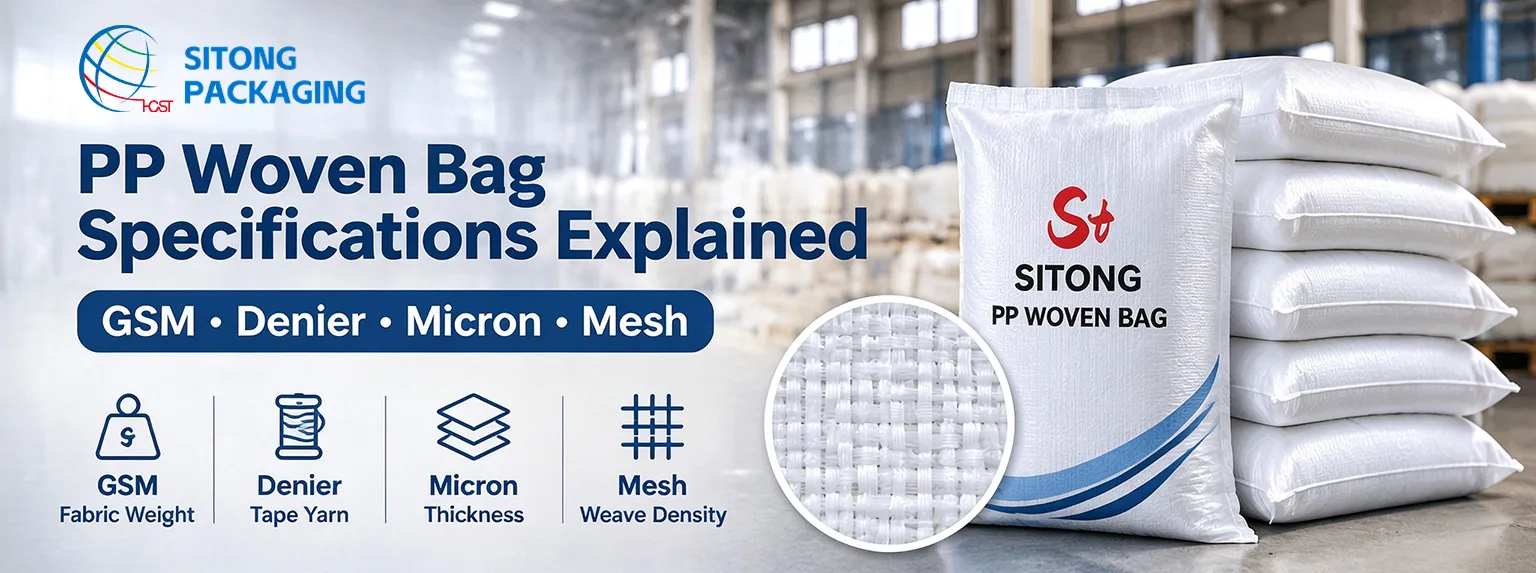
- Fabric GSM — Fabric weight affects material thickness and overall construction. A higher GSM may be appropriate for heavier or more abrasive loads, but the required value depends on the complete bag design.
- Tape denier — Denier indicates the linear density of PP tapes. It should be considered alongside tape tensile properties and weaving quality when assessing fabric strength.
- Weave density — The warp and weft construction affects fabric stability and particle retention. Finer mineral powders may require a tighter weave or an additional coating.
- Seam construction — Stitch type, thread strength, stitch density and seam reinforcement should be matched to the filling weight and handling conditions.
For abrasive mineral products, PP coating can provide an additional surface layer and help reduce direct contact between particles and the woven fabric. However, coating alone does not guarantee puncture resistance. The complete bag construction should be evaluated against the actual product and filling conditions.
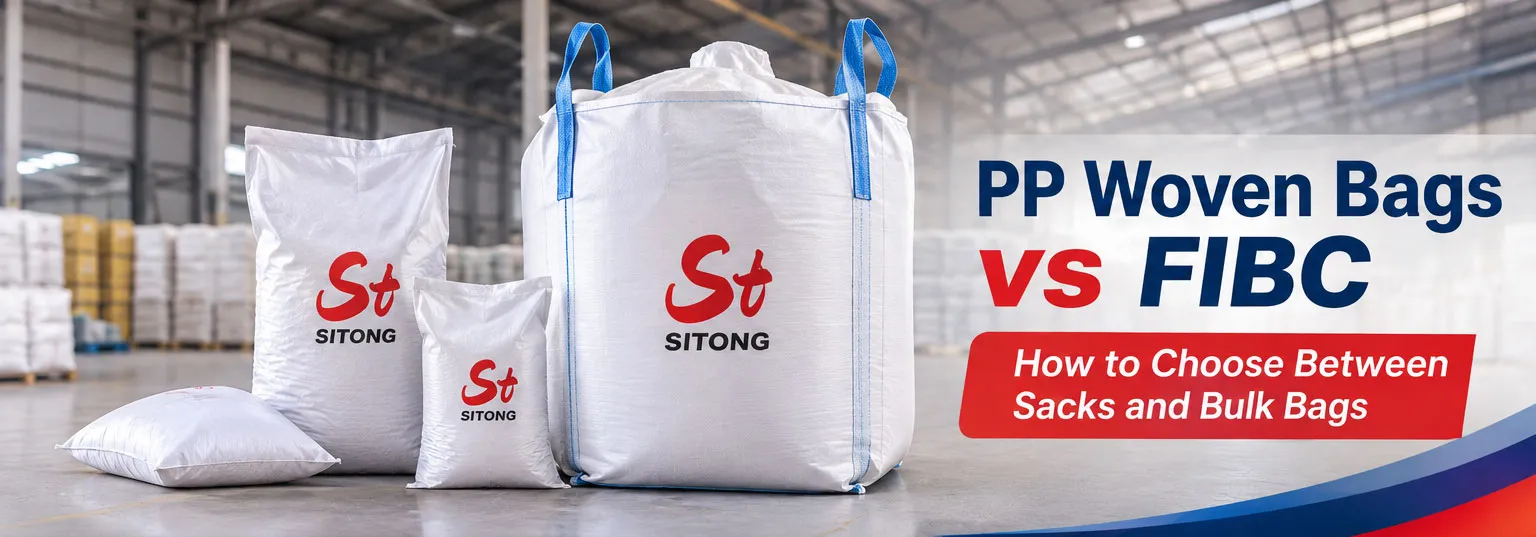
For larger bulk quantities, FIBC bags may be a more practical option depending on filling equipment, handling requirements and transport arrangements. See our FIBC bags range for bulk packaging options.
Moisture Protection
Uncoated PP woven fabric allows air and moisture to pass through its openings, which may be acceptable for dry mineral products stored under covered conditions. Where additional protection is required, buyers can consider three common constructions:
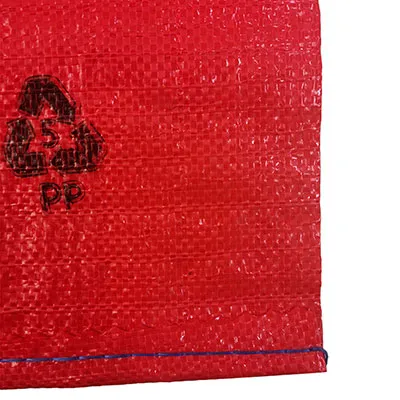
- PP coating — A layer of polypropylene applied to the woven fabric helps reduce fabric permeability and fine-particle leakage while providing additional resistance to moisture penetration.
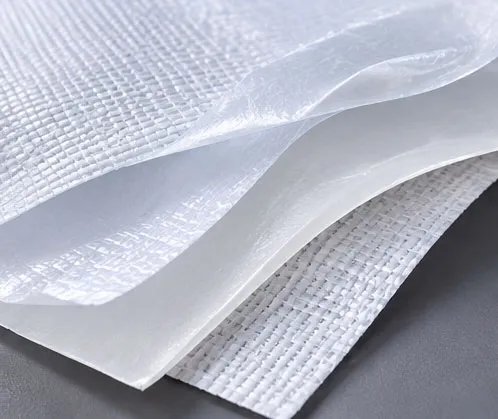
- BOPP lamination — A BOPP film laminated onto the woven fabric provides a printable outer surface and an additional moisture barrier, depending on the film and lamination construction.
- PE liner — An inner polyethylene liner provides a separate barrier between the mineral product and the woven outer sack. Its thickness, fit and sealing method should be specified according to the required protection.
The choice depends on the mineral’s moisture sensitivity, particle size, storage environment and transportation conditions. A basic uncoated sack may be sufficient for some dry aggregates, while moisture-sensitive powders may require coating, lamination or an inner liner. Adding more barrier layers than necessary can increase packaging cost without providing a practical benefit.
Specification Checklist for Mineral PP Woven Bags
Use the following checklist when preparing a mineral PP woven bag specification. Actual values should be confirmed according to the product, filling equipment, storage conditions and required bag performance.
| Parameter | Information to Confirm | Purpose |
|---|---|---|
| Product type | Sand, aggregates, mineral powder, salt or concentrate | Identifies material characteristics |
| Particle size | Fine powder, granules or angular particles | Determines fabric and sift-control requirements |
| Filling weight | 5 kg, 10 kg, 25 kg, 50 kg or other | Helps determine bag construction |
| Bag dimensions | Width, length and gusset if required | Ensures filling and pallet compatibility |
| Fabric GSM | Target fabric weight or agreed specification | Controls overall fabric construction |
| Tape denier | Target denier and tape properties | Helps define fabric strength |
| Weave density | Warp and weft density | Influences fabric stability and particle retention |
| UV stabilization | Outdoor exposure period and destination climate | Determines stabilization requirements |
| Surface treatment | Uncoated, PP coated or BOPP laminated | Defines surface and barrier requirements |
| Inner liner | PE liner required or not; thickness and fit | Provides additional product protection |
| Sewing and closure | Seam construction, stitching and top/bottom closure | Matches filling and handling requirements |
| Printing | Logo, product information, handling marks and colours | Supports identification and branding |
| Packing method | Bundles, bales or pallets | Matches shipping and warehouse requirements |
Buyers should also provide the filling method, expected stacking conditions and order quantity when requesting a quotation.
How to Choose the Right Sack
- Particle type — Angular or abrasive particles require careful consideration of fabric weight, tape properties and seam construction. Fine powders may also need a tighter weave or coating to reduce sifting.
- Outdoor storage — Specify the expected exposure period and destination climate to help determine the appropriate UV stabilization.
- Moisture exposure — Choose uncoated, coated, laminated or lined by the product and transit climate.
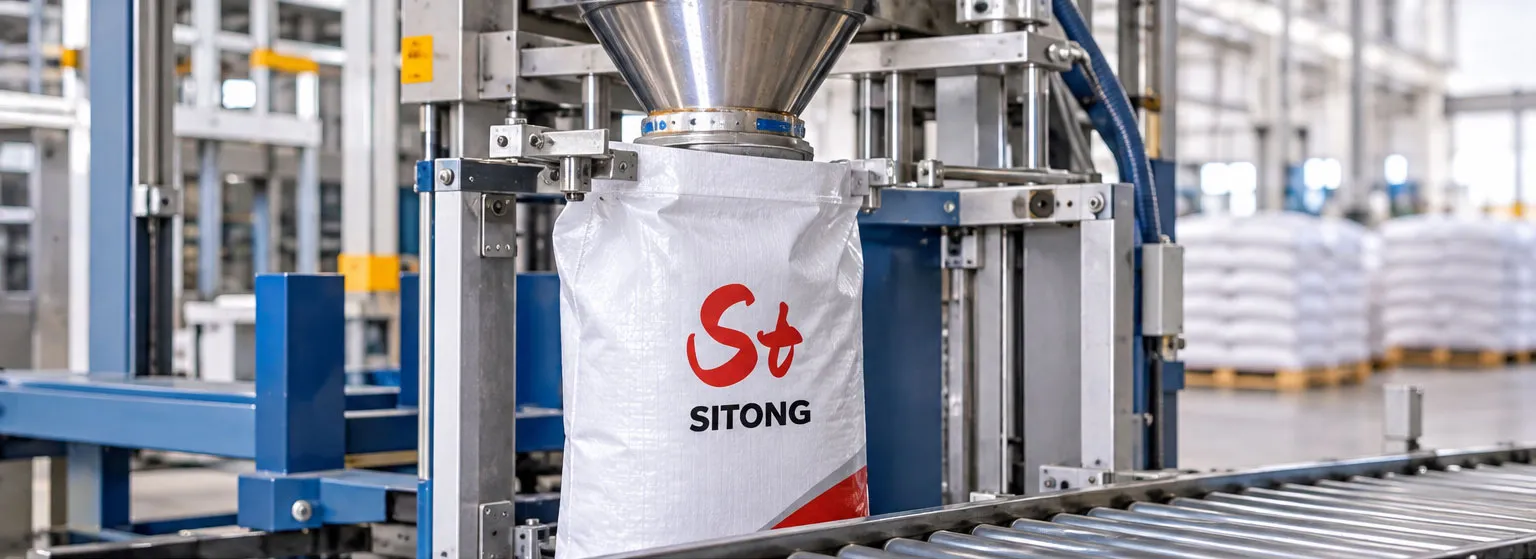
- Filling method — Open-mouth or valve bags should match the available filling line.
- Handling and pallet — Confirm bag dimensions and stack stability with the pallet and warehouse setup.
- Compliance and transport requirements — Check the product’s composition and applicable transport classification. If the material is regulated as dangerous goods, confirm the relevant packaging, marking and labelling requirements for the destination and transport mode.
Sourcing and Manufacturer Considerations
When sourcing mineral PP woven sacks, buyers should evaluate more than the quoted unit price. Fabric weight consistency, tape quality, coating uniformity, bag dimensions and sewing quality all affect performance during filling, stacking and transportation. It is also worth checking whether the supplier can maintain the same specifications across repeat orders.
SITONG PACKAGING has manufacturing facilities in Haicheng, Liaoning, China, and Cambodia. With around 20 production lines and an annual production capacity of approximately 30,000 tonnes, its manufacturing operations cover PP tape extrusion, weaving, coating, printing, cutting and sewing. This integrated production setup supports different bag constructions and OEM specifications for industrial and mineral packaging applications. Buyers can review our PP woven bag manufacturing capabilities and OEM & Custom packaging services for more information.
Sourcing the Right PP Woven Bags for Mineral Products
The right PP woven bag construction depends on more than filling weight. Particle size, abrasiveness, outdoor exposure, moisture sensitivity and handling equipment all influence the specifications required for mineral packaging.
For a quotation from SITONG PACKAGING, provide your mineral product type, particle size, filling weight, bag dimensions, preferred fabric specifications, coating or liner requirements, expected storage conditions and order quantity. Our team can review these details and discuss suitable PP woven sack constructions for your application.
Explore our mining PP woven bags or OEM & Custom services to discuss your packaging requirements.
Frequently Asked Questions
There is no single GSM suitable for all mineral products. The required fabric weight depends on filling weight, particle shape, abrasiveness, bag dimensions and handling conditions. Buyers should confirm the specification against the actual application rather than choosing GSM by filling weight alone.
There is no single GSM suitable for all mineral products. The required fabric weight depends on filling weight, particle shape, abrasiveness, bag dimensions and handling conditions. Buyers should confirm the specification against the actual application rather than choosing GSM by filling weight alone.
UV stabilization is recommended when filled bags are expected to remain outdoors under direct sunlight. The required formulation depends on exposure duration, destination climate and storage conditions. Buyers should specify these details when requesting a quotation.
PP coating is generally suitable when the main requirements are reduced sifting and additional surface protection. BOPP lamination is an option when moisture resistance and printed graphics are also important. A PE liner can provide an additional inner barrier for moisture-sensitive products.
Yes, provided the fabric weight, tape properties, bag dimensions and seam construction are suitable for the material and filling conditions. For very heavy or bulk quantities, FIBC bags may be more practical depending on the handling equipment.
Not automatically. Food-contact suitability depends on the complete packaging construction, raw materials and applicable destination-market requirements. Industrial mineral sacks should not be assumed to meet food-contact standards unless the relevant compliance requirements have been verified.
Provide the mineral type, particle size, filling weight, bag dimensions, fabric GSM, tape denier if specified, coating or liner requirements, printing artwork, expected storage conditions and order quantity. Information about filling equipment and pallet configuration also helps determine a suitable bag construction.