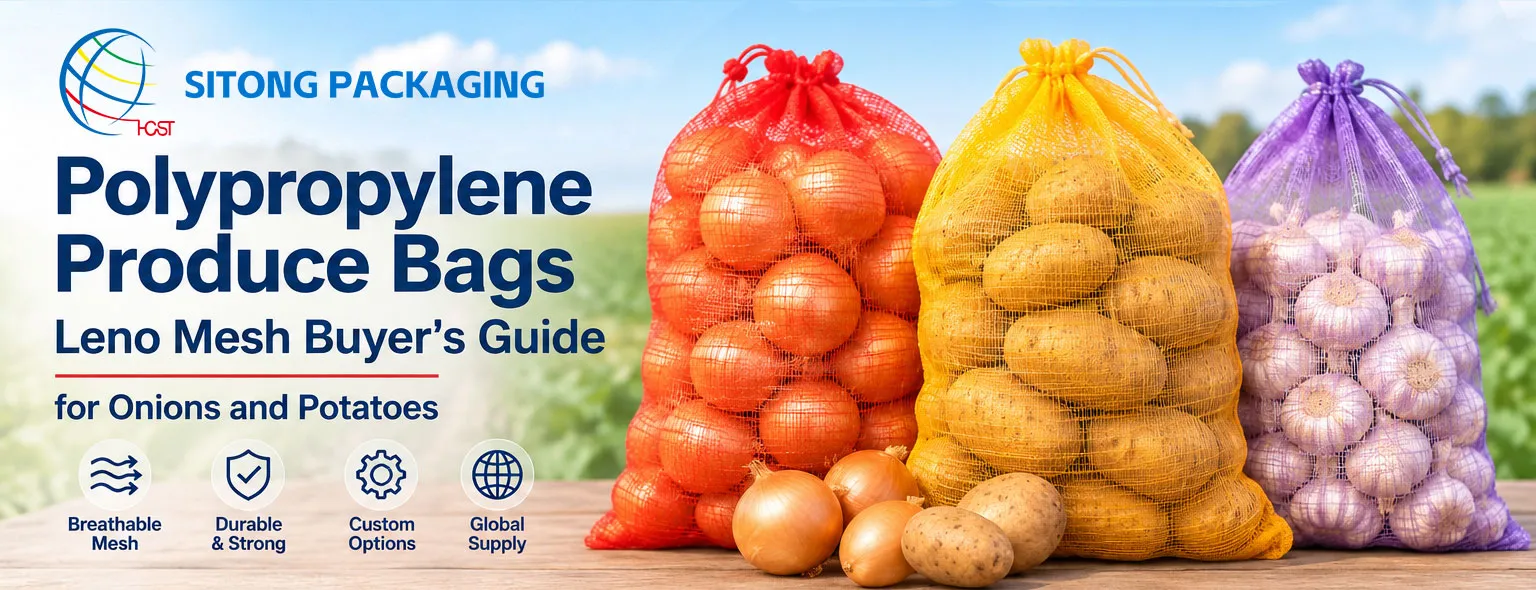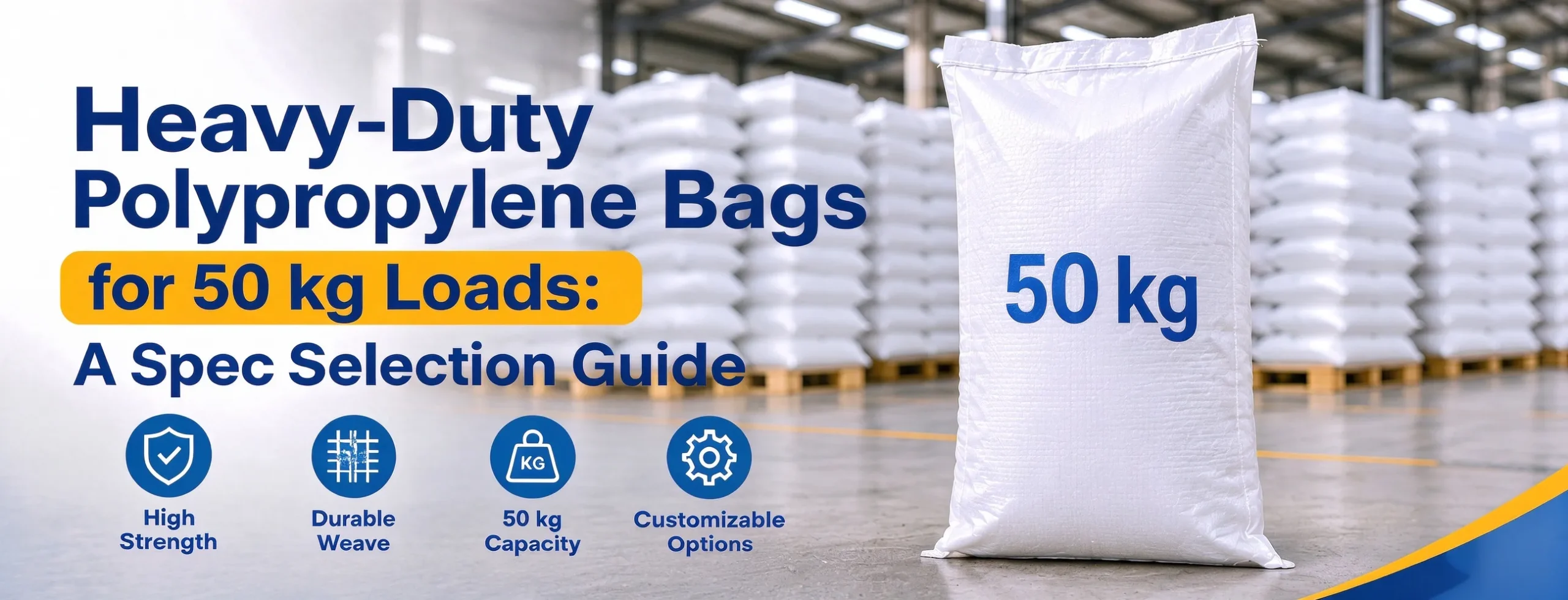

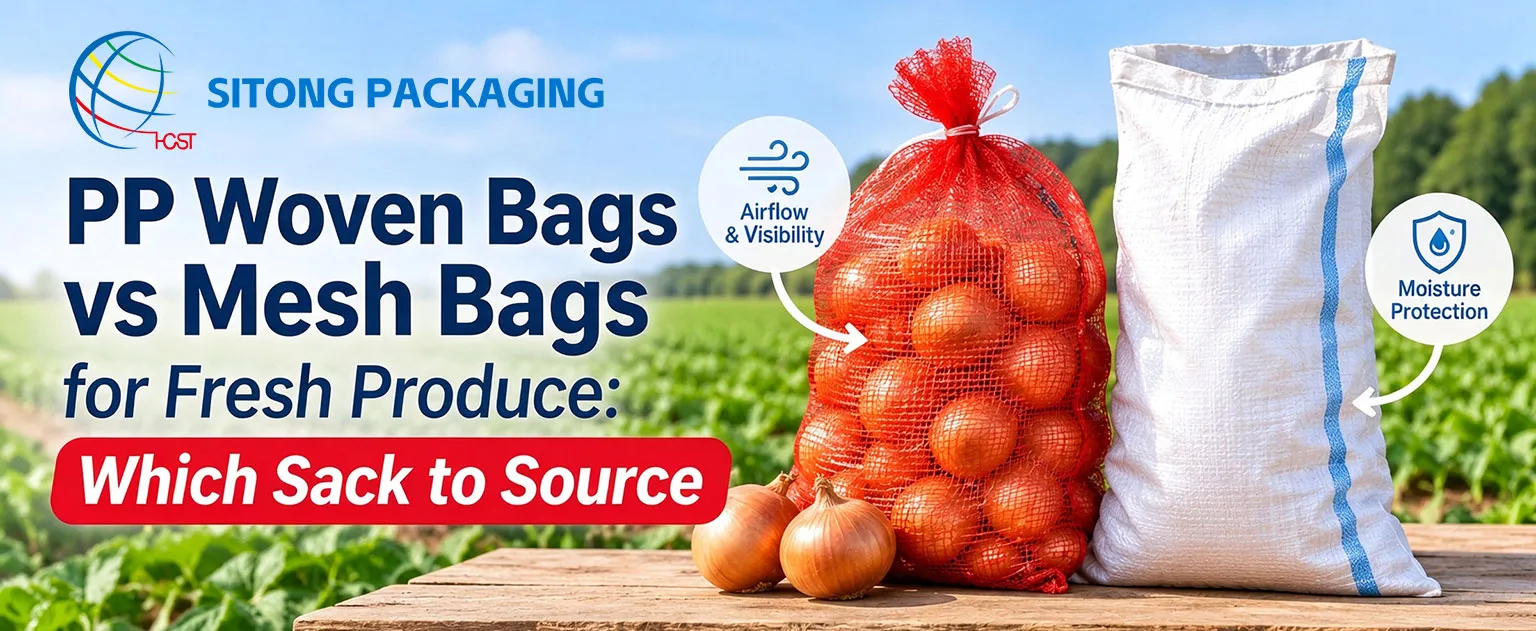
Choosing between PP woven bags vs mesh bags for fresh produce depends largely on the crop’s ventilation and moisture-control requirements. Leno mesh bags allow air to circulate around produce and make the contents visible, making them a common choice for onions, potatoes and other root vegetables. PP woven bags provide a denser packaging structure, with optional coating, lamination or inner liners to improve moisture resistance and support different stacking and branding requirements. For exporters handling multiple agricultural products, the right choice depends on the crop, storage conditions, transport route and destination market. This guide compares the two bag types from a practical sourcing perspective.
A leno mesh bag uses an open polypropylene weave that allows air to circulate and makes the contents visible. A standard PP woven bag has a denser construction designed for product containment, handling and a range of packaging applications. Depending on the application, it can also be supplied with a coating, laminated surface or inner liner for additional moisture resistance and printing options. Neither construction suits every crop; the choice depends on product characteristics and handling conditions.
PP Woven vs Mesh Bags at a Glance
| Decision factor | Leno mesh bag | PP woven bag |
|---|---|---|
| Airflow | High; open weave allows air circulation | Limited; denser construction restricts airflow |
| Moisture protection | Little protection against external moisture | Depends on construction; coating, lamination or liners can improve moisture resistance |
| Product visibility | Contents visible through the mesh | Generally opaque unless a window is added |
| Stacking | Filled bags tend to form rounded profiles | Can maintain a more regular shape, depending on bag design and filling |
| Printing | Suitable for simple branding and identification | Supports flexographic printing; laminated versions offer enhanced graphics |
| Typical applications | Onions, potatoes, garlic and selected root vegetables | Rice, grain, flour, feed, fertiliser and other dry bulk products |
Key takeaway: treat ventilation and moisture protection as two ends of the same decision. A crop that respires heavily needs air; a hygroscopic or long-transit cargo may need a barrier. Bag selection alone cannot prevent condensation or spoilage—product condition, pre-cooling, packing density and transit conditions also matter.
Airflow and Moisture: The Core Difference
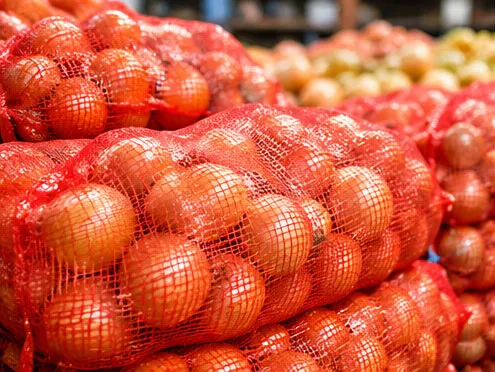
Fresh produce such as onions and potatoes continues to respire after harvest, releasing heat and moisture. The open structure of a leno mesh bag allows air to circulate around the packed produce, which can help reduce moisture accumulation when storage and transport conditions are suitable. This makes mesh packaging a practical option for crops that require ventilation. However, bag selection alone cannot prevent condensation or spoilage. Product condition, pre-cooling, packing density, container ventilation and transit temperature also influence the final result.
Dry products have different packaging requirements. Rice, grain, flour, feed and fertiliser generally need better protection against external moisture and product loss. PP woven bags can be supplied with coatings, laminated surfaces or inner liners according to the cargo and transport conditions. The appropriate construction should be selected based on the product’s moisture sensitivity and the expected storage and shipping environment.
Visibility, Handling and Market Expectations
In wholesale produce markets, buyers often want to inspect product size, colour and condition without opening every bag. The open structure of a mesh bag makes this possible and allows the contents to remain visible during handling and display. Depending on the bag design, coloured bands, labels or simple printed markings can also identify the product grade, origin or supplier.
PP woven bags offer a different presentation advantage. Their denser surface provides more space for product information, branding and identification. Laminated PP woven bags are particularly suitable for applications requiring more detailed graphics, barcodes and batch information. The printing method and available design options depend on the bag construction and production process.
Stacking, Container Loading and Freight
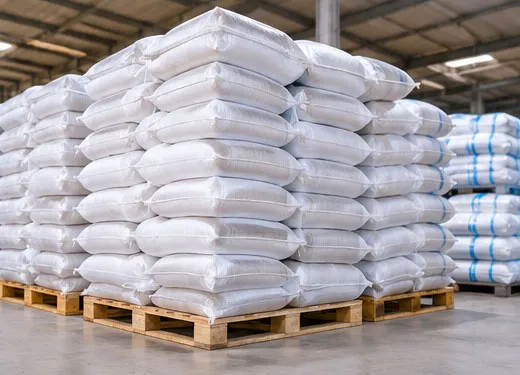
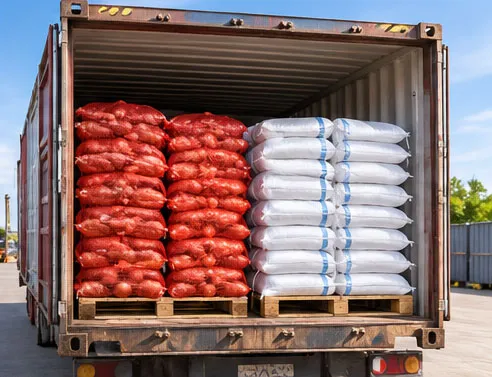
Filled mesh bags often develop a rounded shape, while PP woven bags can be designed with a flatter or more regular profile. This may influence pallet arrangement and stacking efficiency, particularly when bags are loaded in multiple layers. However, actual stability depends on bag dimensions, filling weight, product characteristics and pallet configuration rather than material type alone.
Neither bag type is automatically cheaper to transport. Mesh bags may have a lower empty-bag weight, but the final shipping efficiency depends on the filled dimensions and number of bags loaded per pallet or container. Before placing a bulk order, compare filled samples, pallet patterns, container loading plans and the required handling conditions. Suppliers should also be able to provide relevant specifications for finished dimensions, bag weight and seam strength.
Cost, Spoilage and Total Cost of Ownership
The purchase price per bag is only one part of the total packaging cost. Mesh and PP woven bags have different material requirements, production processes and optional features, so their unit prices depend on specifications and order quantities. More importantly, the packaging must match the cargo. Using an open mesh bag for a moisture-sensitive product may expose it to unsuitable storage conditions, while choosing an unnecessarily restrictive package for a crop that requires ventilation may create other handling problems. Compare quotations alongside product protection requirements, expected losses, packing efficiency and transportation costs to assess the overall cost.
For buyers sourcing PP woven packaging for agricultural products, working directly with a PP woven bag manufacturer can make it easier to confirm bag dimensions, GSM, printing, coating and liner requirements. SITONG supplies customized PP woven packaging for different agricultural and industrial applications, with specifications developed according to the product, filling process and shipping requirements. Ask suppliers for a filled sample of each construction with your actual product and run a short transit trial before committing to a bulk order.
Specifications to Confirm Before Ordering
Before requesting a quotation, buyers should prepare the basic specifications for each bag type. This helps suppliers recommend a suitable construction and provide comparable quotations.
| Specification | Leno mesh bags | PP woven bags |
|---|---|---|
| Bag dimensions | Width, length and capacity | Width, length and gusset dimensions |
| Material weight | Fabric weight or GSM | Fabric GSM and total bag weight |
| Construction | Mesh pattern and opening structure | Weave density and fabric construction |
| Closure | Drawstring, sewn top or other closure | Hemmed top, sewn bottom or specified closure |
| Printing | Colour bands, labels or simple markings | Flexographic printing or laminated graphics |
| Additional features | UV treatment, handles or custom colours | Coating, lamination, inner liner or handles |
| Packing | Bundle quantity and bale configuration | Bundle quantity, bale or pallet configuration |
Also confirm the target filling weight, product type, order quantity, destination market and expected delivery schedule. These details allow suppliers to assess the construction and production requirements before quoting. For custom PP woven bag specifications, discuss the required dimensions, printing and liner options with the supplier.
Which Bag for Which Crop
- Onions and potatoes: leno mesh bags are commonly used when ventilation and product visibility are important.
- Garlic and selected root vegetables: mesh bags can suit products that need air circulation and visual inspection, subject to market and handling requirements.
- Rice, grain and seeds: PP woven bags are suitable for bulk and retail packaging, with optional coating or liners depending on moisture-control requirements.
- Flour, sugar and animal feed: PP woven bags with suitable fabric construction, coating or inner liners can be selected according to particle containment and moisture-control requirements.
- Fertiliser: coated or lined PP woven bags are commonly selected for products requiring better moisture protection.
- Mixed agricultural export programmes: buyers can evaluate both mesh and PP woven constructions according to each crop’s packaging, storage and shipping requirements.
For a deeper specification of mesh grades, fill formats and UV options, see the companion guide to leno polypropylene produce bags for onions and potatoes. For the wider range of constructions, weights and print options available in the sealed format, review PP woven bags.
Decide by Crop, Then Compare Bags
Choosing between PP woven bags vs mesh bags requires more than comparing material or unit price. Buyers should first identify the crop’s ventilation requirements, moisture sensitivity, filling weight and distribution conditions. They can then compare bag dimensions, material weight, construction, printing options and filled-bag performance.
For agricultural exporters handling different product categories, a combination of mesh and PP woven packaging may be the most practical approach. Confirming specifications with filled samples and evaluating the intended pallet and transport conditions before mass production can help reduce packaging mismatches and improve purchasing decisions.
Looking for PP Woven Bags for Your Agricultural Products? SITONG provides customized PP woven packaging for agricultural, food and industrial applications. When comparing PP woven bags vs mesh bags for your products, share your required bag dimensions, GSM, printing design, filling weight and order quantity with our team to discuss suitable specifications and request a quotation. Contact SITONG for your PP woven bag requirements.
Frequently Asked Questions
Mesh bags are generally unsuitable for grain, flour or fertiliser when moisture protection and fine-particle containment are required. PP woven bags with an appropriate coating, lamination or inner liner are usually a better option. The final construction depends on the product’s particle size, moisture sensitivity and storage conditions.
Not necessarily. The price depends on bag dimensions, material weight, construction, printing and order quantity. Compare quotations based on equivalent specifications and consider product protection, packing efficiency and transportation costs rather than unit price alone.
PP woven bags can offer a more regular stacking profile, particularly when designed with suitable dimensions and gussets. Filled mesh bags tend to develop a rounded shape. However, stacking stability depends on filling weight, product characteristics, bag design and pallet arrangement. A filled sample or loading trial provides a more reliable comparison.
Standard PP woven bags are not inherently waterproof. Their woven structure can allow moisture to pass through. Coating, lamination or an inner liner can improve moisture resistance, but the level of protection depends on the construction, seams and closure. Buyers should confirm the required protection level based on storage and transport conditions.
Both can be marked, but the methods differ. Mesh is usually limited to coloured bands and simple in-line marks, while laminated woven PP supports full-colour graphics, barcodes and batch codes.
Evaluate each crop according to its ventilation and moisture-control requirements. When sourcing both formats, confirm that the supplier can provide the required construction specifications, quality documentation and consistent delivery arrangements for each product. Comparing PP woven bags vs mesh bags crop by crop keeps the bag construction matched to the cargo.