


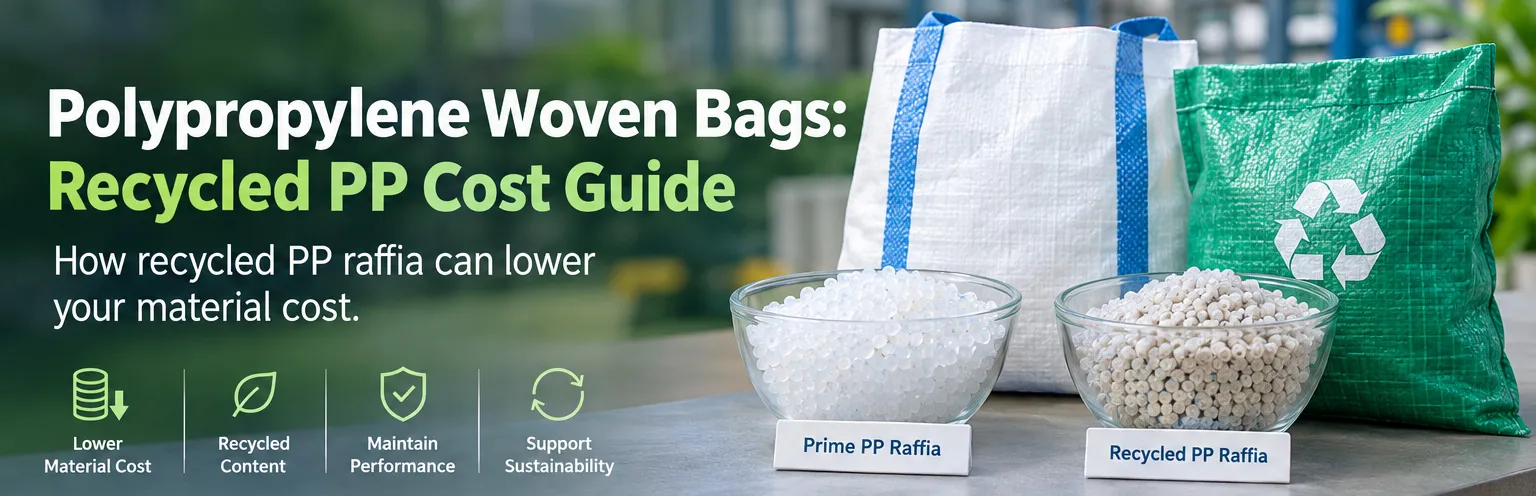
Recycled PP woven bags are highly sensitive to virgin-resin cost, because the recycled share in the tape sets how much prime PP a batch consumes. For conventional polypropylene woven bags, even a small change in tape-grade PP moves the finished bag price. As an India market reference, Polymerupdate data reported recycled natural PP raffia at about Rs.102/kg versus Rs.142/kg for prime raffia on 3 September 2026, a difference of roughly 28%. This comparison is a market snapshot rather than a universal price benchmark, because recycled PP pricing varies by grade, colour, source, quality and local trading conditions. For converters, the potential cost benefit depends on how much recycled PP is incorporated into the tape blend and whether the resulting material meets the finished bag specification.
Prime vs Recycled PP Raffia: The Price Gap
| Grade | Price (India, 3 Sep 2026) | Notes |
|---|---|---|
| Prime PP raffia | Rs.142/kg | Tracks naphtha and virgin resin |
| Recycled natural PP raffia | Rs.102/kg | Tracks reclamation and processing cost |
| Spread | ~Rs.40/kg (~28%) | Raw-material price difference; actual saving depends on blend ratio |
Key takeaway: a large price gap between prime and recycled PP can create meaningful raw-material savings when a qualified recycled-content blend is used. The actual saving depends on the recycled percentage, material grade, processing requirements and finished bag specification, so the market price spread should not be treated as a direct 28% reduction in finished woven bag cost.
In practical terms, recycled PP can lower the material cost of polypropylene woven bags when it replaces part of the prime resin without taking the finished bag outside its required performance specification. The potential saving is determined by the recycled-content percentage and the price difference between the two grades, while processing, yield, testing and quality requirements can also affect the final cost.
A simple illustration shows why the recycled-content percentage matters. If prime PP raffia is Rs.142/kg and recycled PP raffia is Rs.102/kg, the price difference is Rs.40/kg. If a qualified blend replaces 20% of prime PP with recycled PP, the theoretical raw-material price effect would be about Rs.8/kg before processing, yield, testing and other cost differences. The actual saving therefore depends on the blend ratio and the complete production cost rather than the resin price gap alone.
Why Recycled PP Pricing Can Differ from Virgin PP
Virgin raffia-grade PP is closely linked to propylene and broader petrochemical markets, while recycled PP pricing also reflects collection, sorting, washing, compounding and reprocessing costs. These different cost drivers can create a meaningful price gap between prime and recycled material, although the two markets are not completely independent. For woven bag converters, this difference can make a qualified recycled-content blend worth evaluating when raw-material cost is a major purchasing consideration.
Where rPP Fits in Woven Bag Production
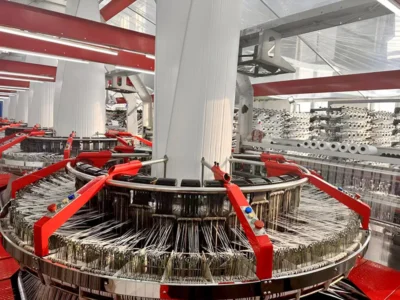
Recycled PP is typically introduced during tape extrusion, but the acceptable percentage depends on resin quality and the required bag performance. Reclaimed PP is compounded, extruded into flat tape, stretched and then woven into fabric on circular looms. The workable recycled percentage depends on the recycled resin grade, contamination level, melt flow, colour requirements, drawing conditions and the performance target of the finished bag. For that reason, there is no single recycled-content percentage that fits every polypropylene woven bag. A supplier should validate the blend against the required GSM, tensile strength, appearance and end-use specification before production. The finished fabric forms a woven polypropylene structure, and the properties of the PP tape directly influence the bag’s strength, appearance, flexibility and handling performance.
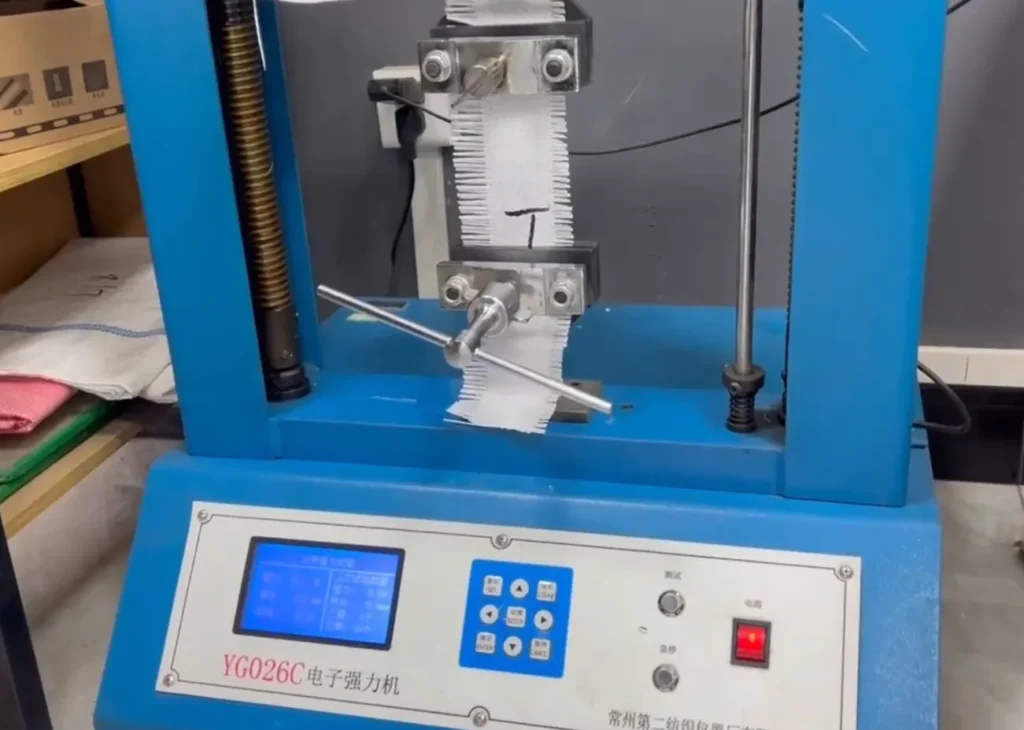
A recycled-content claim alone does not define how a PP woven bag will perform. The target percentage, material grade, colour stability and strength retention should be confirmed through agreed test methods and SKU-level acceptance criteria.
Recycled Content vs. Mono-Material Design
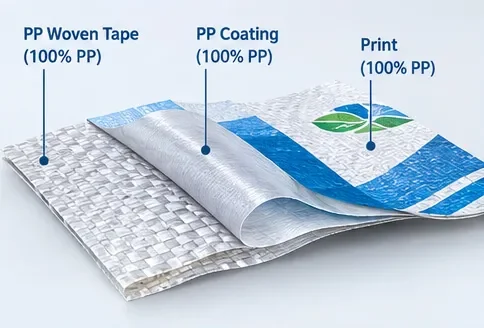
Recycled content and recyclability are related but separate considerations. Recycled PP can reduce the use of virgin polymer, while a mono-material PP structure can make a woven bag easier to sort and recycle where suitable recycling infrastructure exists. A bag made from PP tape with compatible PP coating and printing components may be better aligned with a mono-material design approach than a structure that combines multiple incompatible polymers. Buyers should therefore specify recycled content and end-of-life design separately rather than treating one as proof of the other.
Buyer Checklist for Recycled PP Woven Bags
- Recycled-content target: specify the target percentage and allowable tolerance, and state how the percentage will be documented for each production lot.
- Material consistency: check melt flow, colour, contamination control and relevant physical properties from lot to lot because recycled feedstock can vary more than prime resin.
- Food-contact requirements: do not assume recycled PP is suitable for food-contact packaging. Confirm the applicable regulation, material grade, migration requirements and supporting documentation for the destination market.
- Bag performance: define GSM, dimensions, tensile strength, seam strength, burst performance and other acceptance criteria according to the intended application.
- Production qualification: request trial-run data before approving a new recycled-content blend for regular production.
- Documentation: agree on the certificate of analysis, recycled-content evidence, inspection records and lot traceability required with each shipment.
Before You Switch: What Changes on the Line
Running recycled PP in polypropylene woven bags is not always a drop-in replacement for prime resin. Melt flow, contamination, colour variation and additive content can affect extrusion stability, draw ratio, tape strength, surface appearance and print performance. A short qualification run can help confirm the correct blend and processing window before full-scale production. Buyers should ask the supplier for test data covering GSM, tensile strength, tape quality, colour consistency and other SKU-specific requirements rather than assuming recycled and prime grades will process identically.
Sourcing Polypropylene Woven Bags with Recycled Content
Buyers sourcing a recycled PP woven bag should specify the recycled-content target together with the required bag strength, GSM, dimensions, printing and end-use conditions. The guide to recyclable mono-material PP woven bags covers the design side, while a qualified PP woven bags manufacturer can quote a defined recycled-content grade with batch documentation. Importers and brand owners can also include the PCR target, tolerance and acceptance limits in a custom OEM PP woven bag program. For importers sourcing woven polypropylene bags, the recycled-content specification should be agreed before quotation so the supplier can calculate material usage, production requirements, testing needs and quality acceptance criteria accurately.
Frequently Asked Questions
As an India market reference, Polymerupdate reported recycled natural PP raffia at about Rs.102/kg versus Rs.142/kg for prime raffia on 3 September 2026, a difference of roughly 28%. This is a market snapshot, not a guaranteed saving for every recycled PP grade, blend or woven bag order.
Yes. Qualified recycled PP can be compounded and extruded into flat tape for woven bag production. However, the processing window may differ from prime resin because melt flow, contamination, colour and additive content can affect extrusion, drawing and tape strength. The workable recycled percentage should therefore be validated against the specific bag specification.
It can if unmanaged. Tensile and burst retention depend on the blend, the draw ratio and the masterbatch. Buyers should accept strength per SKU method and request lot data instead of trusting a recycled label.
Not automatically. Recyclability depends on the complete bag structure and the recycling infrastructure available in the target market. A bag designed with compatible PP-based components may be better aligned with mono-material recycling than a structure that combines incompatible materials, but recycled content alone does not prove recyclability.
There is no universal recycled-content percentage for all polypropylene woven bags. The workable level depends on resin quality, melt flow, colour, contamination control, extrusion conditions and the performance requirements of the finished bag. A qualified supplier should validate the target blend against the specific bag specification before production.
Recycled content may support applicable recycled-content requirements, but using recycled PP does not by itself make a polypropylene woven bag compliant with the EU Packaging and Packaging Waste Regulation (PPWR). Requirements depend on the packaging format, applicable recycled-content rules, calculation method and implementation timeline. Buyers should verify the current requirements for the destination market and retain documentation supporting the specified recycled content.
A qualified recycled-content blend can reduce resin cost while maintaining the agreed bag specification, but the saving is not guaranteed for every grade or production run. Buyers should compare the blend price with processing, yield, testing and quality-control costs, then verify tensile strength, GSM and other agreed performance criteria before regular production.
Ask for the PCR percentage on the certificate of analysis, lot-to-lot consistency data, and the accepted strength method. A reputable supplier provides these; a vague “eco” claim without documentation should be treated as unproven.
The saving depends mainly on the recycled-content percentage and the price difference between recycled and prime PP. For example, with a Rs.40/kg raw-material price gap, replacing 20% of prime PP with recycled PP creates a theoretical resin-cost effect of about Rs.8/kg before processing, yield, testing and other production costs. The finished bag saving will therefore be lower or higher depending on the blend and the complete production cost.
Conclusion
Recycled PP woven bags can gain a meaningful raw-material cost advantage when recycled PP is correctly specified and qualified. The early September 2026 India market snapshot shows a substantial price difference between recycled natural PP raffia and prime raffia, but the actual saving depends on the recycled-content percentage, material grade, processing requirements and finished bag specification. For buyers, the better approach is to combine a defined recycled-content target with batch documentation, production qualification and clear performance requirements.