




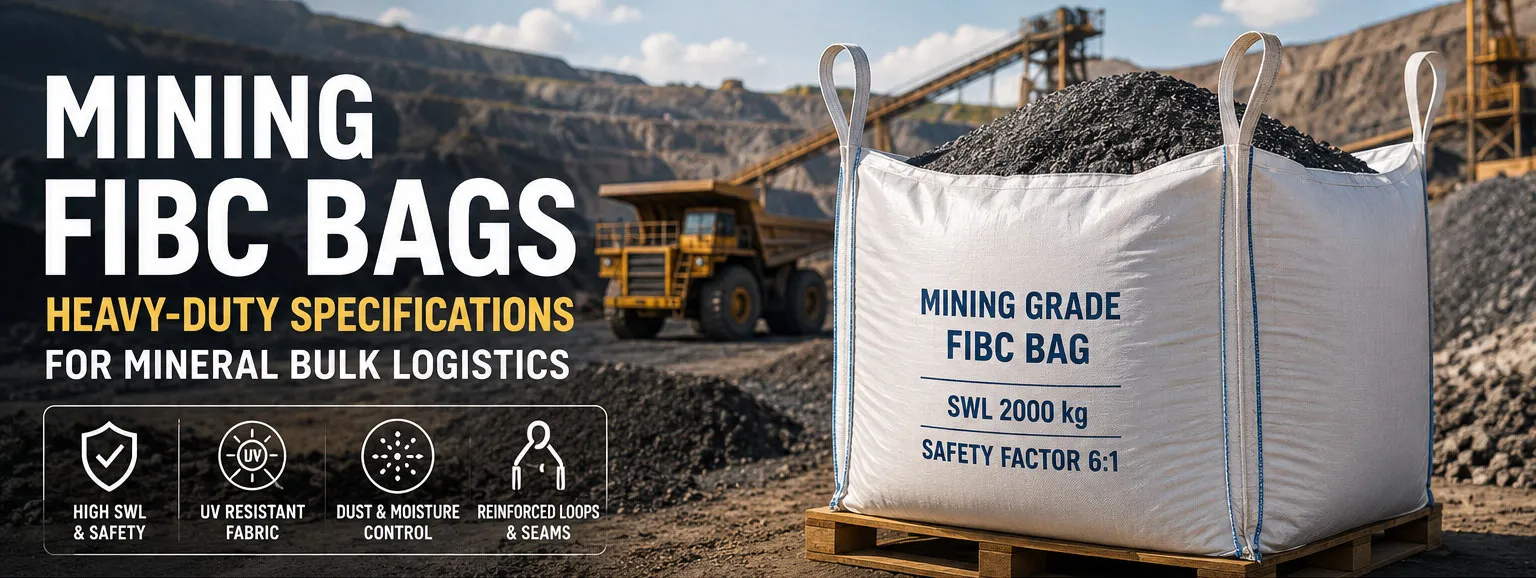
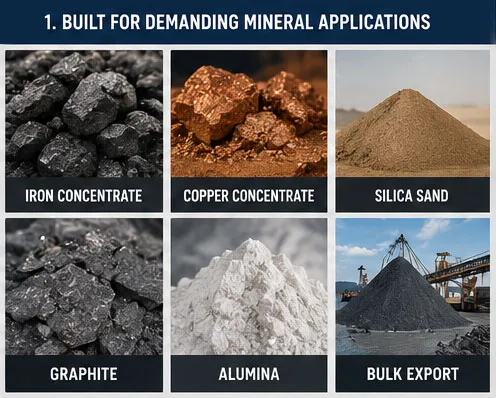
Mining FIBC bags are heavy-duty flexible intermediate bulk containers designed for demanding mineral-handling applications such as iron concentrate, silica sand, graphite, alumina and copper concentrate. Compared with general-purpose bulk bags, a mining-grade FIBC typically requires a clearly declared safe working load (SWL), an application-specific safety factor, reinforced fabric and lifting construction, plus suitable UV protection, liner and discharge options. The correct specification depends on the mineral, bulk density, particle characteristics, storage environment and filling and discharge method.
Mining FIBC bags are heavy-duty flexible bulk containers designed for the handling, storage and transport of dense or abrasive mineral materials. A mining-grade bag is specified by its declared safe working load (SWL), applicable safety factor, fabric and seam construction, lifting-loop design, UV resistance, liner requirements and filling or discharge configuration. Buyers should qualify these requirements against the exact SKU and application, using documented test results where applicable, rather than selecting a bag by capacity alone.
Why Mining Is a Demanding FIBC Application
Three conditions make mining and mineral bulk handling particularly demanding for FIBC bags:
- Weight and abrasion. Dense ores at heavy loads stress fabric, seams and loops; sharp granular material abrades surfaces.
- Outdoor storage. Mines and ports stack bags in sun and weather, demanding UV resistance to avoid embrittlement.
- Leakage control. Fine concentrates and powders sift and dust; liners and tight weaves prevent loss and contamination.
The Core Specifications
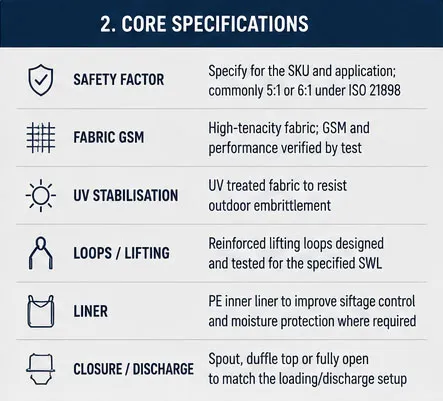
| Specification | What mining demands |
|---|---|
| Safety factor | Specify the safety factor for the SKU and application; designs may use 5:1 or 6:1 under ISO 21898, verified by documented test results |
| Fabric GSM | High-tenacity tape; specify the GSM and SKU acceptance, with tensile/burst verified by the agreed test method |
| UV stabilisation | Resists outdoor embrittlement over storage life |
| Loops / lifting | Reinforced, often cross-corner or four-loop, designed and tested for the specified SWL |
| Liner | PE inner liner to improve siftage control and, where specified, provide moisture protection; select liner construction for the product and required barrier performance |
| Closure / discharge | Spout, duffle or fully open per loading/discharge setup |
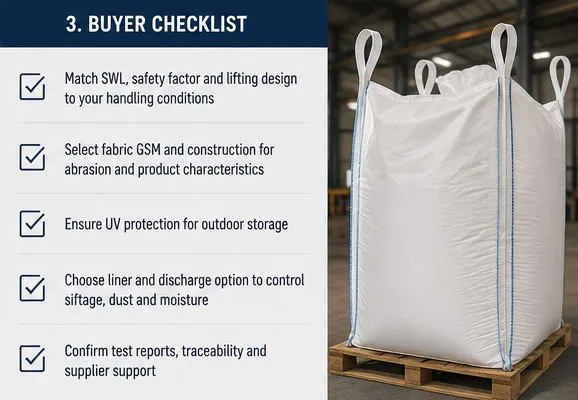
Key Takeaway: Match SWL, lifting construction, fabric performance, UV exposure, liner and discharge configuration to the SKU and application, and require documented test results for the exact bag.
Buyers should request test certification for the declared safety factor — a bag misrated for its declared load is a serious hazard.
Mining FIBC bags performance is determined across the manufacturing chain, from PP resin and tape extrusion to circular-loom weaving, fabric conversion, sewing and lifting-loop construction. For buyers, the important point is that tape quality, fabric construction, seams and lifting components should be controlled against the declared requirements of the exact SKU rather than evaluated only by the finished bag’s appearance.
How Mineral Demand Affects FIBC Procurement
Higher copper and lithium demand can increase bulk-logistics requirements in applicable mineral supply chains, and FIBC can be used for applicable copper-concentrate bulk-logistics applications — a procurement signal for mining-grade bag specs. The adjacent mining-explosives market is projected near US$14.9 billion in 2026 (Accio, citing Market Research Future), a separate indicator rather than direct FIBC-demand evidence.
Mining FIBC Bags Applications, Hazardous Goods and Compliance Boundaries
Two distinctions buyers must respect:
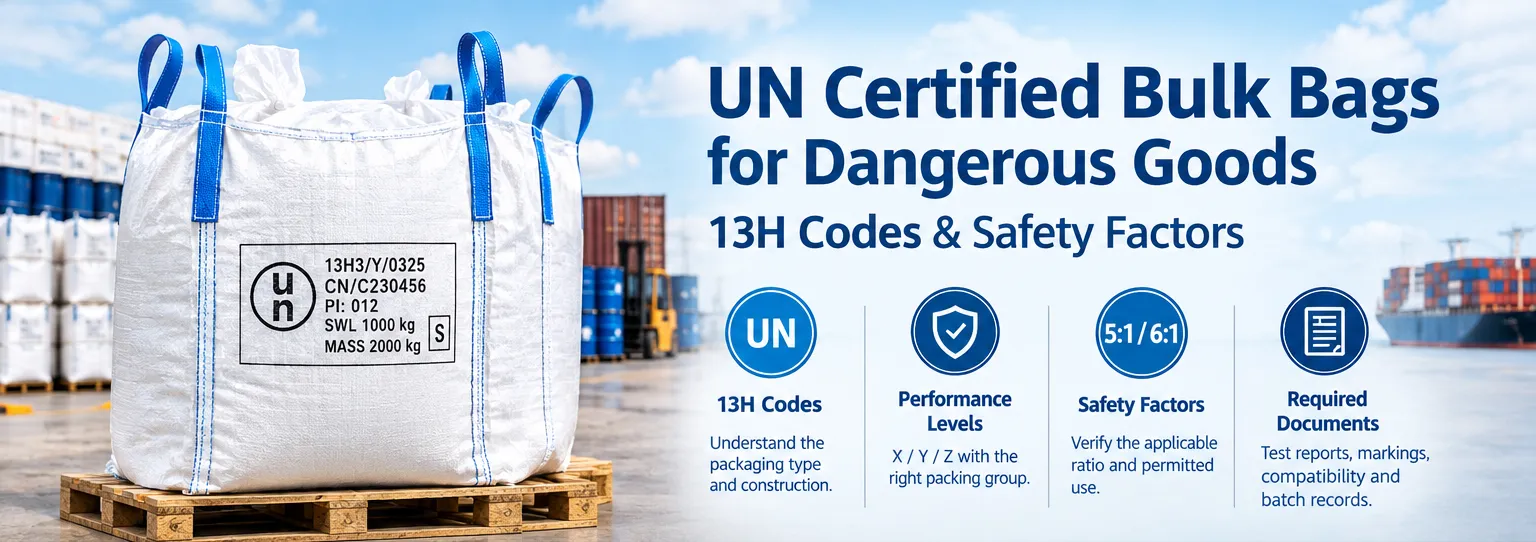
- Mineral bulk vs hazardous goods. Many mineral products are transported as non-dangerous dry bulk, but classification depends on the specific material and applicable transport/regulatory requirements; FIBC for them need strength and liner specs, not UN certification. FIBC used for applicable dangerous goods may require UN-tested packaging meeting the relevant transport requirements; buyers should confirm the exact packaging instruction for the classified product.
- Traceability. Where traceability is required, buyers can specify batch coding and other identification features for quality control and chain-of-custody procedures.
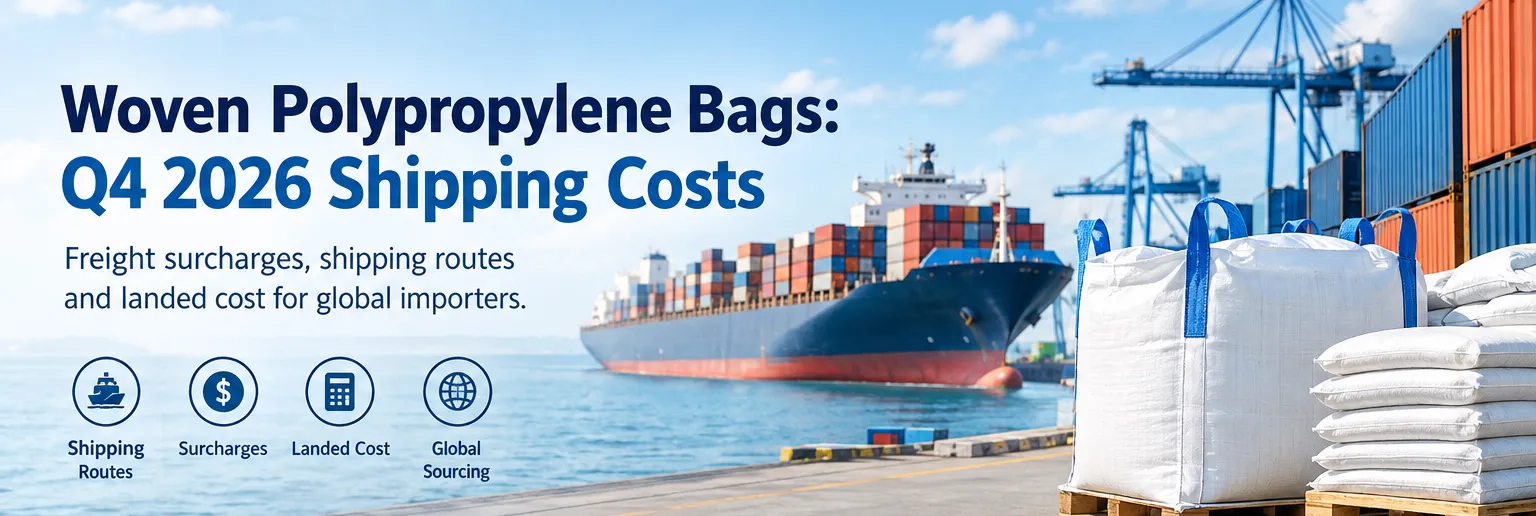
Mining logistics also depends on ocean freight, which is constrained by both container volume and payload weight — bag weight reduction does not automatically lower freight, so optimise construction against the packed product, palletisation and container plan.
Choosing a Mining-Grade FIBC Supplier
For a mining FIBC procurement program, buyers should evaluate the bag construction, electrostatic classification where relevant, applicable HS/HTS import classification, MOQ, production capacity and lead time. The supplier should also be able to document the declared SWL, safety factor, test method and acceptance results for the exact SKU:
- Confirm the chain: declared SWL → applicable safety factor → named test method → exact SKU → acceptance result and documentation, against the applicable ISO 21898 requirements where the standard applies.
- Heavy-duty fabric with UV masterbatch validated for outdoor life; specify GSM and SKU acceptance.
- Reinforced lifting loops designed and tested for the specified SWL and construction.
- PE liner options and tight weave for siftage control; select liner type by particle size, moisture sensitivity and filling/discharge method.
- OEM and custom options for spout type, printing and batch coding.
Before approving a supplier, compare MOQ, available production capacity and lead time with the forecast order volume and delivery schedule.
Key Takeaways
- Mineral ores are a significant share of global FIBC consumption, with building materials also a major application; Asia-Pacific is a leading mining-FIBC market.
- Specify the safety factor for the SKU and application; designs may use 5:1 or 6:1 under ISO 21898, verified by documented test results — not assumed from trip count.
- Specify GSM and SKU acceptance, with tensile/burst verified by the agreed test method; UV-stabilised tape, reinforced loops and PE liner address abrasion, outdoor life and siftage.
- Higher copper and lithium demand can increase bulk-logistics requirements in applicable mineral supply chains; specify the bag against those physical and logistics conditions rather than treating a separate market forecast as direct FIBC-demand evidence.
- Distinguish non-dangerous mineral bulk from applicable dangerous-goods FIBC, which may require UN-tested packaging meeting the relevant transport requirements.
For mining and mineral exporters, the right move is to specify mining FIBC bags — safety factor, GSM, UV, liner and loops validated against the SKU — and work with a supplier you can contact our FIBC team for documented testing, custom spout, print and traceability support.
Frequently Asked Questions
Yes. Mineral ores and building materials are significant FIBC applications, and Asia-Pacific is an important regional market for mining-related FIBC demand. A precise global percentage for mining-specific FIBC consumption is not established in this article.
Heavy-duty mining FIBC are built with reinforced fabric, seams and lifting loops for high safe-working loads. The carried load is set by the declared SWL for the exact SKU, confirmed by documented testing — some supplier-specific heavy-duty designs may be specified for safe working loads up to 2,000 kg, subject to SKU acceptance and the applicable test method. Buyers should specify the load against their product, not assume a fixed capacity.
There is no universal 5:1 or 6:1 requirement for every mining FIBC application. The required safety factor should be specified according to the bag design, handling conditions and applicable requirements, then verified through the relevant test method and documented acceptance results for the exact SKU. Buyers should not select a safety factor based on the number of lifting loops alone.
Mining bags are stored outdoors in sun and weather; UV-stabilised tape resists embrittlement that would otherwise cause splits and spills.
A liner is application-dependent. For fine concentrates and powders, a PE inner liner can improve siftage and dust-loss control and, where the liner construction is designed for it, provide additional moisture protection. The liner should be selected according to particle size, moisture sensitivity and the filling and discharge process.
Mining FIBC procurement is primarily influenced by the physical characteristics of mineral products and the logistics environment, including bulk density, abrasion, outdoor exposure, siftage control, filling and discharge requirements, and export handling. Changes in copper and lithium supply chains may also affect bulk-logistics requirements where these minerals are involved.
No. Many mineral products are transported as non-dangerous dry bulk, but classification depends on the specific material and applicable regulations; those needing strength and liner specs are distinct from FIBC used for applicable dangerous goods, which may require UN-tested packaging meeting the relevant transport requirements — buyers should confirm the exact packaging instruction for the classified product.
Yes — spout type, discharge style, printing and batch coding can be specified through OEM/custom programs for loadout and traceability.