





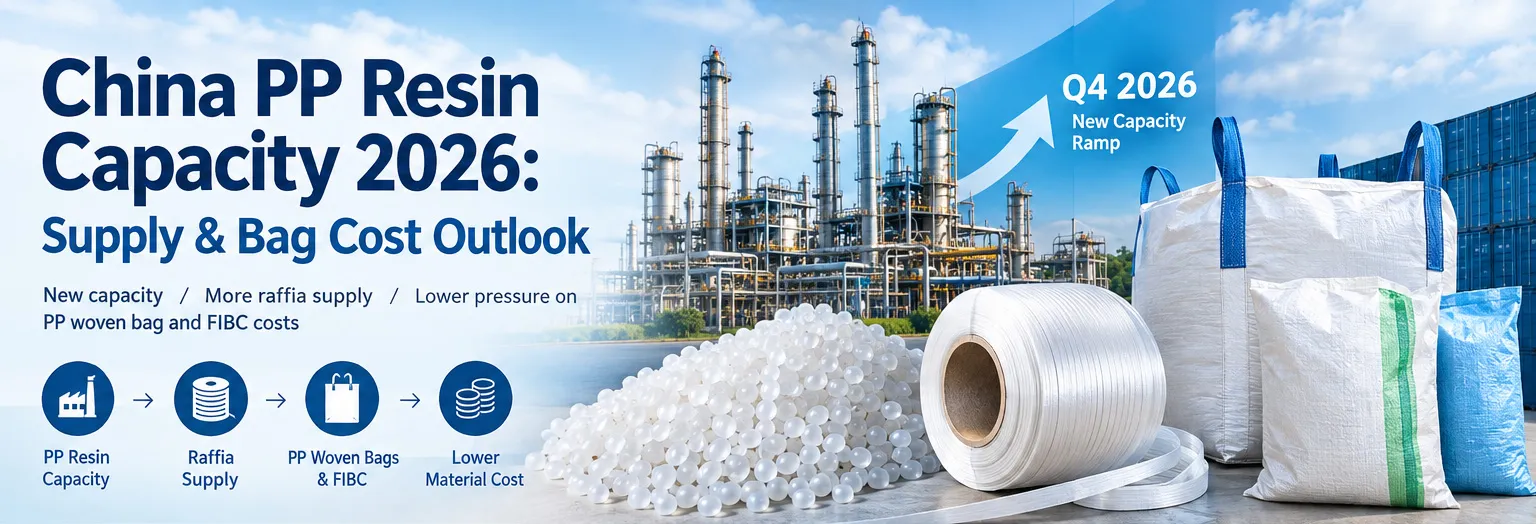
China PP resin capacity 2026 is set to expand by roughly 4.6 million tonnes per year, with most of the new lines concentrated in the fourth quarter. For converters of raffia, the flat tape used to weave PP woven bags and FIBC, that supply wave points to easier feedstock availability and softer cost into late 2026 and early 2027. This article maps the announced capacity additions, the expected raffia price path, and what buyers of woven bags and bulk containers should watch when timing orders.
Capacity Addition at a Glance
- Total new PP capacity (2026): an estimated 4–6 Mt/y per published capacity trackers, with the figure moving as maintenance and ramp schedules change
- Timing: First-half additions near zero plus maintenance; Q4 is the concentration window
- Feedstock effect: Raffia (PP woven grade) supply turns from tight to ample
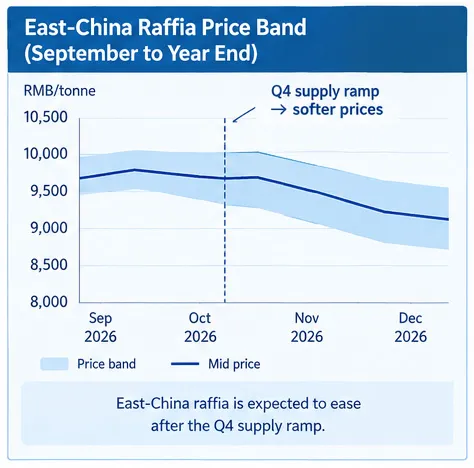
- Price path: East-China raffia around RMB 9,200 to 9,700/t in September, bias lower after October
- À retenir de l'acheteur : Late-2026 / early-2027 FOB pricing may reflect the easier resin environment
What Is Driving PP Resin Supply in 2026
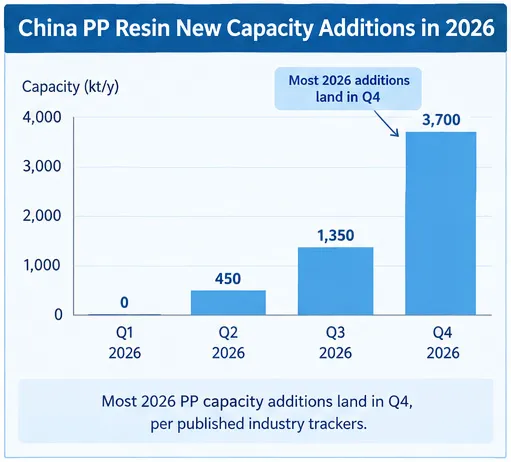
Public industry trackers place planned or expected 2026 PP additions in the roughly 4-6 Mt/y range, though estimates vary as schedules are revised. A 450 kt unit in Tarim came on line in July. September expectations included Lihuayi Weiyuan (200 kt), Zhongmei Yulin phase II (600 kt) and Zhongsha Gulei (950 kt). The Q4 cluster, Zhenhai, Baofeng phase IV, Dongming Shenghai and Huajin Aramco (about 1.0 Mt of oil-based capacity), adds further supply as units ramp. The first half saw near-zero net addition plus high maintenance linked to geopolitics, which kept spot tight; the September to December ramp plus a maintenance lull is likely to move the balance toward a more comfortable supply position.
New PP capacity does not lower bag cost on the day it starts up. The effect shows up after the unit ramps, displaces imports and eases the raffia spread buyers actually pay.
2026 China PP New-Capacity Map
| Producer / unit | Added capacity (kt/y) | Expected window |
|---|---|---|
| Tarim Petrochemical | 450 | Q2 (July online) |
| Lihuayi Weiyuan | 200 | September |
| Zhongmei Yulin phase II | 600 | September |
| Zhongsha Gulei | 950 | September |
| Zhenhai / Baofeng IV / Dongming Shenghai / Huajin Aramco | about 3,700 combined | Q4 ramp |
À retenir : The headline capacity figure is an industry estimate, not a single official number, and actual ramp speed varies by unit. Buyers should track effective operating rate, not nameplate, because a unit that starts up but runs below nameplate still leaves the market tighter than the headline suggests.
Raffia Feedstock Outlook
Raffia is the PP grade drawn into tape and then woven. With new capacity ramping, East-China raffia that traded around RMB 9,200 to 9,700 per tonne in September could lose upward bias after October if the supply ramp proceeds as expected. The near-term caveat is real: effective increment before Q4 is limited and spot can stay firm through September and October. The cost relief, if the ramp proceeds, arrives toward year end and into the first quarter of 2027.
Impact on Woven Bags, FIBC and Fabric
PP woven bags, FIBC and PP woven fabric are all raffia-intensive. A lower and more stable raffia price can improve converter margins and create room for more competitive FOB offers, though resin is only one part of the finished-bag cost. The effect on recycled-content bags is less straightforward: cheaper virgin PP changes the cost advantage of recycled material, but recycled PP pricing also depends on collection, sorting and processing costs. The flip side is that buyers who locked high resin-linked pricing earlier may see neighbours quoting lower later in the cycle.
Buyer Timing: When to Lock FOB
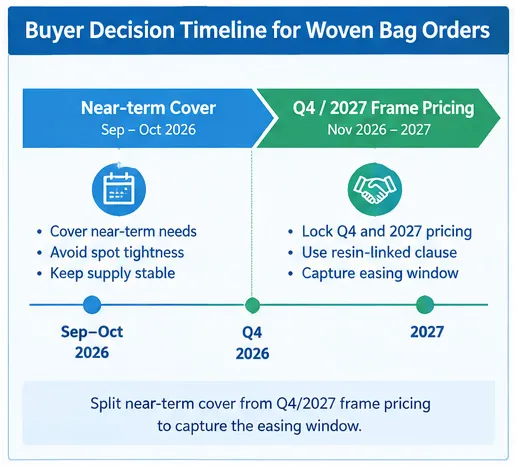
For importers, the practical question is whether to buy now or wait for the easier resin window. A reasonable approach is to split volume: cover near-term requirements (September to October) at current levels to avoid spot tightness, and open discussions on Q4 and 2027 frame pricing once the ramp is visible in operating rates. Buyers with long contracts can propose a resin-linked clause so the late-2026 easing passes through rather than staying with the supplier.
Risks to the Soft-Landing View
- Slow ramp: Units may start up later or run below nameplate, delaying the surplus.
- Logistics: Regional allocation and freight can offset a lower ex-works resin price.
- Crude swing: PP tracks crude and naphtha; a crude rebound rebuilds cost pressure.
- Demand: Strong downstream packaging demand can absorb new capacity faster than expected.
Sourcing Woven Bags Amid Easing Resin
Buyers planning PP woven bag or FIBC programs should watch the raffia spread and ask suppliers for a transparent resin-linked quote. The companion PP resin price 2026 article covers the early-year cost rise, while the Sacs tissés en PP hub explains the product range this feedstock supports. For cost-led programs, the recycled PP woven bag cost view shows how rPP blends interact with virgin tape pricing.
Foire aux questions
Industry capacity trackers estimate about 4.6 million tonnes per year of new PP capacity in 2026, with the largest block concentrated in the fourth quarter as several large units ramp.
The effect shows up after units ramp and ease the raffia spread, expected toward year end and into early 2027, not on the start-up day. Near-term September to October spot can stay firm.
Raffia is the PP grade drawn into tape and woven into PP woven bags, FIBC and fabric. Its price drives converter margin and the FOB quote buyers receive.
No. It is an industry estimate from capacity trackers such as OilChem, aggregating announced units. Actual effective supply depends on ramp speed and operating rate, which can differ from nameplate.
A balanced approach is to cover near-term needs at current levels and open Q4 or 2027 frame pricing once the ramp is visible, ideally with a resin-linked clause so easing passes through.
It can. When virgin raffia is cheap the cost gap to recycled tape narrows, which changes the blend economics buyers and suppliers weigh for rPP programs.
A slow ramp, regional logistics constraints, a crude or naphtha rebound, or stronger-than-expected downstream demand can all delay or offset the expected surplus.
Follow East-China raffia spot ranges from industry trackers and supplier quotes, and watch effective operating rate rather than nameplate announcements alone.
Conclusion
China PP resin capacity 2026 is expanding with several million tonnes of planned or expected new supply, concentrated in the second half, and that supply wave could ease raffia availability and soften woven-bag feedstock cost into late 2026 and early 2027. Buyers should cover near-term requirements, track effective operating rate over nameplate, and use resin-linked pricing to capture the easing window when it arrives.