
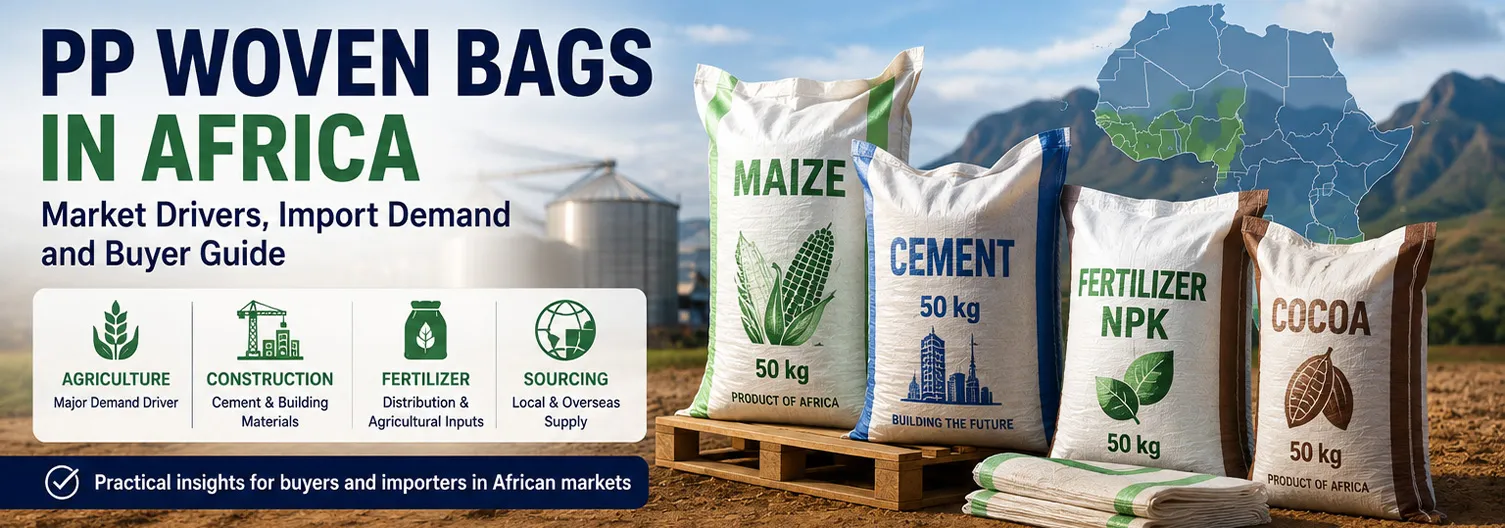
El África subsahariana tiene una fuerte demanda de bolsas tejidas de polipropileno (PP) en la agricultura, la construcción, la distribución de fertilizantes y otras cadenas de suministro de productos básicos. Para los importadores y distribuidores, la demanda está determinada por el tipo de producto, el peso llenado, los métodos de manipulación, las condiciones de almacenamiento y las prácticas de embalaje locales. Las aplicaciones comunes incluyen cereales y productos agrícolas, cemento, fertilizantes, productos químicos y otros productos secos, y las especificaciones de las bolsas varían según el país y el uso final. Esta guía analiza los principales impulsores de la demanda, las fuentes de suministro y los factores prácticos que los compradores deben considerar al adquirir bolsas tejidas de PP para los mercados africanos.
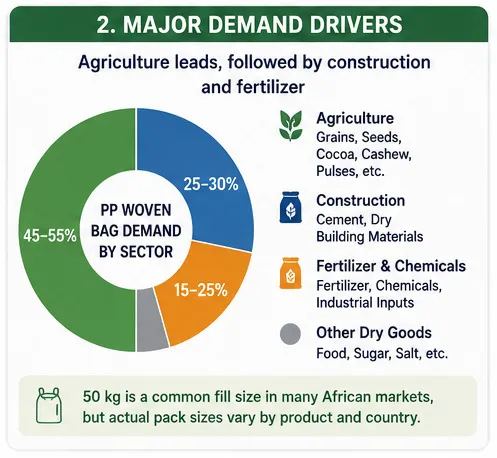
Las bolsas tejidas de PP atienden a varios segmentos de demanda en los mercados africanos. La agricultura, la construcción y los fertilizantes son fuentes importantes de demanda de bolsas, mientras que la importancia relativa de cada segmento varía según el país, el producto básico y la cadena de suministro.
Respuesta rápida: África es un mercado importante para las bolsas tejidas de PP, con una demanda vinculada a la agricultura, la construcción, los fertilizantes y otras cadenas de suministro de productos secos. No existe una valoración pública única y ampliamente aceptada para el mercado africano de bolsas tejidas de PP porque los estudios disponibles suelen utilizar categorías más amplias de sacos, bolsas o embalajes. Los compradores deben evaluar la demanda país por país y hacer coincidir las especificaciones de la bolsa con el producto, el peso llenado, la manipulación, el almacenamiento y los requisitos del mercado de destino.
Mercado africano de bolsas tejidas de PP: tamaño, demanda y crecimiento
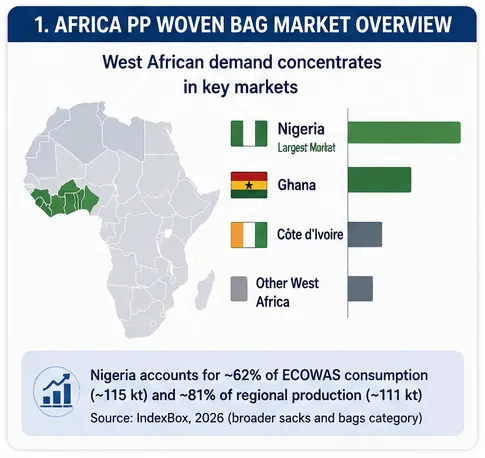
Las estimaciones de mercado publicadas varían dependiendo de cómo se define la categoría, por lo que los compradores deben distinguir entre el mercado africano más amplio de bolsas de embalaje y el segmento específico de bolsas tejidas de PP. Por esta razón, las cifras utilizadas en esta guía deben tratarse como estimaciones de mercado y no como una valoración definitiva del mercado de bolsas tejidas de PP únicamente. A nivel nacional, los datos regionales disponibles pueden proporcionar una imagen más clara de la demanda y la concentración de la producción, particularmente en África occidental.
Dentro de África occidental, Nigeria es el mercado más grande en la categoría más amplia de sacos y bolsas. IndexBox estima que Nigeria representó alrededor del 62% del consumo de la CEDEAO, o aproximadamente 115 mil toneladas, y alrededor del 81% de la producción regional, o aproximadamente 111 mil toneladas, en su evaluación del mercado de 2026. Estas cifras cubren la categoría más amplia de sacos y bolsas y no solo las bolsas tejidas de PP, pero indican la importancia de Nigeria como un importante mercado de embalaje en África Occidental. Ghana y Costa de Marfil también son mercados regionales importantes, en particular para los productos agrícolas y las exportaciones.
Impulsor de demanda 1: agricultura y seguridad alimentaria
La agricultura es una fuente importante de demanda de bolsas en los mercados africanos, en particular de cereales, semillas, legumbres, cacao, anacardos y otros productos básicos que pasan por los canales de recolección, almacenamiento, procesamiento y exportación. El tipo de bolsa varía según el producto y la cadena de suministro. Los sacos tejidos de PP se consideran comúnmente para aplicaciones donde la resistencia, la protección contra la humedad, la imprimibilidad y la durabilidad del manejo son importantes. Para aplicaciones agrícolas, los compradores deben hacer coincidir la construcción de la bolsa con el producto, el peso lleno, el período de almacenamiento, las condiciones de transporte y cualquier requisito del mercado de destino. Vea nuestro bolsas tejidas PP agrícolas página para opciones específicas de la aplicación.
50 kg es un formato común para productos agrícolas y otros productos a granel en muchos mercados africanos, pero los tamaños de envase reales varían según el producto, el país, el equipo de llenado y el canal de distribución. Los compradores deben confirmar el peso lleno requerido y las dimensiones de la bolsa antes de especificar la construcción final de la bolsa tejida de PP.
Impulsor de la demanda 2: construcción y cemento
La construcción es otra fuente importante de demanda de bolsas tejidas de PP, particularmente de cemento y otros materiales de construcción secos. Los sacos de cemento generalmente necesitan suficiente resistencia a la tracción y al estallido, un cierre y una construcción de costura adecuados y una protección contra la humedad adecuada al entorno de manipulación. Cuando las bolsas llenas puedan permanecer al aire libre durante períodos prolongados, se puede considerar la estabilización de los rayos UV en función de la exposición esperada a la luz solar y la duración del almacenamiento. La especificación final debe acordarse con el comprador, el sistema de llenado y las condiciones de almacenamiento locales.
Impulsor de la demanda 3: fertilizantes y productos químicos
Los fertilizantes y los productos químicos crean otro segmento importante de la demanda de sacos tejidos de PP. Dependiendo de la formulación, el proceso de llenado, la sensibilidad a la humedad y las condiciones de almacenamiento, los compradores pueden especificar tela laminada, un revestimiento interior u otras construcciones protectoras. La compatibilidad química debe evaluarse para el producto específico en lugar de asumirse únicamente a partir del material de la bolsa. La información de etiquetado y manipulación también debe seguir los requisitos del mercado de destino.
Suministro: Fuentes locales y extranjeras
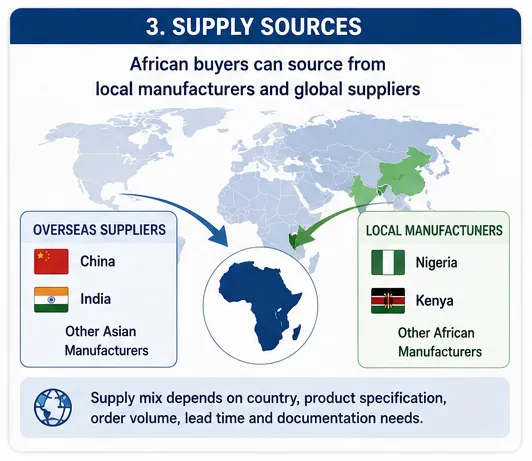
Los mercados africanos son abastecidos tanto por fabricantes locales como por productores extranjeros. China y la India son fuentes asiáticas establecidas de sacos tejidos y otros embalajes industriales, mientras que países como Nigeria y Kenia también tienen capacidad de producción local. Los importadores pueden considerar proveedores extranjeros cuando requieran construcciones de bolsas, impresiones, opciones de materiales, volúmenes de producción o documentación de exportación particulares. El equilibrio entre la oferta local e importada varía según el país y la especificación.
Los mercados africanos son un destino importante para los proveedores extranjeros de bolsas tejidas de PP. La propia combinación de exportaciones de SITONG también refleja esta demanda: África representa el 39% de las exportaciones de la empresa, seguida de América del Sur con el 32%, América Central con el 18% y Asia con el 7%. Esta cifra a nivel de empresa describe la combinación de ventas de SITONG y no debe interpretarse como una medida del mercado de importación africano en general.
Mercados africanos clave para las bolsas tejidas de PP
| Mercado | Principales aplicaciones de bolsas tejidas de PP | Enfoque del comprador |
|---|---|---|
| Nigeria | Agricultura, cemento, fertilizantes. | Volumen, suministro local, personalización. |
| Ghana | Cacao, agricultura, construcción. | Embalaje de exportación, protección contra la humedad. |
| Costa de Marfil | Cacao, anacardo, agricultura. | Embalaje de exportación, impresión, durabilidad. |
| Kenia | Agricultura, fertilizantes, industrial. | Etiquetado, EPR, reciclabilidad |
| Sudáfrica | Agricultura, minería, construcción. | Especificación, cumplimiento, logística. |
Regulaciones de embalaje y desempeño de los productos en los mercados africanos
Los requisitos reglamentarios se están convirtiendo en una parte cada vez más importante del abastecimiento de envases en los mercados africanos, pero varían según el país y el bloque regional. Los compradores deberían comprobar las normas aplicables sobre contenido reciclado, reciclabilidad, responsabilidad del productor, etiquetado de envases y gestión de residuos en el mercado de destino en lugar de tratar a África como una única jurisdicción regulatoria. Por otra parte, la estabilización UV es una consideración de rendimiento para bolsas expuestas a la luz solar prolongada, no un requisito universal de embalaje africano.
Kenia proporciona un ejemplo útil de requisitos de embalaje específicos de cada país. Su Reglamento sobre materiales de embalaje de plástico de 2024 cubre los materiales de embalaje de plástico e incluye disposiciones relacionadas con la autorización, planes de responsabilidad ampliada del productor, contenido reciclado, marcado de reciclabilidad y etiquetado de contenido reciclado. Debido a que los requisitos difieren entre los mercados africanos, los importadores deben verificar las normas nacionales aplicables antes de finalizar las especificaciones del bolso o la documentación de envío.
Orientación al comprador
| Solicitud | Especificación recomendada | Razón principal |
|---|---|---|
| Granos / semillas | GSM adecuado, protección contra la humedad, laminación opcional | Protección y manipulación del producto. |
| Cemento | Construcción de alta resistencia, cierre adecuado | Rendimiento de ráfaga y manejo |
| Fertilizante | Laminación o revestimiento cuando sea necesario | Compatibilidad con la humedad y el producto. |
| Almacenamiento al aire libre | Estabilización UV donde la exposición lo requiere. | Resistencia a la luz solar |
| Exportación/suministro de licitación | Registros documentados de composición, especificaciones y calidad del material. | Requisitos del comprador, licitación y mercado de destino. |
Lista de verificación de compra de bolsas tejidas de PP para los mercados africanos
Antes de realizar un pedido, confirme:
- País de destino y requisitos de embalaje aplicables
- Producto y peso llenado
- Dimensiones de la bolsa
- Construcción de tela y GSM.
- Laminación o revestimiento interior
- Método de cierre y costura.
- Información de impresión y lotes
- Exposición a los rayos UV y condiciones de almacenamiento esperadas.
- Cantidad requerida y calendario de entrega.
- Documentación de materiales, calidad y cumplimiento.
Conclusiones clave
- África es un mercado importante para las bolsas tejidas de PP, y la agricultura, la construcción, los fertilizantes y otras aplicaciones de productos secos son fuentes importantes de demanda; la importancia relativa de cada segmento varía según el país y el producto básico.
- Nigeria es el mercado más grande en la categoría más amplia de sacos y bolsas de la CEDEAO y representa aproximadamente el 62 % del consumo regional y el 81 % de la producción en la evaluación de IndexBox de 2026; Estas cifras no son específicas de las bolsas tejidas de PP. Ghana y Costa de Marfil también son mercados importantes de África occidental para envases agrícolas e industriales.
- 50 kg es un tamaño de paquete agrícola e industrial común en muchos mercados africanos, pero las dimensiones y la construcción final de la bolsa varían según el producto, el país, el sistema de llenado y los requisitos de manipulación.
- La oferta combina la producción local con el abastecimiento en el extranjero; China y la India son fuentes asiáticas establecidas de sacos tejidos, mientras que Nigeria y Kenia tienen capacidad local.
- Las normas de embalaje varían entre los países africanos y los mercados regionales, incluidos los requisitos relacionados con el contenido reciclado, la reciclabilidad, la EPR, el etiquetado y la gestión de residuos. Los compradores deben verificar las reglas aplicables en el país de destino en lugar de asumir un estándar único para toda África; La estabilización UV debe tratarse como una especificación de rendimiento para una exposición prolongada al aire libre.
Para los distribuidores e importadores africanos, las especificaciones de las bolsas tejidas de PP deben adaptarse al producto, el peso del llenado, las condiciones de manipulación, el entorno de almacenamiento y los requisitos del mercado de destino. Los compradores también deben evaluar la coherencia, la documentación, la capacidad de personalización y la experiencia de exportación de los proveedores antes de realizar pedidos repetidos. trabajando con un Fabricante de bolsas tejidas de PP que puedan proporcionar especificaciones consistentes y admitir empaques personalizados pueden ayudar a reducir el riesgo de abastecimiento. Solicite un presupuesto personalizado a través de nuestro pagina de contacto.
Preguntas frecuentes
No existe una sola figura pública ampliamente citada que pueda ser tratada como una valoración definitiva del mercado africano de bolsas tejidas de PP. Las estimaciones disponibles suelen utilizar categorías más amplias, como sacos y bolsas o sacos y bolsas de papel. Por ejemplo, una estimación de IndexBox para el mercado de bolsas y sacos de papel de África fue de alrededor de 4.500 millones de dólares en 2024, tras un máximo de alrededor de 4.700 millones de dólares en 2022; esa cifra cubre sacos y bolsas de papel en lugar de bolsas tejidas de PP específicamente. Por lo tanto, los compradores no deberían utilizar la cifra de 4.000 a 5.000 millones de dólares como valoración del mercado africano de bolsas tejidas de PP y deberían basarse en datos específicos del producto y del país, cuando estén disponibles.
Nigeria es el mercado más grande en la categoría más amplia de sacos y bolsas de África occidental, y IndexBox estima alrededor del 62 % del consumo de la CEDEAO y el 81 % de la producción regional en su evaluación de 2026. Ghana y Costa de Marfil también son mercados importantes vinculados a la agricultura, los productos alimenticios y la actividad industrial. Estas cifras describen la categoría más amplia de sacos y bolsas y no solo las bolsas tejidas de PP.
50 kg es un tamaño de paquete común para muchos productos agrícolas e industriales porque puede adaptarse a las prácticas establecidas de manipulación, llenado y distribución. Sin embargo, no es un estándar universal en toda África; Los compradores deben confirmar el peso lleno requerido y las dimensiones de la bolsa para el producto y mercado específicos.
Hay oferta tanto local como importada. Países como Nigeria y Kenia tienen capacidad de producción local, mientras que los proveedores extranjeros en Asia pueden atender a compradores que requieren construcciones, impresiones, volúmenes de producción o documentación de exportación específicos. El modelo de abastecimiento apropiado depende del país, las especificaciones del producto, el volumen del pedido, el tiempo de entrega y el costo de entrega.
Los requisitos de embalaje varían según el mercado africano. Es posible que los compradores deban considerar las normas sobre contenido reciclado, la reciclabilidad y el etiquetado de los envases, las obligaciones de responsabilidad del productor y otros requisitos nacionales. La estabilización UV es una consideración del rendimiento del producto para una exposición prolongada al aire libre en lugar de un requisito regulatorio universal en toda África.
En los mercados de alta irradiancia, las bolsas almacenadas al aire libre durante períodos prolongados pueden perder resistencia a la tracción; La estabilización UV aborda esa exposición. Se trata de una elección de rendimiento del producto basada en las condiciones de almacenamiento previstas, no de un requisito normativo universal en toda África.
Las aplicaciones comunes incluyen productos agrícolas como cereales, semillas, cacao y anacardos, así como cemento, fertilizantes, productos químicos y otros productos secos. La importancia relativa de cada aplicación varía según el país y la cadena de suministro, por lo que los compradores deben seleccionar la construcción de la bolsa según el producto, el peso lleno y las condiciones de manipulación y almacenamiento.
Al importar bolsas tejidas de PP, especifique el producto, el peso del llenado, las dimensiones de la bolsa, la construcción de la tela, los requisitos de laminación o revestimiento, el tipo de cierre, la impresión, las condiciones de exposición a los rayos UV, la cantidad del pedido, el mercado de destino y cualquier requisito reglamentario o de documentación aplicable.