

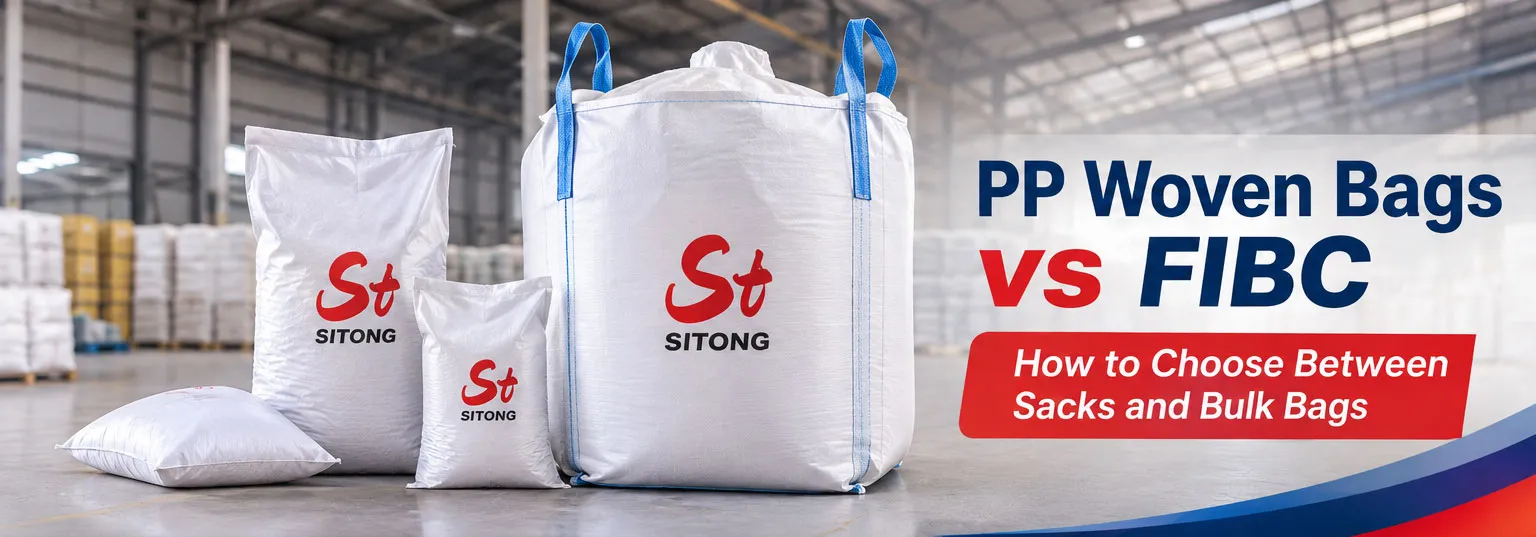
PP woven bags and FIBC are both made from woven polypropylene fabric, but they serve different packaging and handling requirements. PP woven bags, commonly called woven sacks, are typically designed for 5–50 kg packages and are handled manually or on pallets. FIBC (Flexible Intermediate Bulk Containers), also known as bulk bags or jumbo bags, commonly have a safe working load (SWL) of 250–2,000 kg and are handled using forklifts, cranes or other suitable lifting equipment. The right format depends on the required package weight, handling equipment, filling and discharge systems, storage conditions and distribution model — not simply the material used.
What Are PP Woven Bags and FIBC?
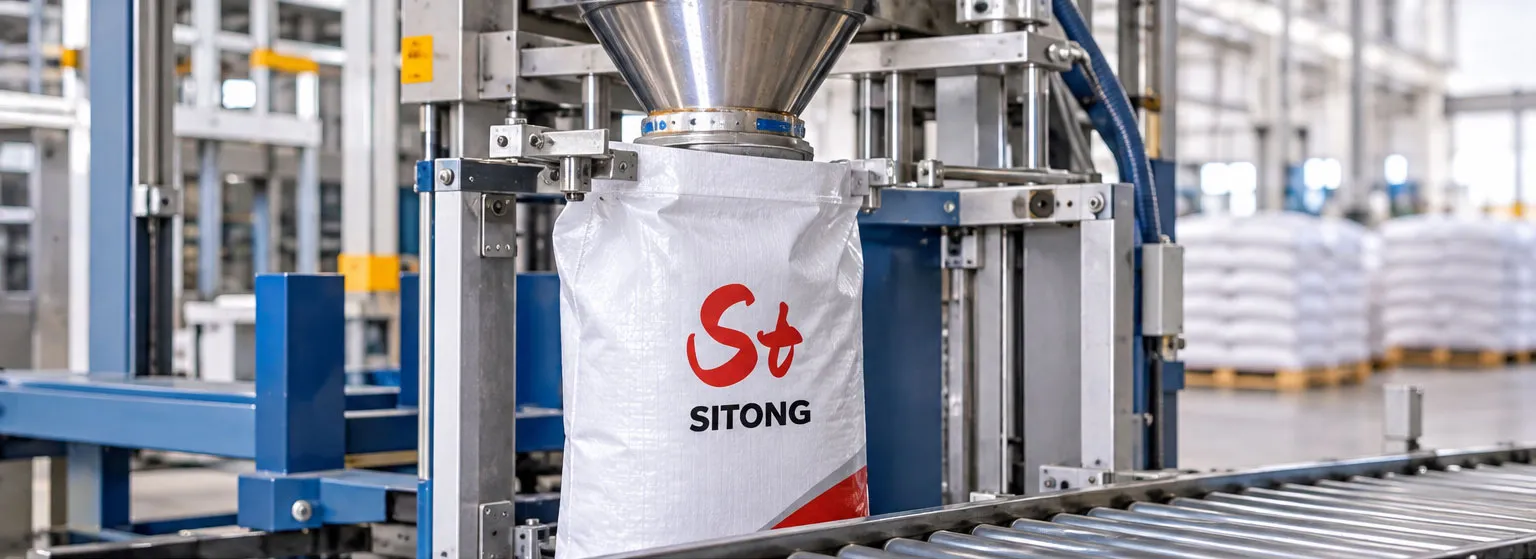
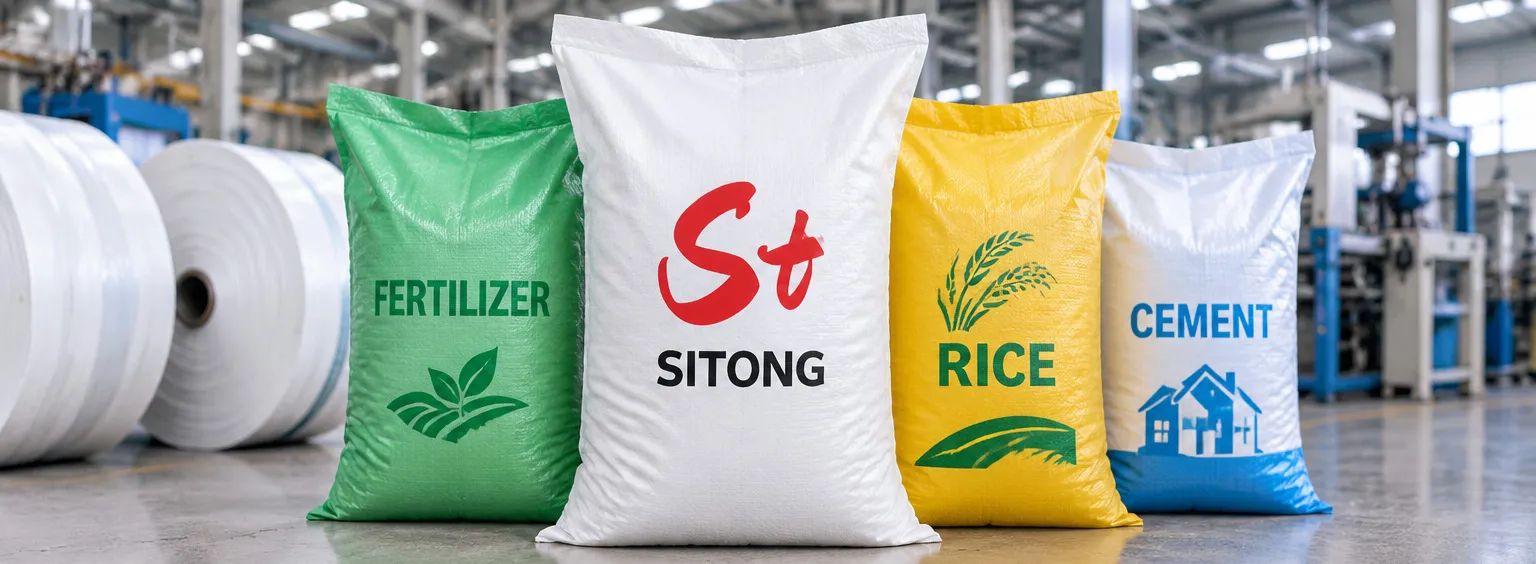
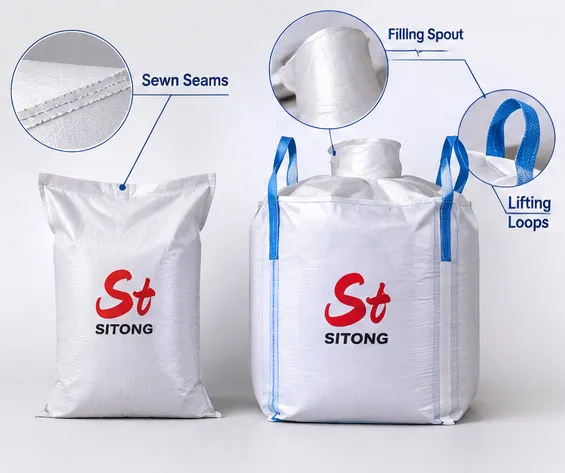
一个 PP编织袋 is a sewn sack made from woven polypropylene tapes. It is supplied in a finished shape with a top and bottom, and may include optional features such as a PP coating, a BOPP printed film, an inner PE liner, a valve filling opening or handles. These bags are common for retail, distribution and manual or semi-automated filling of relatively small lots.
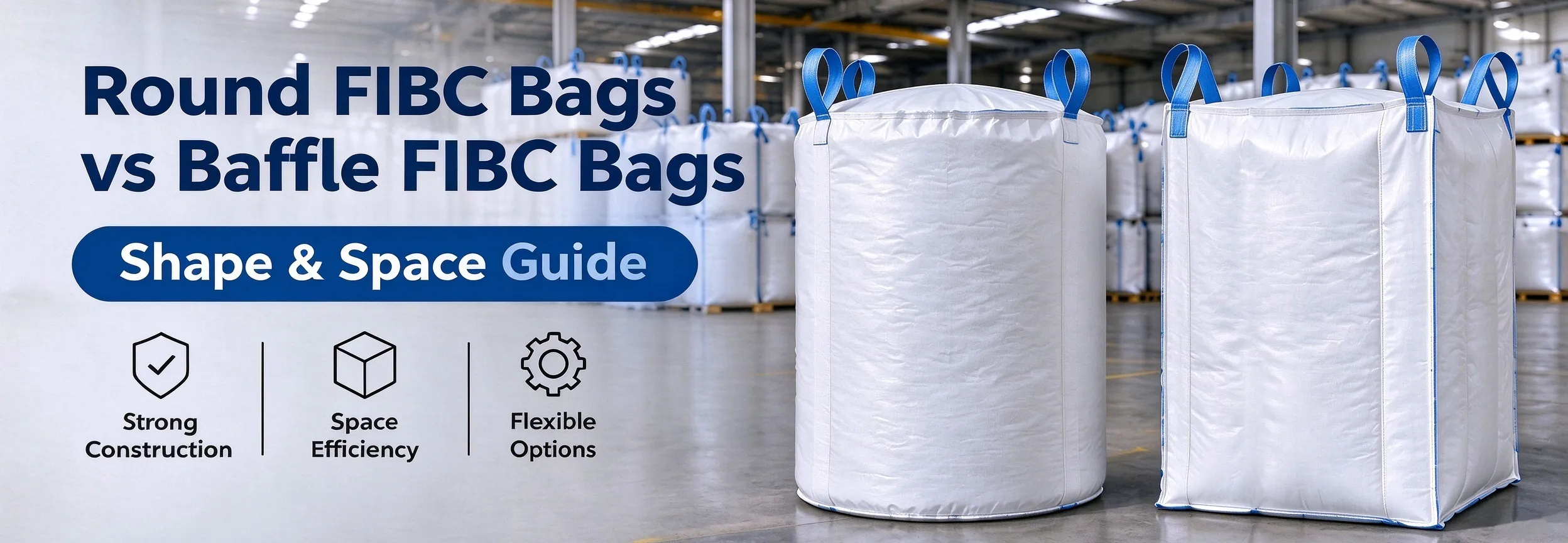
An FIBC is a large flexible container made from woven polypropylene fabric, designed to hold and transport bulk materials in a single load. Depending on the design, it may use a tubular, U-panel or four-panel body, with lifting loops or other lifting arrangements. Top options include open tops, duffle closures and filling spouts, while bottom designs may feature discharge spouts, flat bottoms or fully open outlets. These configurations are selected according to the product, filling system, discharge requirements and handling equipment.
Because both products start from the same base fabric, the practical difference is scale, structure and how they are filled, moved and emptied. Our PP编织袋指南 and our FIBC bulk bags overview cover each format in more detail.
PP Woven Bags vs FIBC: Key Differences
The table below summarizes the main comparison points buyers should weigh when deciding between sacks and bulk bags.
| 比较点 | PP Woven Bags (Sacks) | FIBC (Bulk Bags) |
|---|---|---|
| Typical filling weight | Commonly 5–50 kg per bag | Commonly 250–2,000 kg SWL |
| 车身结构 | Woven PP fabric with sewn seams; optional coating, BOPP lamination or PE liner | Tubular, U-panel or four-panel woven body with lifting loops |
| Top design | Open mouth, sewn top or filling valve | Open top, duffle or filling spout |
| Bottom design | Sewn bottom, with construction depending on bag type | Flat bottom, discharge spout or open bottom |
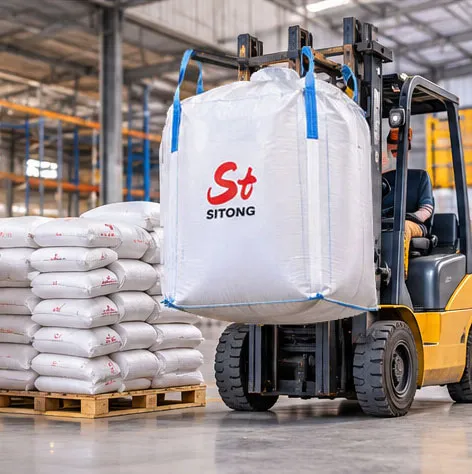
| Handling | Manual handling, carts or palletized movement | Forklift, crane or compatible lifting equipment |
| 灌装设备 | Manual, semi-automatic or automatic sack filling lines | Bulk bag filling stations and suitable filling systems |
| 典型应用 | Retail packs, agricultural sacks, feed and fertilizer packaging | Bulk grain, chemicals, minerals, fertilizer and industrial materials |
| Safety requirements | Depend on product, load and any applicable packaging regulations | Specify SWL, safety factor, lifting design and single-trip or reusable classification |
| Cost considerations | Lower cost per unit; suitable for smaller packaging units | Higher cost per unit; may reduce packaging and handling operations per tonne in suitable bulk flows |
Capacity and Filling Weight
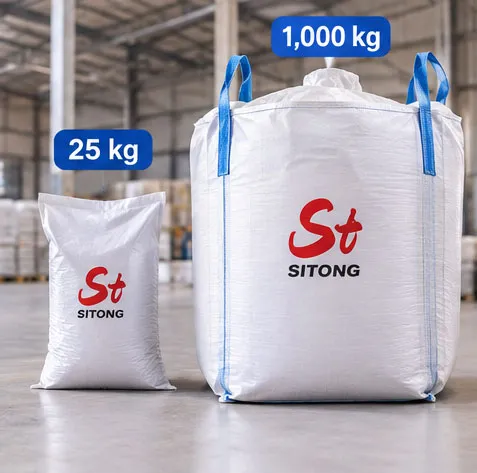
Filling weight is usually the first factor in choosing between sacks and bulk bags. PP woven sacks are commonly used for 5–50 kg units of rice, flour, seeds, animal feed and fertilizer, making them suitable for retail distribution and operations that handle smaller quantities. FIBC are better suited to bulk movements where hundreds or thousands of kilograms of one material need to be filled, transported or discharged as a single load.
When specifying an FIBC, buyers should distinguish between safe working load (SWL) and bag volume. A bag rated for 1,000 kg does not automatically have a fixed capacity in litres or cubic metres. Its required dimensions depend on the material’s bulk density, filling level, available storage height and discharge method. The lifting equipment and site handling conditions must also be compatible with the filled bag.
Construction and Components
Although both use woven polypropylene, the component set differs:
- PP编织袋 — Usually consist of a woven fabric body with sewn seams. Optional features include PP coating to reduce air permeability and product sifting, BOPP lamination for high-quality graphics and surface protection, PE liners for an additional internal barrier, and valve openings for compatible filling systems.
- FIBC — Typically include a woven body, lifting loops and top or bottom configurations selected for the filling and discharge process. Depending on the application, buyers may specify an inner liner, coated fabric, conductive components, special seams or additional closures. These features should be matched to the product’s moisture sensitivity, flow characteristics and handling environment.
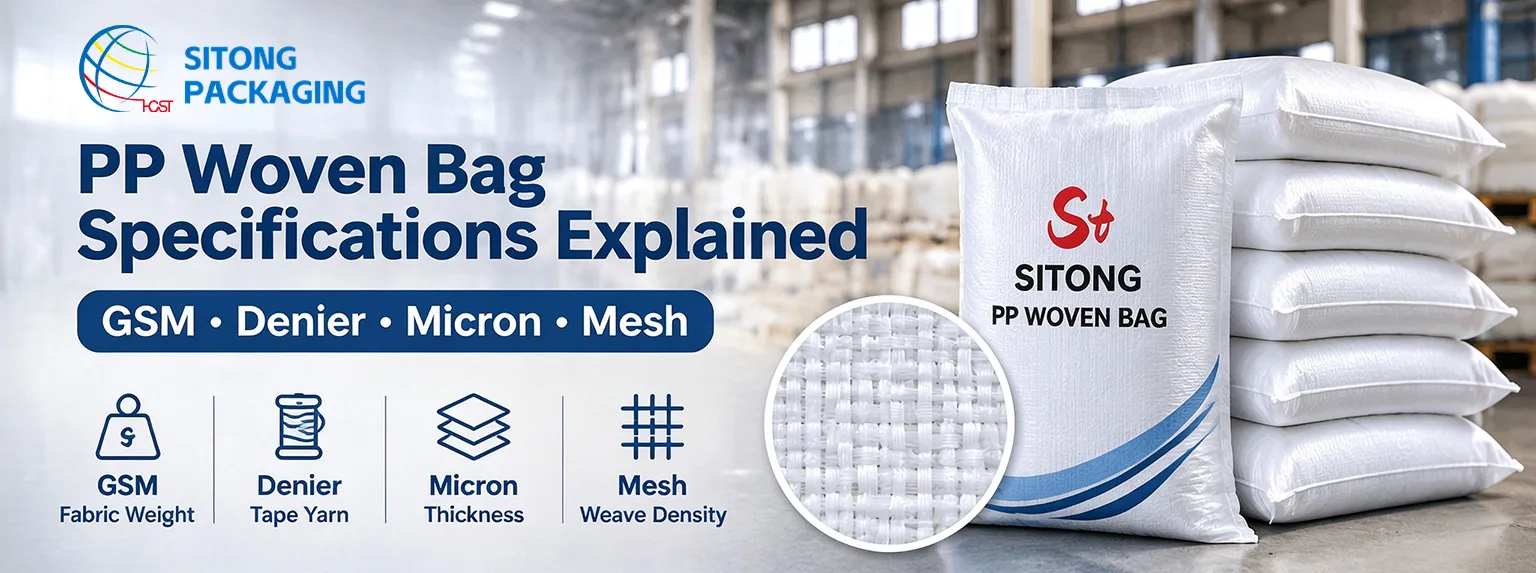
Buyers comparing fabric quality should look at the same variables for both formats: GSM, tape denier, weave density, coating and seam construction. Our PP编织袋规格指南 explains how to read those numbers.
Handling, Storage and Logistics
PP woven sacks can be handled individually or stacked on pallets, making them suitable for warehouses that manage multiple products, smaller order quantities and retail distribution. Their storage arrangement depends on sack dimensions, pallet configuration, stacking stability and warehouse requirements.
FIBC consolidate larger quantities into fewer handling units, which can reduce the number of filling, lifting and transfer operations in bulk material flows. However, they require compatible forklifts or cranes, suitable lifting attachments and sufficient clearance for the filled bag’s dimensions. Storage planning should account for stacking stability, floor loading, bag height and the manufacturer’s recommended handling conditions.
Filling Line Compatibility and Production Efficiency
The packaging format should also match the filling and packing equipment available at the production site. PP woven sacks can be supplied with open mouths or valve openings for manual, semi-automatic and automatic sack filling lines. Valve bags are particularly relevant for powder products handled by compatible filling systems.
FIBC are filled using dedicated bulk bag filling stations, which may incorporate weighing, air removal and dust-control systems. The discharge spout and bottom configuration should also match the receiving equipment. Buyers should check filling capacity, bag positioning, closure methods and downstream discharge requirements before selecting a format.
Cost Considerations
The purchase price of an empty bag does not show the full packaging cost. PP woven sacks may require more filling cycles, pallets and manual handling when calculated per tonne. FIBC have a higher unit price but can reduce the number of packages and handling operations in suitable bulk applications.
A practical cost comparison should include:
- Packaging cost per tonne of product
- Filling and sealing labour
- Pallets and secondary packaging
- Warehouse space and loading requirements
- Transportation and unloading costs
- Liner, coating or other additional components
The more economical format depends on order volume, labour costs, existing equipment and the final distribution process. Buyers should compare the total cost of handling and delivering the product rather than the empty bag price alone.
常见应用
- 农业 — PP woven sacks are widely used for 25–50 kg rice, wheat, seeds, animal feed and fertilizer packs supplied to distributors or end users. FIBC are more suitable for bulk grain, feed ingredients and fertilizer moved between farms, processors and industrial facilities.
- 建造 — PP woven sacks are commonly specified for cement, tile adhesive, gypsum and dry mortar sold in standard retail or project quantities. FIBC can be used for larger-volume handling of cement, sand, minerals and other materials at batching or processing facilities.
- Food processing — BOPP laminated or PE-lined PP woven sacks are used for branded rice, flour, sugar and other packaged food products. FIBC are suitable for bulk ingredients such as sugar and salt when the required food-contact construction and handling controls are in place.
- Chemicals and minerals — The choice depends on bulk density, particle size, moisture sensitivity, flow behaviour and transport classification. Some products require lined, coated, conductive or UN-tested packaging rather than standard woven bags.
How to Decide: PP Woven Bags or FIBC?
Use this checklist before specifying a format:
- Required filling weight — PP woven sacks are generally suitable for 5–50 kg units, while FIBC are commonly specified for bulk loads of 250–2,000 kg SWL.
- Filling and discharge systems — Check whether the production line uses sack filling machines, valve filling equipment or bulk bag filling stations, and whether the receiving process supports controlled FIBC discharge.
- Handling equipment — Confirm the availability of forklifts, cranes, suitable lifting attachments and sufficient operating clearance for filled FIBC.
- Storage and distribution — Consider pallet dimensions, stacking stability, warehouse space, shipment size and whether products are sold in small units or transferred in bulk.
- 产品特点 — Evaluate bulk density, particle size, flow behaviour, moisture sensitivity and any liner or coating requirements.
- Compliance and testing — Confirm applicable food-contact, chemical compatibility, Dangerous Goods and lifting safety requirements before approving the final construction.
PP Woven Bags vs FIBC: Which Should You Choose?
The table below is a buying-scenario reference, not a fixed rule. The final choice should still be confirmed against product density, equipment and specifications.
| Buyer requirement | Recommended format |
|---|---|
| 5–25 kg retail packaging | PP编织袋 |
| 25–50 kg agricultural or industrial sacks | PP编织袋 |
| 250–2,000 kg bulk loads | FIBC |
| Manual distribution and pallet handling | PP编织袋 |
| Forklift or crane-based bulk handling | FIBC |
| Branded retail packaging | PP woven bags, often BOPP laminated |
| Automated bulk filling and discharge | FIBC, subject to equipment compatibility |
Specification Selection Differences
Although both formats use woven polypropylene fabric, their specifications address different performance requirements. For PP woven sacks, buyers typically specify bag width and length, fabric GSM, tape denier, weave density, printing, coating or lamination, and liner options. For FIBC, key specifications include safe working load, safety factor, bag dimensions, lifting loop design, top and bottom configurations, liner requirements and electrostatic protection where applicable. The final specification should reflect the product’s physical properties, filling process, handling conditions and destination requirements.
Food-Contact and Dangerous Goods Notes
Both PP woven bags and FIBC may be manufactured for regulated applications, but the required specifications and documentation depend on the product and destination market.
- 食品接触 — For the US market, applicable requirements may include FDA 21 CFR 177.1520 for olefin polymers. In the EU, Regulation (EU) No 10/2011 and the framework Regulation (EC) No 1935/2004 may apply to relevant plastic food-contact components. Buyers should request a Declaration of Compliance and supporting migration test reports for the actual packaging construction, including any liner, coating or laminated layer where applicable. Food-contact suitability should not be assumed from the base PP material alone.
- Dangerous Goods — Certain woven plastic packaging designs can be tested and approved under applicable UN packaging requirements. Woven plastic bags typically use the 5H packaging codes (such as 5H1, 5H2 and 5H3), while FIBC are classified under the 13H series. The applicable subtype depends on the packaging construction and approved design. Buyers should verify the complete UN marking, test certificate, permitted packing group and conditions of use with the packaging supplier before ordering.
FIBC safety factors depend on the applicable design requirements and intended service life. Common specifications include 5:1 for single-trip bags and 6:1 for certain reusable designs, although other ratings may apply to specific products and standards. Buyers should verify the SWL, safety factor, service classification and supporting test documentation rather than assuming that all FIBC follow the same rating.
采购和制造商考虑因素
When sourcing both PP woven sacks and FIBC, buyers should look beyond the finished bag price. Fabric consistency, coating quality, seam strength, printing accuracy and dimensional control all affect packaging performance. A supplier with integrated production and conversion capabilities can also make it easier to coordinate material specifications, customization and repeat orders across different packaging formats.
SITONG PACKAGING operates manufacturing facilities in Haicheng, Liaoning, China, and Cambodia. Across its manufacturing operations, the company has around 20 production lines and an annual production capacity of approximately 30,000 tonnes. Its production capabilities include PP tape weaving, coating, printing, cutting and sewing for PP woven sacks and FIBC. Product configurations are developed according to customer requirements, covering different bag structures, printing options and packaging specifications. Buyers can explore our PP编织袋制造能力 and our FIBC manufacturer page for more details on OEM requirements and available constructions.
结论
PP woven sacks and FIBC serve different stages of packaging and material handling. Sacks are a practical choice for smaller retail and distribution units, while FIBC are designed for larger loads moving through bulk filling, storage and industrial logistics systems.
Before placing an order, confirm the filling weight, bag dimensions, fabric specifications, filling and discharge arrangements, and any applicable compliance requirements. These details help ensure that the selected packaging works with the actual production and handling process.
If you are comparing PP woven sacks and FIBC for your products, 联系四通包装 or review our custom packaging solutions to discuss bag construction, OEM specifications, MOQ and production options.
常见问题解答
PP woven bags are smaller packaging units, commonly holding 5–50 kg, while FIBC are designed for bulk loads, typically with an SWL of 250–2,000 kg. Sacks are usually handled manually or on pallets, whereas FIBC require suitable lifting equipment.
Not in every application. FIBC are suitable for bulk material handling and industrial transfer, but they are not a direct replacement for sacks used in retail packaging, smaller deliveries or manual distribution. The choice depends on filling weight, production equipment and the final distribution process.
Start with the required safe working load (SWL), then calculate the bag volume based on the material’s bulk density and required filling height. The bag dimensions, lifting structure and discharge design should match the actual filling and handling conditions.
PP woven sacks generally cost less per unit, while FIBC have a higher unit price but can reduce the number of packaging and handling operations in bulk flows. Compare the total cost per tonne, including filling, labour, pallets, transport and unloading.
Yes, provided the complete packaging construction meets the applicable food-contact requirements for the destination market. Buyers should confirm the suitability of the fabric, coating, printing inks and liners where applicable, supported by relevant compliance documentation and test reports.
Certain designs of woven plastic bags and FIBC can be UN-tested and approved for specified Dangerous Goods applications. Woven plastic bags generally fall under the 5H packaging category, while FIBC use the 13H category. Approval depends on the complete packaging design, testing and permitted conditions of use.