



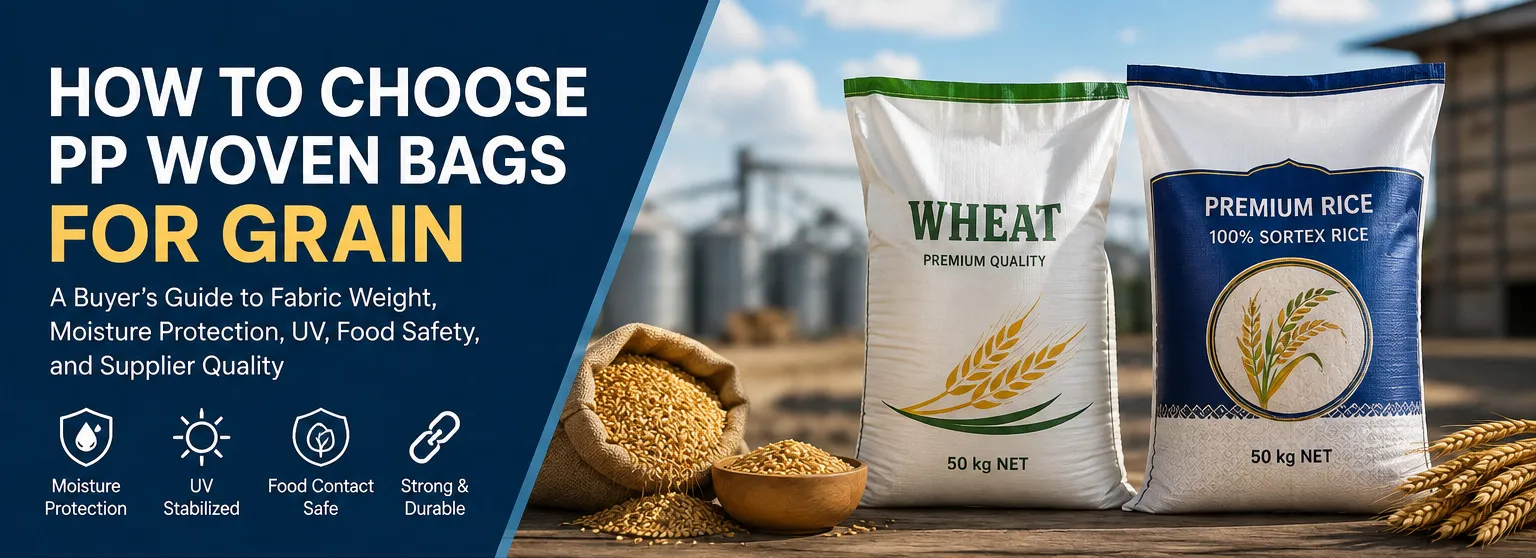
Le stockage et le déplacement des céréales nécessitent un emballage qui protège contre l’humidité, les parasites et le stress de manipulation sans gonfler le coût au débarquement. Sacs tissés en PP sont largement utilisés pour le blé, le riz, le maïs, le soja et les graines car ils offrent un équilibre pratique entre résistance, poids, durabilité et coût. Cependant, les spécifications appropriées dépendent du grain, du poids du remplissage, des conditions de stockage, de l'itinéraire de transport et de la méthode de remplissage. Ce guide explique comment choisir le poids du tissu, la protection contre l'humidité, la stabilisation UV, la fermeture, l'impression et les exigences des fournisseurs pour l'emballage des céréales.
Réponse rapide : Choisissez des sacs tissés en PP pour les céréales en adaptant la construction du sac au poids rempli, aux conditions de manipulation, à l'environnement de stockage et au système de remplissage. Le poids du tissu (GSM) est un facteur de résistance important, mais le GSM requis dépend également de la densité de tissage, des dimensions du sac, de la construction des coutures et des conditions d'empilage. Utilisez un laminage ou une doublure intérieure en LDPE lorsqu'une protection contre l'humidité est nécessaire, ajoutez une stabilisation UV pour une exposition prolongée à l'extérieur et confirmez que tous les matériaux en contact avec les aliments et la documentation du fournisseur répondent aux exigences de votre marché de destination.
Que sont les sacs tissés en PP pour les céréales ?
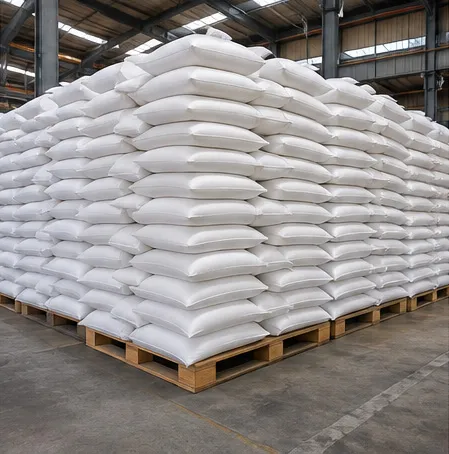
Les sacs tissés en PP sont fabriqués à partir de fils de ruban de polypropylène tissés sur des métiers circulaires pour former un tissu solide et léger. Pour les céréales, ils sont généralement fournis sous forme de sacs tubulaires ou à couture arrière, souvent laminés ou associés à une doublure intérieure, et imprimés pour le marquage ou le traçage des lots. La structure tissée offre une résistance élevée à la traction pour un faible poids, c'est pourquoi elle domine l'emballage agricole en vrac.
Un sac à céréales tissé en PP est un sac en tissu tissé en polypropylène conçu pour emballer et transporter des céréales, des légumineuses, des graines oléagineuses et d'autres produits agricoles. Sa construction peut être ajustée en fonction du poids du produit, de la méthode de remplissage, des conditions de stockage, des exigences de transport et de la protection contre l'humidité nécessaire.
Comparaison des configurations de sacs tissés en PP
La première décision concerne la construction du sac. Le tissu tissé non enduit permet un meilleur échange d'air et convient souvent aux produits secs et à la manipulation à court terme. Le laminage ajoute une couche de film PP qui améliore la résistance à l'humidité de la surface et fournit une surface d'impression plus lisse. Une doublure intérieure en LDPE ajoute une autre barrière contre l'humidité à l'intérieur du sac et peut être envisagée pour un stockage plus long ou des conditions d'humidité plus élevée.
| Configuration | Surface | Idéal pour | Capacité d'impression |
|---|---|---|---|
| Tissé uni | Non couché | Chargements secs, court-courriers et respirants | Impression flexographique de base |
| Laminé (film PP) | Revêtement mat | Protection contre l'humidité, marquage de base | Impression flexographique |
| BOPP laminé | Film brillant | Vente au détail, applications sensibles à l'humidité, impression couleur | Impression multicolore haute résolution |
| Equipé d'une doublure | PEBD intérieur | Stockage long, régions très humides | L'impression dépend de la construction du sac extérieur |
Exigence d'emballage des grains par rapport à la configuration recommandée
| Exigence en matière d'emballage des grains | Configuration recommandée |
|---|---|
| Grain sec, stockage à court terme | Fabricant de sacs tissés en PP |
| Protection de base contre l'humidité | Sac tissé en PP laminé |
| Transport ou stockage humide | Sac plastifié + doublure adaptée |
| Emballage de céréales au détail | Points clés à retenir |
| Exposition extérieure prolongée | Construction tissée en PP stabilisé aux UV |
| Remplissage automatisé | Dimensions du sac et fermeture adaptées au matériel de remplissage |
Processus de sélection recommandé
- Définissez le poids rempli : 25 kg, 50 kg ou une autre taille de paquet.
- Vérifiez les conditions de stockage et de transport – sèches, humides, intérieures ou extérieures.
- Choisissez la barrière contre l'humidité : tissée uni, laminée ou équipée d'une doublure.
- Définissez la résistance du sac requise – tenez compte du GSM ainsi que des conditions de tissage, de coutures et d'empilage.
- Confirmez les exigences de remplissage et de fermeture : remplissage manuel ou automatisé, cousu ou sur le dessus de la valve.
- Choisissez vos exigences d’impression : impression flexographique de base ou BOPP haute résolution.
- Confirmez les exigences en matière de contact alimentaire et du marché — obtenez la documentation requise pour le marché de destination.
- Approuvez les échantillons avant la production en série : vérifiez les dimensions, le poids, la construction, l'impression et les exigences de performances pertinentes.
7 facteurs à prendre en compte lors du choix des sacs à céréales tissés en PP
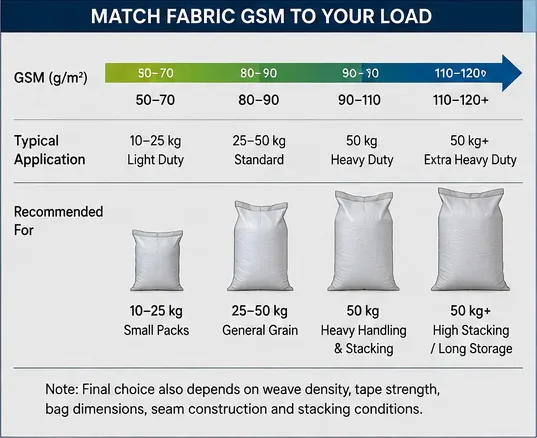
1. Poids du tissu (GSM) et résistance
Le poids du tissu, mesuré en grammes par mètre carré (g/m²), est l'un des facteurs qui affectent la résistance et la durabilité d'un sac tissé en PP. En règle générale, les tissus plus légers peuvent convenir aux petits paquets, tandis que les constructions plus lourdes sont souvent sélectionnées pour les charges de grains plus importantes et les conditions de manipulation exigeantes. La spécification finale doit également prendre en compte la résistance du ruban, la densité de tissage, les dimensions du sac, la construction des coutures, la méthode de remplissage et la hauteur d'empilage. Faites correspondre la construction complète du sac au poids rempli plutôt que de sélectionner uniquement le GSM.
2. Doublures et protection contre l'humidité
Un excès d'humidité peut augmenter le risque de détérioration de la qualité du grain pendant le stockage et le transport. Un film extérieur laminé améliore la résistance à l'humidité de surface, tandis qu'une doublure intérieure en LDPE fournit une barrière interne supplémentaire. Pour les grains se déplaçant dans des régions humides ou confrontés à des périodes de stockage plus longues, envisagez un laminage ou une doublure en fonction de la protection contre l'humidité requise. Le choix final doit également tenir compte de la teneur en humidité du grain, de la durée de stockage et des conditions de transport.
3. Stabilisation UV pour le stockage extérieur
Le polypropylène peut se dégrader après une exposition prolongée au soleil. Si les sacs remplis doivent rester à l'extérieur avant l'expédition ou pendant le stockage, demandez au fournisseur si la stabilisation UV est appropriée pour les conditions et la durée d'exposition prévues. Pour un stockage couvert ou une manipulation extérieure de courte durée, un niveau de protection UV inférieur ou aucune stabilisation supplémentaire peut suffire, selon l'application.
4. Taille, capacité et fermeture
Confirmez les dimensions remplies par rapport à votre ligne de pesée et de couture. Les formats de grains courants sont de 25 kg et 50 kg (ou 50 lb et 100 lb pour certains marchés), avec des dimensions adaptées pour que le sac rempli s'empile et se palettise proprement. Les dimensions du sac doivent être déterminées ainsi que le poids rempli, la densité apparente du produit, l'équipement de remplissage et les exigences d'empilage. Les options de fermeture incluent des dessus coupés à chaud, ourlés, cousus ou à valve ; les sacs à valve accélèrent le remplissage sur les lignes automatisées.
5. Sécurité et conformité en matière de contact alimentaire
Les céréales sont un produit alimentaire, les matériaux des sacs doivent donc répondre aux exigences de contact alimentaire applicables sur le marché de destination. Spécifiez la résine requise et toute restriction relative au contenu recyclé en fonction de l'application prévue et des réglementations locales, et demandez au fournisseur la documentation pertinente relative au contact alimentaire. Ne vous fiez pas uniquement à une allégation générique de « qualité alimentaire » ; confirmer la déclaration matérielle et les preuves de conformité exigées par votre acheteur ou votre marché.
6. Impression et présentation de la marque
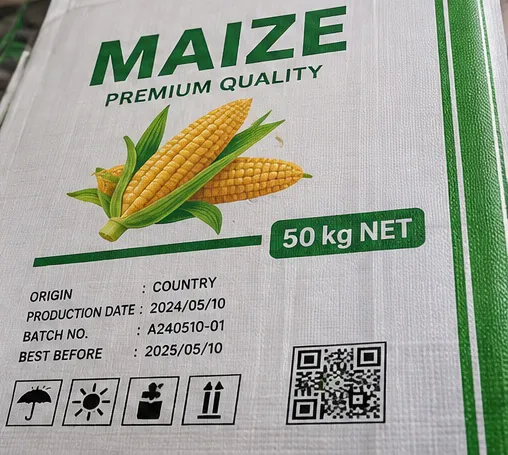
La lamination BOPP prend en charge l'impression multicolore haute résolution pour les graphiques de marque, les informations sur les produits et les détails de traçabilité. Selon le marché et le processus d'emballage, le sac peut contenir des informations telles que le nom du produit, le poids net, l'origine, le numéro de lot, le code-barres ou les instructions de manipulation. Les sacs unis ou laminés mats acceptent une impression flexographique plus simple.
7. Sélection des fournisseurs et des fabricants
Spécifier le sac ne représente que la moitié du travail ; la cohérence des fournisseurs est tout aussi importante. Travailler avec un Fabricant de sacs tissés en PP qui peut documenter les spécifications des matériaux, le GSM, les dimensions, la qualité des coutures et les exigences applicables en matière de contact alimentaire. Avant de passer une commande de production, demandez des échantillons et, le cas échéant, des rapports de test ou des dossiers d'inspection pour les exigences de performance clés. Pour les commandes répétées, conservez un échantillon approuvé ou une fiche technique comme référence afin que la production future puisse être vérifiée par rapport aux mêmes exigences.
Assortir le sac au grain
Différentes céréales peuvent nécessiter différentes priorités d'emballage, mais les spécifications finales doivent être basées sur le produit et la chaîne d'approvisionnement plutôt que sur le seul nom de la culture. Le blé et le maïs en paquets de 25 à 50 kg peuvent être utilisés dans des sacs tissés unis ou laminés en fonction de l'humidité et des conditions de manipulation. Le riz expédié par des routes humides peut bénéficier d'un laminage ou d'un revêtement en LDPE. Le soja, les légumineuses et les graines doivent être évalués en fonction de leur protection contre l'humidité, de leur méthode de remplissage, de leur période de stockage et de leurs exigences en matière de contact alimentaire. Pour des applications plus larges en matière d'emballage agricole, consultez notre sacs tissés en PP agricole aperçu.
Points clés à retenir
- Faites correspondre le poids du tissu (g/m²) à la charge remplie, mais tenez-le compte de la densité de tissage, des coutures et des conditions d'empilage.
- Spécifiez un laminage ou une doublure intérieure partout où l'humidité constitue un risque.
- Ajoutez une stabilisation UV uniquement pour un stockage extérieur prolongé.
- Confirmez la taille, la capacité et la fermeture par rapport à votre équipement de remplissage et à la densité apparente du produit.
- Exigez une documentation de conformité relative au contact alimentaire adaptée à votre marché de destination.
- Utilisez l'impression BOPP pour le marquage et la traçabilité sur les emballages de vente au détail ou de semences.
- Achetez auprès d'un fabricant capable de documenter les spécifications et de les conserver lors de commandes répétées.
Conclusion
Le choix des sacs tissés en PP pour les céréales est un exercice de spécification et non un achat de produit. Ancrez-vous sur le poids du tissu, la barrière contre l'humidité et la sécurité du contact alimentaire, puis adaptez les UV, l'impression et la fermeture à votre récolte et à votre itinéraire. Achetez auprès d'un fabricant qui peut prouver les spécifications sur chaque commande, et le sac protégera le grain du remplissage jusqu'à la destination finale.
Questions fréquemment posées
Pour un sac de céréales de 50 kg, le GSM requis dépend des dimensions du sac, de la densité de tissage, de la résistance du ruban, de la construction des coutures, de la méthode de remplissage et des conditions d'empilage. Une construction tissée plus lourde est généralement envisagée lorsque le sac est confronté à des charges plus élevées ou à une manipulation exigeante, mais le fournisseur doit confirmer la spécification finale par le biais de la conception de son sac et de ses exigences de test plutôt que par le seul GSM.
Uniquement lorsque l’humidité constitue une menace réelle : stockage prolongé, ports très humides ou transit pendant la saison des pluies. Dans des conditions sèches et sur de courtes distances, un film extérieur laminé suffit souvent, et le fait de sauter la doublure réduit le coût et le poids.
Uniquement pour les sacs stockés à découvert à l'extérieur pendant des semaines. Le stockage en intérieur ou dans des délais courts ne nécessite pas de mélange maître UV, alors omettez-le lorsque cela n'est pas nécessaire pour éviter de payer pour une protection que vous n'utiliserez pas.
Oui. La stratification BOPP prend en charge l'impression photographique en couleur ; Les sacs unis ou laminés mats acceptent une impression flexographique plus simple. L'impression comporte également des codes de lot et d'origine pour la traçabilité.
Ils peuvent l’être lorsque les matériaux répondent aux exigences de contact alimentaire du marché de destination. Demandez toujours les documents de conformité pertinents plutôt que de vous fier à une allégation générique de « qualité alimentaire ».
Le MOQ varie selon le fabricant, la complexité d'impression et la largeur du tissu, et est généralement défini selon les spécifications de la commande. Confirmez le minimum auprès de votre fournisseur à l'avance, car le GSM personnalisé, le laminage et l'impression modifient le seuil.
Uni pour les charges sèches, respirantes et économiques ; laminé pour l'humidité et le marquage de base ; BOPP pour la présentation au détail, les itinéraires humides et l'impression à fort impact. Le choix dépend de votre culture, de votre marché et de vos conditions de stockage.
La taille appropriée du sac pour 50 kg de céréales dépend de la densité apparente du produit, de l’équipement de remplissage et des dimensions de remplissage souhaitées. Différents grains ont des densités apparentes différentes, de sorte que le même poids rempli peut nécessiter des dimensions de sac différentes. Confirmez les dimensions auprès de votre fournisseur en fonction du grain spécifique et du processus de remplissage.
Les sacs laminés et laminés BOPP ajoutent une couche de film au tissu tissé pour une résistance à l'humidité et une meilleure imprimabilité. Le laminage BOPP prend en outre en charge l'impression multicolore haute résolution, ce qui le rend plus adapté aux emballages de céréales au détail où la présentation de la marque et la qualité des informations sur le produit sont importantes.
Fournissez le type de produit, le poids rempli, les dimensions du sac, le GSM du tissu ou la résistance requise, les exigences de laminage ou de doublure, les illustrations d'impression, le type de fermeture, la quantité, le marché de destination et toute exigence en matière de contact alimentaire. Cela donne au fabricant suffisamment d’informations pour recommander une construction appropriée et établir un devis précis.