

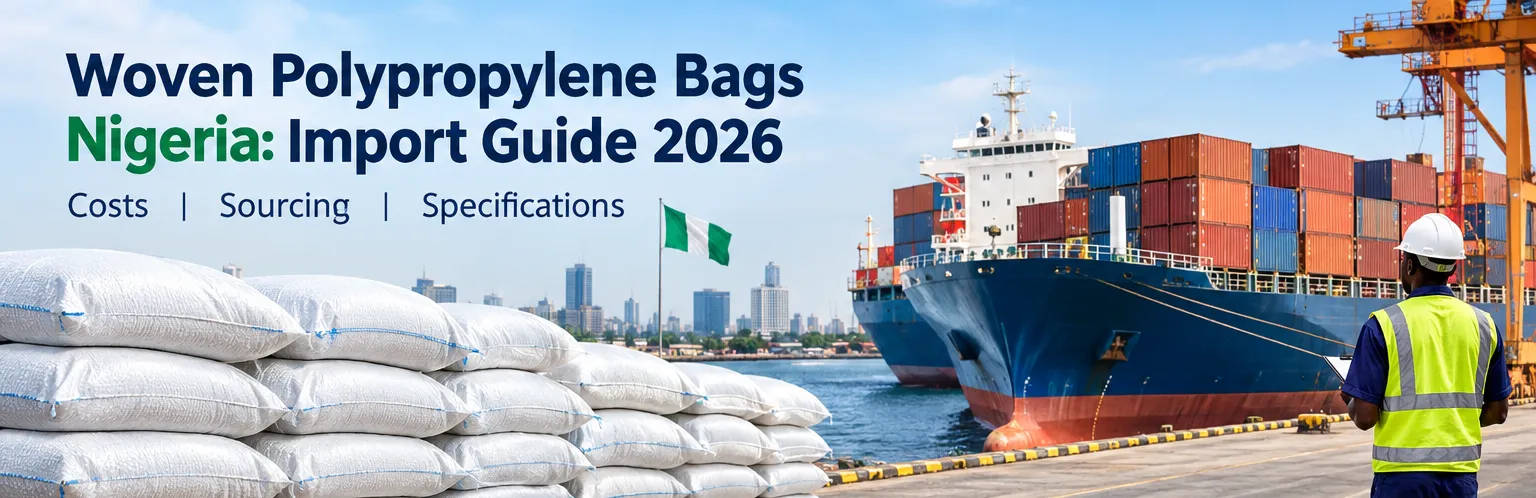
Buyers planning a PP woven bags Nigeria import should evaluate Nigeria as an important market for woven polypropylene bags used in grain, fertilizer, cement, sugar and other bulk-product packaging. For importers and distributors, the sourcing decision depends on more than the factory price: bag specifications, polypropylene (PP) resin costs, exchange rates, ocean freight, import duties, customs clearance and inland delivery all affect the final landed cost.
This guide explains how to compare PP woven sacks from local converters and overseas suppliers, choose suitable bag specifications for different applications, and assess whether importing finished bags makes commercial sense in Nigeria in 2026.
Nigeria’s Demand for Woven Polypropylene Bags
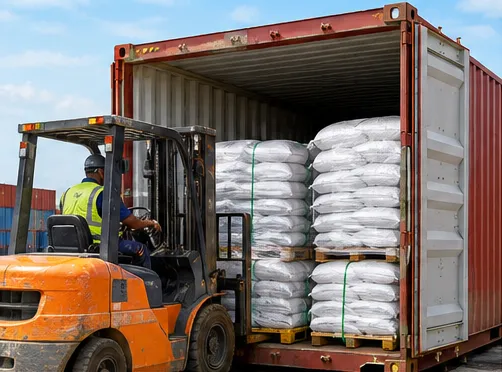
Nigeria’s woven polypropylene bag market serves several recurring packaging applications, including grain and pulses, fertilizer, cement, sugar and processed food. Demand depends on agricultural output, industrial production, distribution volumes and seasonal purchasing cycles.
| Segmento | Typical packaging requirement | Key buying considerations |
|---|---|---|
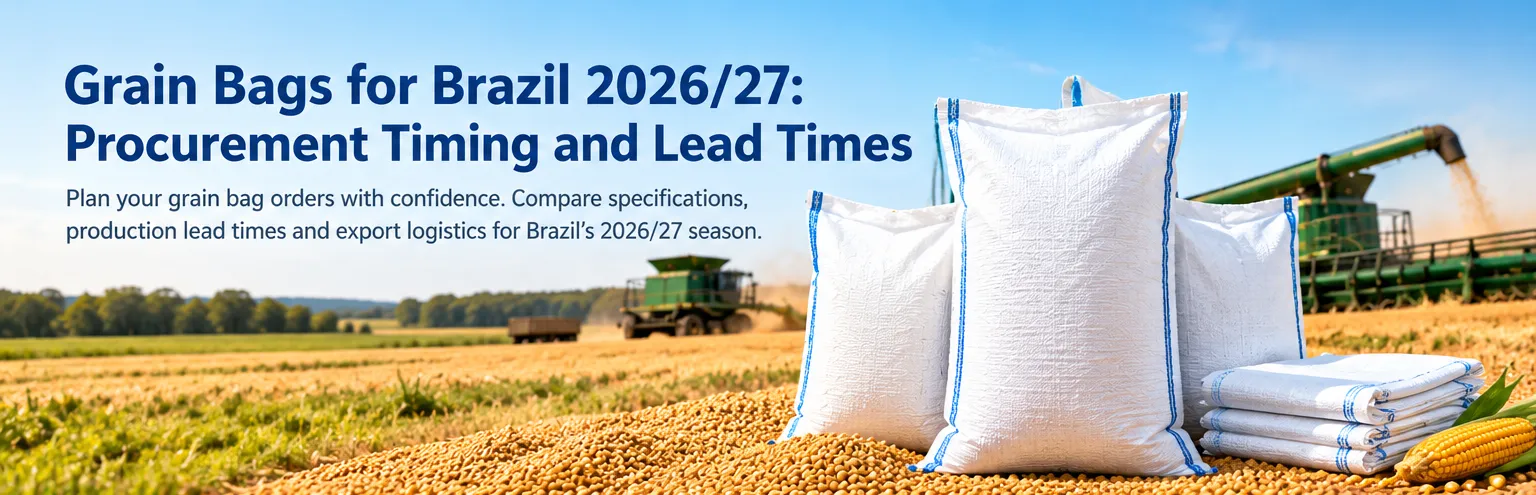
| Granos y legumbres | 25 kg and 50 kg PP woven sacks | Stitch strength, fabric weight, storage conditions and moisture management |
| Fertilizante | Printed or unprinted woven sacks | Load capacity, seam integrity, handling resistance and product compatibility |
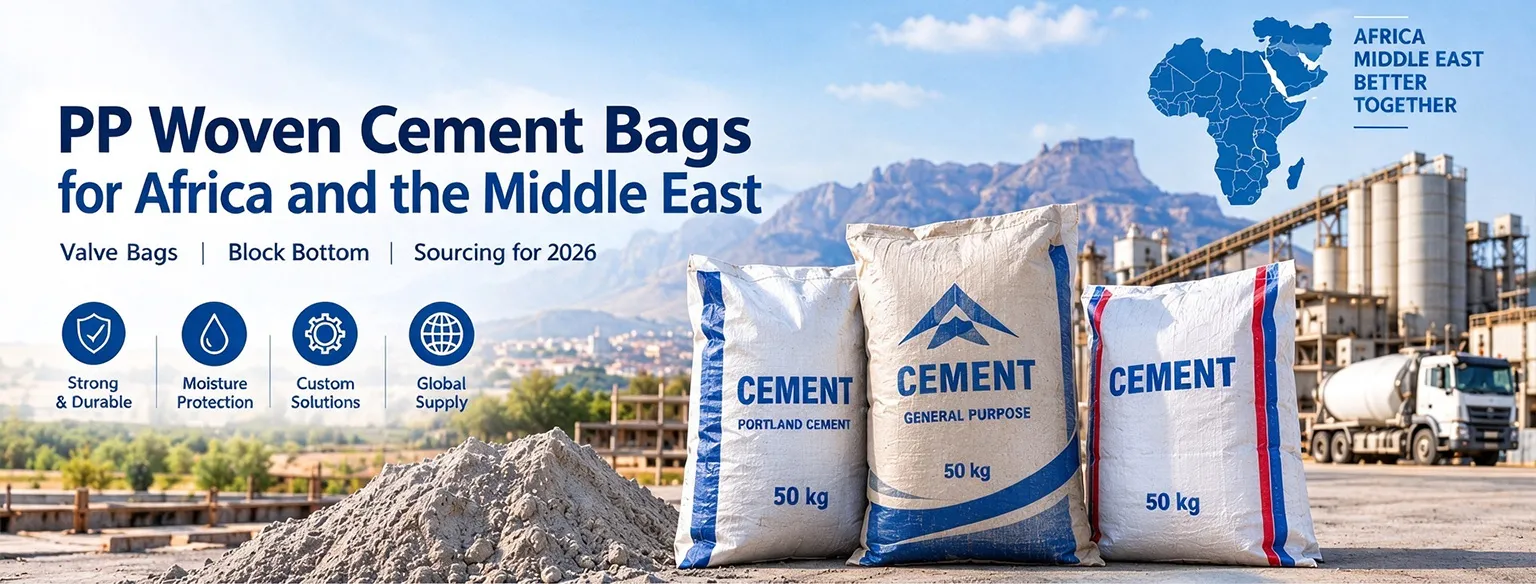
| Cemento | Heavy-duty sacks or valve bags, depending on filling equipment | Filling speed, dust control, stacking performance and line compatibility |
| Food and beverage | Printed, laminated or liner-equipped bags, depending on application | Print quality, barrier performance and applicable food-contact requirements |
| Industrial bulk materials | Heavy-duty woven sacks or FIBC, depending on load size | Safe working load, handling equipment and transport conditions |
Commodity sacks are primarily purchased on the basis of specification compliance and delivered cost. Laminated and BOPP-printed bags may offer additional value through branding, print consistency and product protection. FIBC is a separate bulk-packaging category whose suitability depends on the material, load and handling system.
These differences create opportunities for suppliers that can meet documented specifications consistently. However, segment growth rates should only be quoted when the underlying report identifies the market, geography, reporting period and measurement basis.
Respuesta rápida: Importing finished woven polypropylene bags may be competitive when an overseas supplier’s quoted price, freight, applicable import charges and delivery costs produce a lower total cost than local conversion. A weaker naira can raise the local-currency cost of imported resin and finished bags alike, so buyers should compare current, like-for-like landed-cost quotations rather than assume that either sourcing route is always cheaper.
Local Conversion Costs, PP Resin and Exchange-Rate Risk
Polypropylene resin is a major input cost in woven bag manufacturing. For Nigerian converters that rely on imported resin, local-currency production costs can change with the naira exchange rate, international resin prices, electricity and generator fuel costs, labour, waste rates and factory utilisation.
Imported finished bags are also exposed to foreign-exchange movements, along with ocean freight, applicable import duties and levies, customs clearance, port charges and inland delivery. As a result, naira depreciation does not automatically make imported bags cheaper than locally converted products.
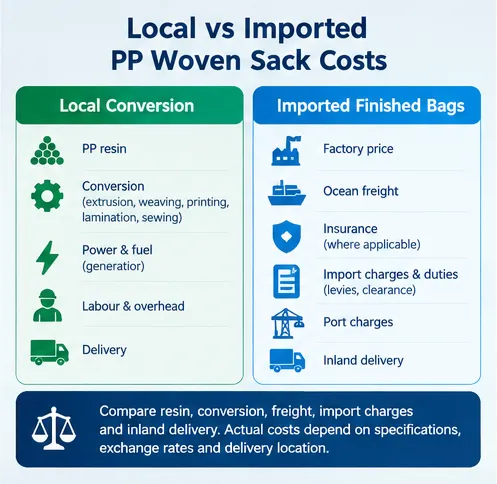
Buyers should compare quotations using the same bag specification, order quantity, quotation date, currency basis and delivery point. A useful comparison includes:
- Local conversion: resin, additives, extrusion, weaving, printing, lamination, sewing, overhead and delivery.
- Finished-bag imports: factory price, international freight, insurance where applicable, import charges, clearance, port-related costs and inland transport.
- Quality and operational risk: rejected bags, production downtime, damaged goods, inventory carrying costs and supplier lead times.
Use current supplier quotations and applicable Nigerian customs requirements to calculate the landed cost per accepted bag or per tonne of usable packaging. Treat resin-price ranges, resin cost shares and generator-cost premiums as time- and factory-specific inputs, not universal market benchmarks.
PP Woven Sack Specifications by Application
The right PP woven sack specification depends on the packaged material, filling method, storage conditions and distribution requirements. Confirm the final dimensions, fabric weight, closure design and any application-specific requirements before requesting a production quotation.
| Bag type | Typical capacity or format | Key specification options | What buyers should confirm |
|---|---|---|---|
| Standard PP woven sack | Commonly 25 kg or 50 kg, depending on application | Plain or printed, sewn closure, optional coating | Dimensions, fabric weight, seam strength and filling method |
| Laminated PP woven sack | Application-specific capacity | PP coating, optional liner, moisture-resistant construction | Required barrier performance, sealing method and storage conditions |
| BOPP-printed woven sack | Application-specific capacity | BOPP film lamination, branded graphics and customized printing | Artwork approval, print colours, finish and packaging requirements |
| Valve or block-bottom sack | Designed for compatible filling systems | Valve opening, bottom construction and line-specific dimensions | Filling equipment compatibility, filling speed and dust-control requirements |
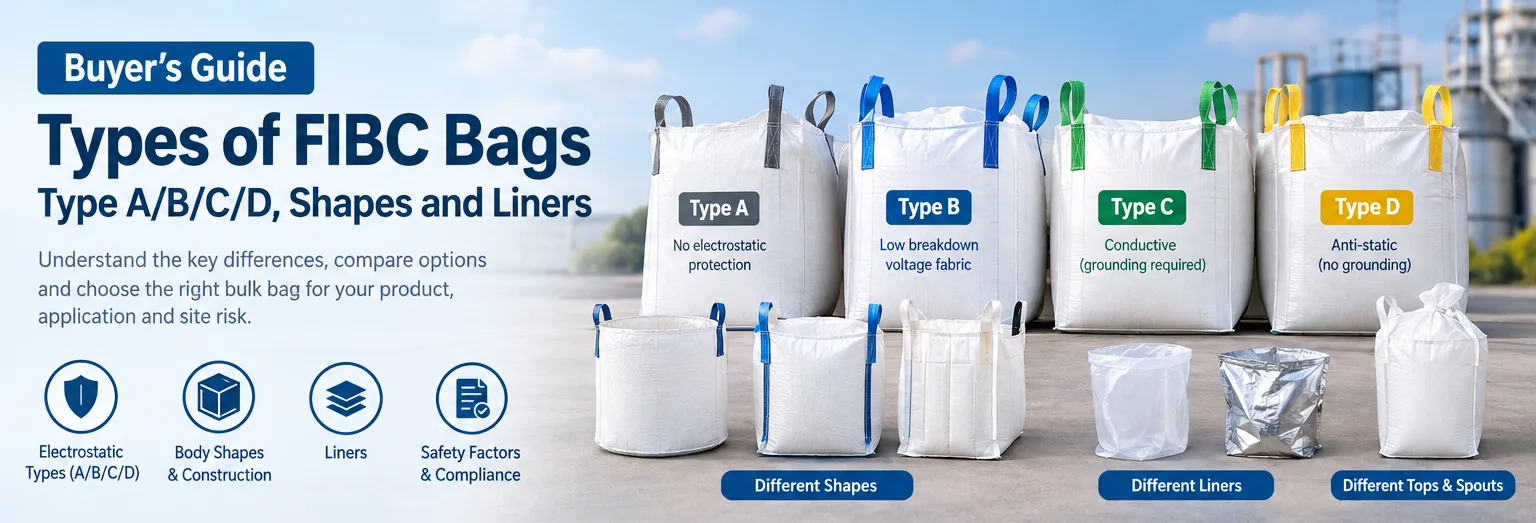
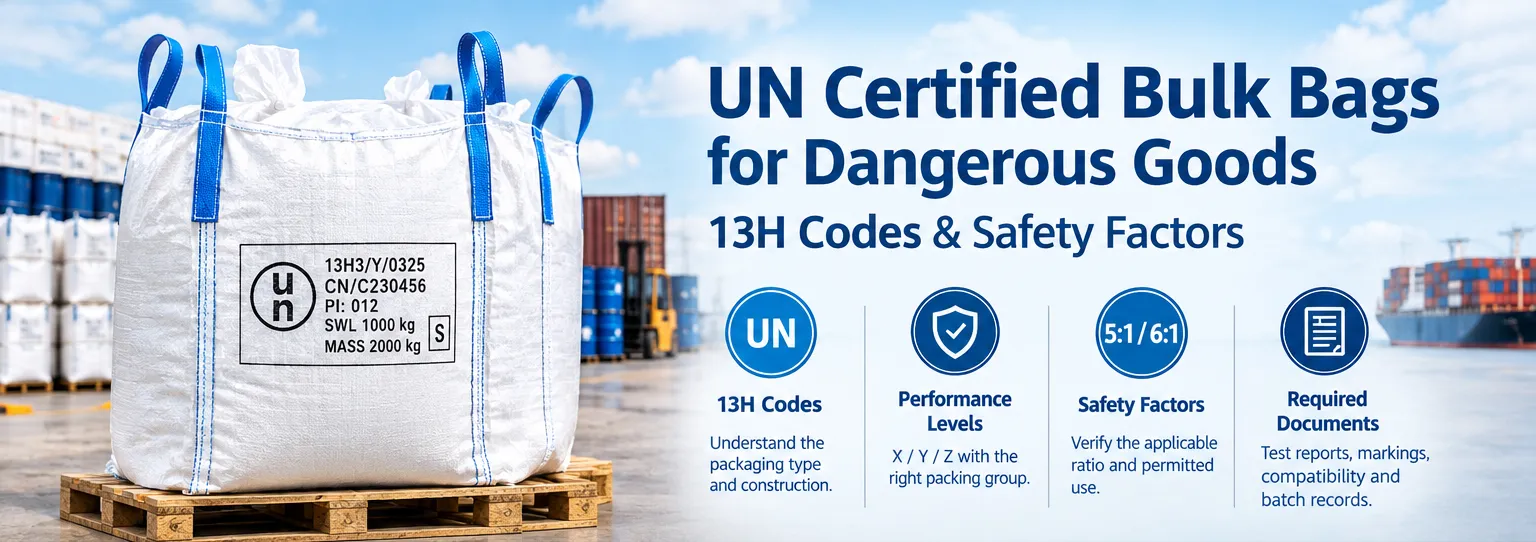
| FIBC (bulk bag) | Commonly designed for bulk loads of 500–1,000 kg or more, depending on specification | Different lifting loops, inlet and discharge options, coated or uncoated fabric | Safe working load, safety factor, lifting method and applicable test requirements |
These formats are not interchangeable. Confirm the product’s actual filling, transport and storage conditions before selecting a bag. Where food-contact compliance, moisture barriers or specialized bulk-handling requirements apply, specify the relevant requirements and request supporting documentation from the supplier.
Landed Cost, Import Charges and Buyer Checklist
Factory price alone is not a reliable basis for comparing imported and locally converted PP woven sacks. Nigerian buyers should calculate the total delivered cost using the same specification, quantity and delivery point.
Key cost items include:
- Freight and insurance: Confirm the quotation’s shipping terms and whether freight and insurance are included.
- Customs and import charges: Verify the current tariff classification, applicable duties, levies and clearance requirements for the specific product.
- Port and inland logistics: Include port-related charges, storage where applicable, and transport from the arrival port to the final warehouse.
- Financing and inventory: Consider payment terms, exchange-rate exposure, transit time and the working capital tied up in imported stock.
- Quality and rejection risk: Evaluate fabric strength, seam integrity, print accuracy, dimensional consistency and agreed acceptance criteria.
- Supplier and shipment reliability: Confirm production lead time, inspection arrangements, packing details and the process for handling nonconforming goods.
For freight assumptions, consult the 2026 Q4 shipping cost guide to understand the factors affecting shipment costs. For broader regional context, see the Bolsas tejidas PP Mercado africano overview. For fertilizer packaging specifically, the bolsas tejidas PP fertilizantes guide covers relevant product options.
Choosing a PP Woven Bags Manufacturer for Nigeria
When evaluating a PP woven bags manufacturer, Nigerian importers should compare production capability, specification control, export experience and the supplier’s ability to support repeat orders. SITONG PACKAGING manufactures PP woven bags at facilities in Haicheng (Anshan), Liaoning, China, and Cambodia, and exports to international markets. Visit the Fabricante de bolsas tejidas de PP page to review the company’s product and manufacturing information.
Before placing an order, confirm the minimum order quantity (MOQ), production lead time, printing approval process, packing method, shipment schedule and documentation requirements. Buyers should also verify which production facility will fulfil the order and confirm the applicable product specifications and shipping terms in writing.
For a comparable wholesale quotation, provide the bag type, finished dimensions, fabric weight or agreed strength requirements, printing colours, lamination or liner requirements, order quantity, destination port and target delivery date. A qualified PP woven bags manufacturer should confirm the applicable MOQ, production lead time, specifications and shipping terms before order confirmation. Contact SITONG PACKAGING through the company’s official contact page to discuss your requirements and request a quotation. Compare offers using the same specifications and delivery terms so that the landed cost can be assessed consistently against local alternatives.
For importers and distributors purchasing PP woven bags wholesale, confirm MOQ, printing consistency, repeat-order availability and shipment terms before comparing supplier quotations.
Conclusión
Nigeria offers recurring packaging opportunities across agriculture, fertilizer, cement, food processing and industrial applications. Whether locally converted sacks or imported finished bags provide better value depends on current input costs, exchange rates, shipping charges, import requirements and product quality.
Importers should compare ordinary PP woven sacks, laminated or BOPP-printed bags, and FIBC against their actual application requirements. Request a specification-based quotation, confirm the destination and shipping terms, and evaluate landed cost per accepted bag rather than relying on factory price alone. For sourcing options and manufacturing information, visit the PP woven bags manufacturer page.
Preguntas frecuentes
Not always. Compare the finished-bag purchase price, freight, applicable import charges, clearance, port costs and inland delivery against the equivalent locally converted bag. Use the same specification, order quantity and delivery point for both quotations.
Provide the bag’s intended application, finished dimensions, fabric weight or agreed strength requirements, capacity, printing colours, lamination or liner requirements, closure type and order quantity. Confirm whether the bag must meet any food-contact or other application-specific requirements.
Include the quoted bag price, freight, insurance where applicable, applicable duties and levies, clearance, port charges, inland transportation and any relevant financing or inventory costs. Confirm current customs requirements for the specific product before placing an order.
Review production capability, quality-control procedures, printing consistency, sample approval, MOQ, production lead time, shipment arrangements and documentation. Confirm the manufacturing site and agree on measurable product specifications and acceptance criteria before bulk production.