

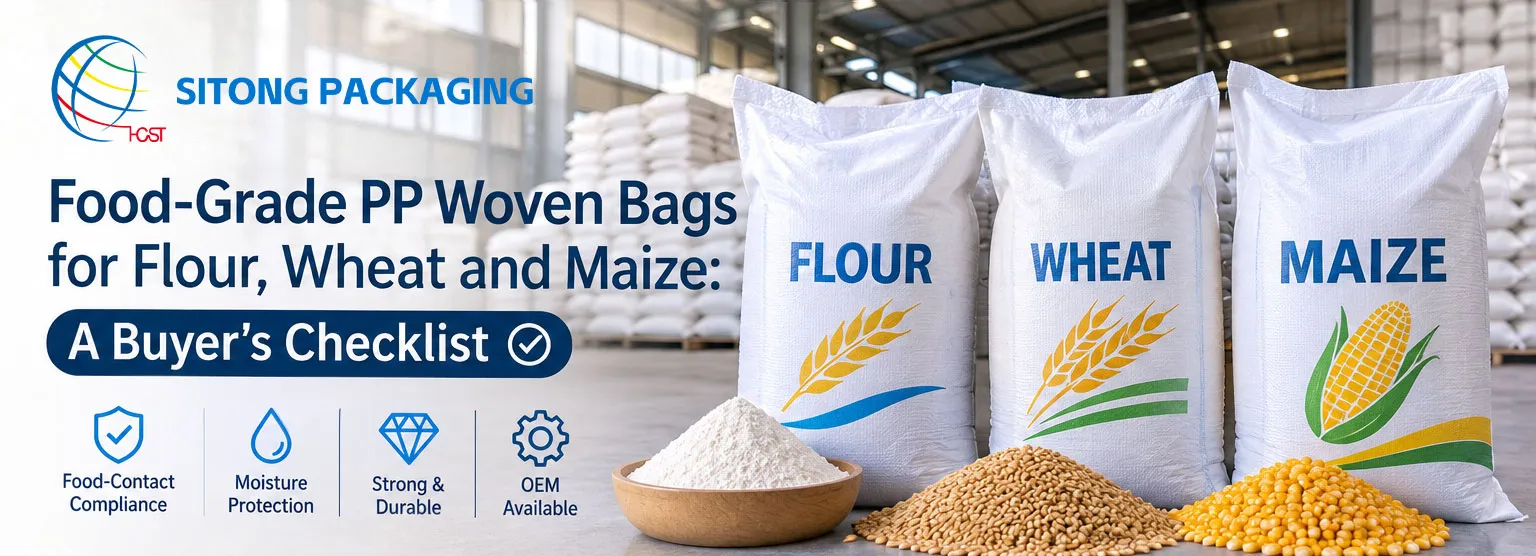
Food-grade PP woven bags for flour, wheat and maize are used by flour mills, grain traders and food processors to pack wheat, maize and milled products for storage and transport. Choosing the right sack involves more than selecting a fabric weight. Buyers need to consider food-contact suitability, particle size, moisture exposure, filling conditions and the length of storage.
Flour requires closer control of dust leakage and moisture than whole wheat or maize kernels, while maize meal has similar packaging needs to other fine powders. The choice of woven fabric, coating, lamination or inner liner should reflect the product’s particle size, filling process and storage conditions. This guide explains the specifications and compliance documents buyers should check before ordering.
For the wider range of sack types and materials, see our food-grade PP woven bags overview.
Why Flour, Wheat and Maize Need a Food-Grade Sack
A sack that holds cement or fertiliser may look similar to a grain sack, but the two are not interchangeable. Food packaging must not transfer unwanted substances to the product, and it must protect a food that will be eaten or further processed. Three practical concerns drive the specification.
- Food-contact suitability. The polymer, additives, processing aids and printing materials must be suitable for the intended food-contact application. Buyers should request material declarations and supporting compliance documents rather than relying on a general food-grade claim.
- Particle retention. Fine flour can escape through fabric openings and seams, creating product loss and dust around filling and handling areas. Fabric density, coating, liner selection and closure design should match the particle size.
- Moisture protection. Dry grain and flour can absorb moisture during storage and transport. Coatings, laminations or inner liners can reduce moisture exposure, but the actual protection depends on the complete bag construction, closure and storage conditions.
Food and animal feed applications should be specified separately. A sack intended for maize for human consumption may be subject to different material, hygiene and documentation requirements from one used for animal feed. Buyers should confirm the intended use before approving the bag specification.
What “Food-Grade” Actually Requires
“Food-grade” is not a single material specification or a universal certification. It refers to whether the complete packaging construction is suitable for its intended food-contact use, taking into account the polymer, additives, processing conditions, printing materials and contact conditions.
For the US market, buyers commonly refer to FDA 21 CFR 177.1520 for olefin polymers used in food-contact applications. In the EU, Regulation (EC) No 1935/2004 establishes the general framework for food-contact materials, while Regulation (EU) No 10/2011 sets specific requirements for plastic food-contact materials. Compliance depends on the intended application and applicable conditions of use; citing a regulation alone does not establish that a finished woven sack complies.
Before ordering, ask the supplier to identify the materials used in the bag, the applicable food-contact requirements and the conditions covered by its compliance documentation. Depending on the destination market and buyer requirements, supporting evidence may include material declarations, migration test reports and other relevant technical documents. Check that the evidence covers the actual construction being purchased, including any coating, liner and printing materials.
For plastic food-contact materials in the EU, a Declaration of Compliance (DoC) is an important part of the documentation process. Buyers should check that the declaration and supporting documents cover the relevant materials, intended food types and conditions of use. Where a woven sack includes coatings, liners or printing layers, the compliance assessment should address the applicable components of the complete packaging construction.
Management-system certification is a separate part of supplier evaluation. SITONG PACKAGING maintains relevant BRCGS and ISO certifications for its applicable manufacturing operations. Buyers can request current certificates to verify the certified site, scope and validity period. These certifications support supplier evaluation but do not replace product-specific food-contact declarations or test evidence. For a fuller introduction to fabric and construction choices, our grain bag selection guide covers the selection criteria in more detail.
Barrier and Closure Options
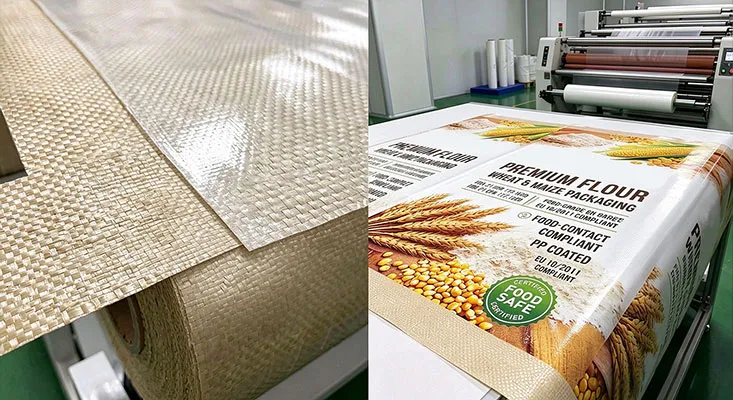
The barrier is chosen to match the product’s sensitivity to moisture and the length of storage. For dry products moved quickly through supply chains, an uncoated or lightly coated woven sack may be enough. For flour or for grain held through a humid season, more protection is usually justified.
- Uncoated woven fabric. Suitable for some dry whole-grain applications where breathability and cost are priorities. It offers limited resistance to fine-particle leakage and moisture exposure, so it is generally less suitable for fine flour.
- PP-coated woven fabric. A PP coating covers the woven surface and helps reduce dust leakage through fabric openings. It also provides additional resistance to moisture penetration, although the actual barrier depends on coating weight, coverage and bag construction.
- BOPP-laminated bags. A printed BOPP film provides a smooth surface for product information and branding, along with additional moisture resistance. Performance depends on the film, lamination quality and finished bag construction.
- بطانة داخلية من البولي ايثيلين. A separate liner provides an additional barrier between the product and the woven outer sack. Specify the liner thickness, dimensions, fit and sealing method according to the required moisture protection.
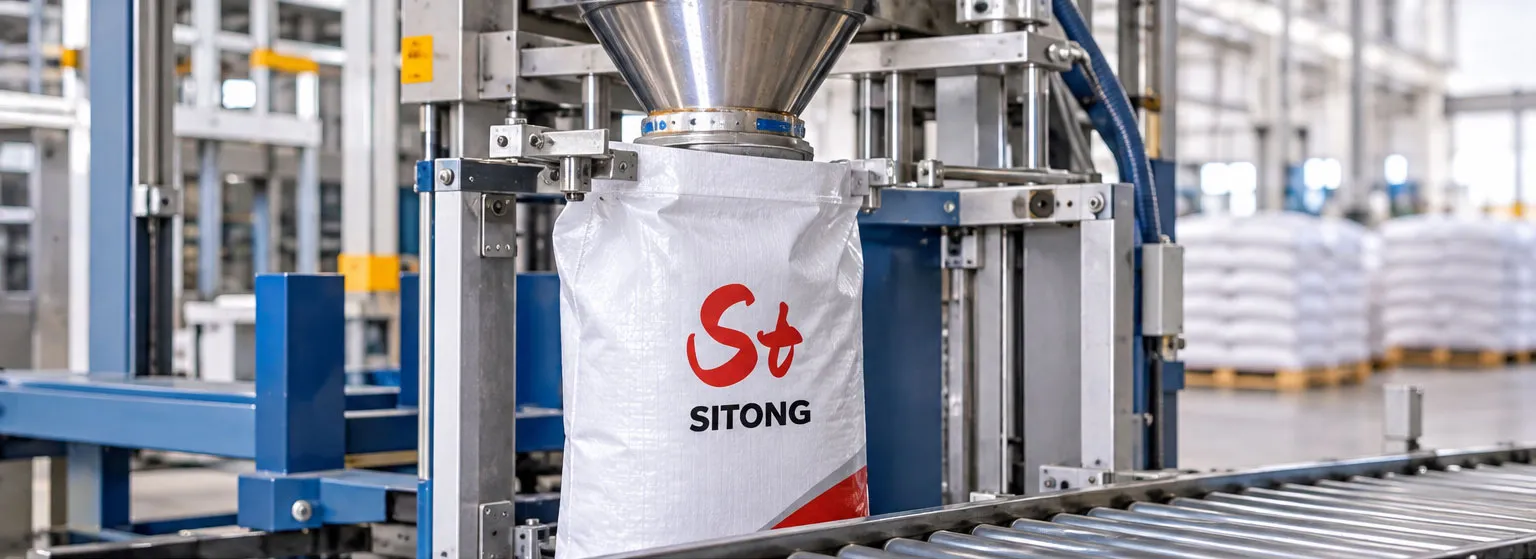
Closure design should also match the filling process and product characteristics. Open-mouth sewn bags are widely used for conventional packing, while valve-style constructions may suit compatible automated filling systems. For fine powders, the sewing area and final closure deserve particular attention because leakage can occur even when the fabric itself retains the product well.
For grain intended for extended storage, bag construction is only one part of the decision. Grain moisture content, warehouse conditions, temperature and pest control also affect storage performance. See our hermetic grain storage guide for a comparison of storage approaches.
Specification Checklist for Flour, Wheat and Maize Bags
Use the following checklist when preparing a quotation request. The final specification should be confirmed against the product, filling equipment, storage conditions and destination-market requirements. GSM alone is not enough to determine bag performance; fabric construction, seams and closure also need to be considered.
| المعلمة | معلومات للتأكيد | Why It Matters |
|---|---|---|
| منتج | Flour, wheat, whole maize or maize meal; human food or animal feed | Defines product handling and compliance requirements |
| ملء الوزن | 5, 10, 25 or 50 kg, as applicable | Determines bag dimensions and construction |
| أبعاد الحقيبة | Width, length and bottom construction | Ensures compatibility with filling and handling equipment |
| مواصفات القماش | GSM, tape denier, weave density and agreed tolerances | Helps control fabric consistency and mechanical performance |
| بناء السطح | Uncoated, PP-coated or BOPP-laminated | Affects particle retention, moisture protection and printing |
| بطانة داخلية | Required or not; material, thickness, fit and sealing method | Defines the additional barrier between product and outer sack |
| إنهاء | Open-mouth sewn, heat-sealed or valve construction | Must match filling and sealing equipment |
| الطباعة | Artwork, colours, printing method and approved ink system | Supports product identification and branding |
| Food-contact evidence | Applicable regulations, material declarations and test reports where required | Supports compliance assessment for the intended application |
| Storage and transit | Storage duration, climate, stacking and transport conditions | Helps determine the necessary barrier and construction |
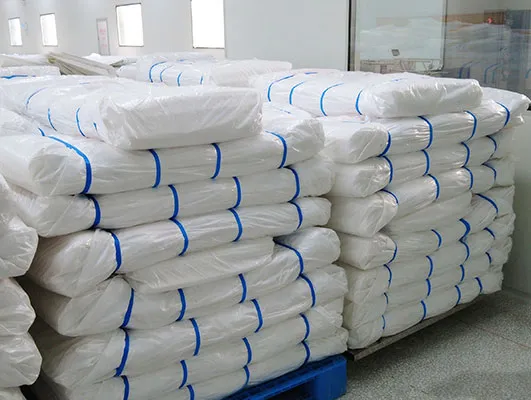
| Packing format | Bundles, bales, pallet quantity and wrapping | Affects warehouse handling and shipment planning |
| تفاصيل الطلب | Quantity, destination, delivery schedule and repeat-order requirements | Allows the supplier to assess production and delivery feasibility |
How to Choose PP Woven Bags by Product
Flour. Flour requires good particle retention because fine powder can escape through the weave, seams and closure. PP-coated woven fabric is a practical starting point, while a suitable inner liner may be considered when additional moisture protection is needed. Buyers should also check dust leakage during filling and handling, not just the appearance of the finished bag.
Wheat. Whole wheat kernels are less likely to sift through the fabric than flour, so the main considerations are bag strength, moisture exposure and storage conditions. For relatively short storage under dry, covered conditions, an uncoated or coated sack may be sufficient. Longer storage or humid transport conditions may justify an additional liner, depending on the grain’s moisture content and storage requirements.
Maize. First confirm whether the bag is intended for whole maize, maize meal, food processing or animal feed. Whole kernels generally require a different particle-retention specification from finely milled maize. For maize meal, consider the same dust-control measures used for flour. For whole maize, focus more on fabric strength, moisture exposure and handling conditions.
In all three applications, the filling method, stacking arrangement and expected storage period should be confirmed before finalising the bag design. A specification developed for one product or packing line should not automatically be reused for another.
What to Check When Sourcing from a PP Woven Bag Manufacturer
When comparing manufacturers, look beyond the quoted price. Ask how polypropylene materials and additives are controlled, how printing materials are selected, how finished bags are inspected and whether the supplier can maintain the agreed specification across repeat orders. For food packaging, also confirm which production site and manufacturing processes are covered by the relevant quality and food-safety management certifications.
SITONG PACKAGING operates manufacturing facilities in Haicheng, Liaoning, China, and Cambodia. With around 20 production lines and approximately 30,000 tonnes of annual production capacity across its operations, the company handles key processes including tape extrusion, weaving, coating, printing, cutting and sewing. These in-house capabilities support different PP woven sack constructions and OEM requirements, from fabric specifications to finished bag dimensions and printing.
For flour, wheat and maize packaging projects, buyers can discuss fabric GSM, bag dimensions, coating or lamination, inner liners, printing and packing formats with the SITONG team. Food-contact suitability should be confirmed separately for the specific materials and finished construction, with supporting documents reviewed against the destination market’s requirements. Learn more about our قدرات تصنيع الأكياس المنسوجة PP و OEM and custom packaging services.
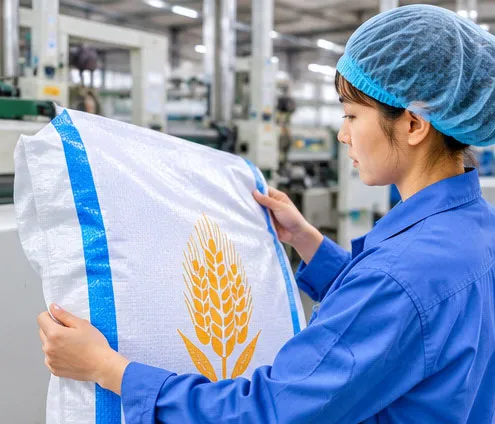
Preparing an Enquiry for Food-Grade PP Woven Bags
To receive an accurate quotation, send the supplier the product name, intended use, filling weight, bag dimensions and estimated order quantity. Also specify the required fabric GSM, coating or lamination, inner liner, closure type, printing colours and artwork. If available, include reference samples or drawings so the manufacturer can assess the construction and production requirements before sampling.
For food-contact applications, also identify the destination market and any required compliance documents. If the bags will be used on an automated filling line or stored for an extended period, share the equipment requirements and expected storage conditions. This information helps the manufacturer assess the construction, documentation and production requirements before sampling and quotation.
Contact SITONG PACKAGING to discuss your flour, wheat or maize bag specifications and OEM requirements.
الأسئلة المتداولة
Yes. Food-grade PP woven bags for flour, wheat and maize can be used when the materials, additives, printing components and finished construction are suitable for the intended application. Flour generally needs better particle retention than whole grain, so coated fabric or an inner liner may be considered.
Not every food-contact application requires an FDA approval certificate for the finished bag. For the US market, buyers should assess the applicable FDA food-contact requirements, including 21 CFR 177.1520 where relevant, and request supporting material declarations or test reports. Compliance should be evaluated for the intended use and complete packaging construction.
PP-coated bags are a practical option when the main priorities are reducing flour leakage and improving moisture resistance. BOPP-laminated bags offer a printable outer film and additional moisture protection. The choice depends on the required barrier, printing needs, storage conditions and budget.
Both filling weights are common options for grain and flour packaging. The final dimensions and fabric specification depend on product density, filling equipment, handling conditions and stacking requirements. Buyers should confirm the finished bag dimensions and construction rather than selecting by weight alone.
Not automatically. Although the physical bag design may be similar, material suitability, hygiene controls and documentation can differ between food and feed applications. Specify the intended use clearly and confirm the applicable requirements before production.
Request a material declaration identifying the polymer and relevant additives, a statement of applicable food-contact requirements, and migration test reports where required. Also check the scope and validity of relevant management-system certificates. These documents serve different purposes and should not be treated as interchangeable.