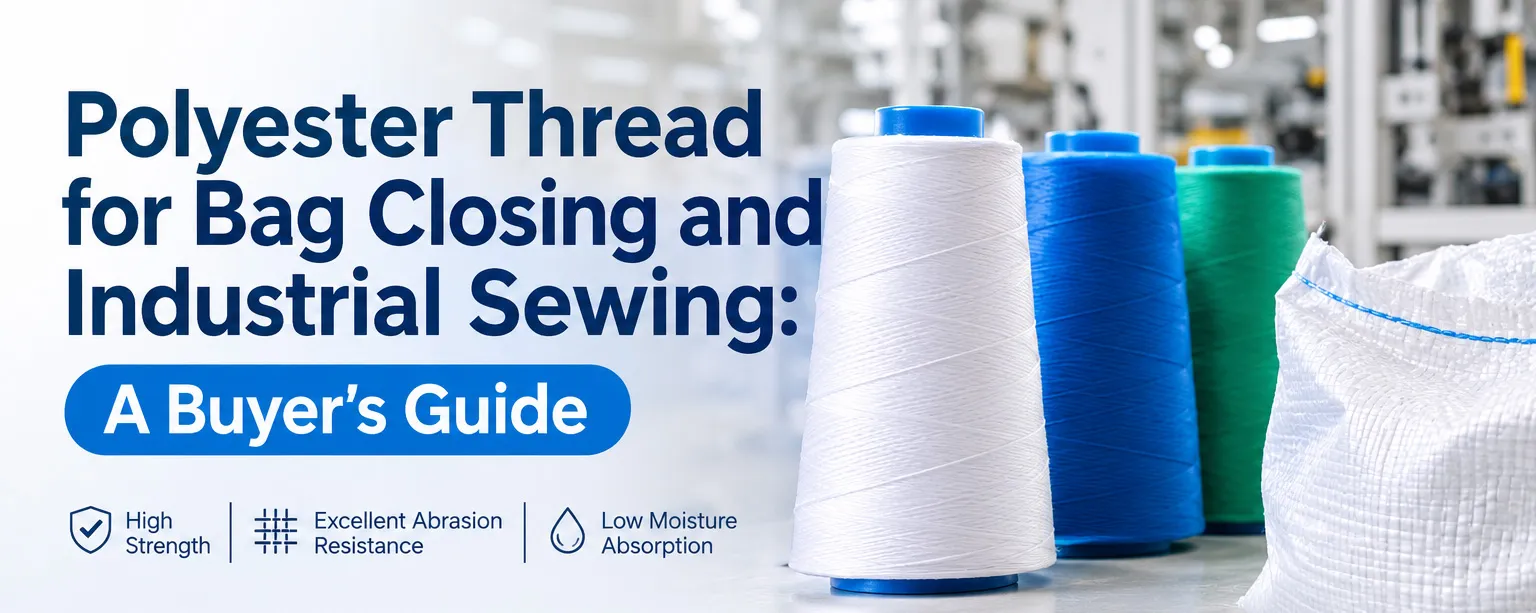




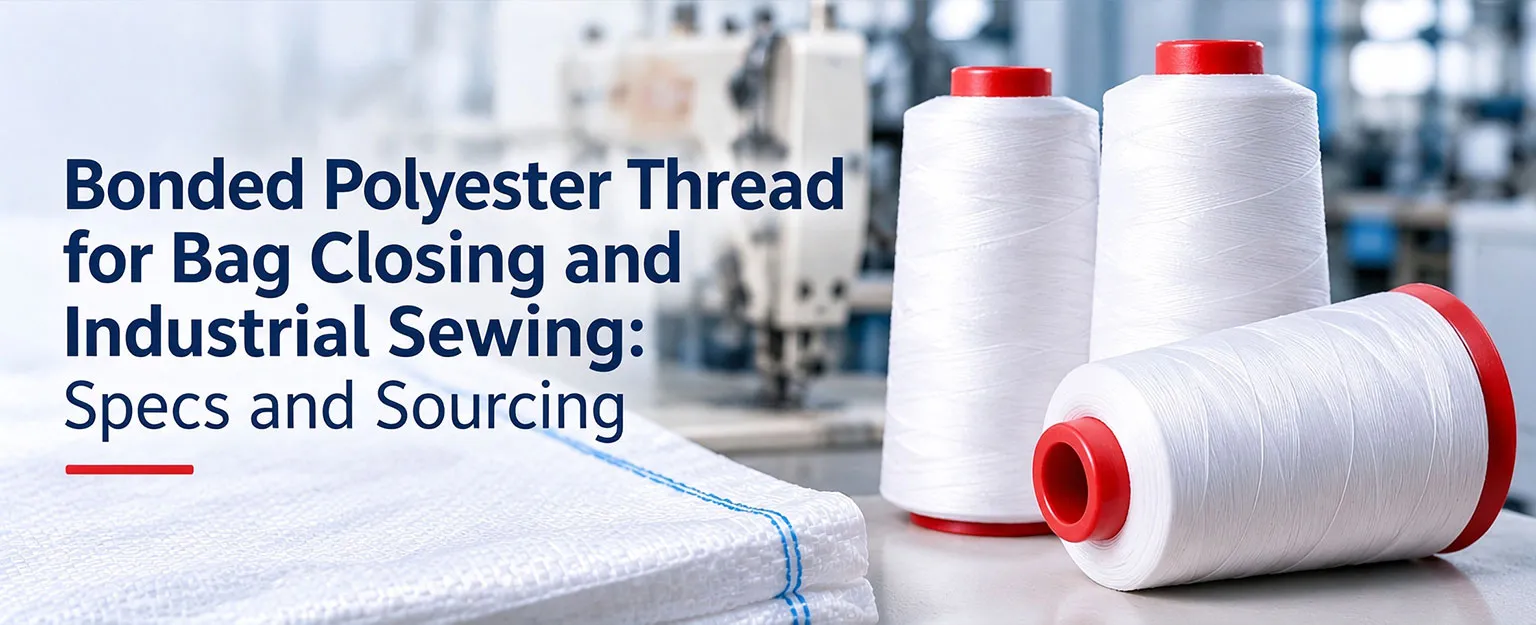
Bonded polyester thread is made from continuous polyester filaments treated with a bonding agent that helps hold the filaments together during sewing. This construction reduces filament separation and fraying, helping maintain consistent thread feeding on industrial sewing machines. Compared with spun polyester, bonded filament thread generally offers lower lint generation and better abrasion resistance, making it suitable for woven bag closing, FIBC sewing and other demanding industrial applications. Its UV performance depends on the polyester grade and any additional stabilisation treatment. If you are sourcing thread for seam closure on PP woven bags or FIBC, the decision is not simply “polyester or nylon”—it is which polyester construction, what size, and what documentation comes with it.
Bonded polyester thread is continuous-filament polyester treated with a bonding resin that holds the filaments together. The bond reduces fraying and lint in high-speed sewing and is why bonded thread is specified for load-bearing and outdoor seams.
Bonded Polyester Thread at a Glance
- Construction: continuous filaments bonded with a resin coating
- Key behaviour: reduced filament separation, lower lint generation and more consistent feeding under suitable machine conditions
- Performance factors: breaking strength, abrasion resistance, elongation, UV resistance and moisture stability
- Size systems: Tex (grams per 1,000 m) is the reliable reference; V-size and ticket numbers vary by maker
- Typical bag use: woven bag bottom and top closure, FIBC seams, webbing and handle attachment
- Specify: fibre type and construction, size, breaking strength, finish and test basis
What “Bonded” Actually Means
Polyester thread comes in several constructions, and the word polyester alone says little about performance. Spun polyester is made from short staple fibres twisted into a yarn, which makes it soft and economical but more prone to lint and lower in abrasion resistance. Twisted filament polyester uses continuous filaments twisted together without a bonding resin, so it is smoother than spun but can separate and fray at high sewing speeds. Bonded polyester starts with continuous filaments and adds a resin coating that holds them as a single strand.
The bonding treatment helps keep the continuous filaments together as the thread passes through the needle, tension discs and other machine components. This can reduce filament separation, surface fuzz and sewing interruptions, particularly in high-speed industrial applications. Actual stitch consistency and thread-break performance still depend on thread quality, machine adjustment, needle selection and sewing conditions. For a bag producer running large volumes, these factors should be evaluated together rather than relying on thread construction alone.
Point à retenir : “polyester thread” is an ambiguous purchase description. Name the construction—bonded continuous filament, twisted filament or spun—before comparing prices, because the three do not share the same strength, lint or abrasion behaviour.
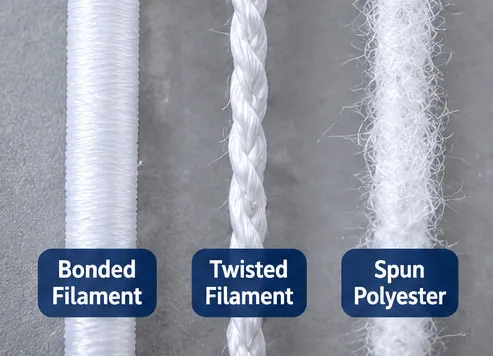
Bonded vs Spun vs Twisted Filament
| Propriété | Bonded continuous filament | Twisted filament | Spun polyester |
|---|---|---|---|
| Fibre form | Continuous filaments + resin bond | Continuous filaments, no bond | Short staple fibres twisted |
| Fraying and lint | Faible | Moderate at high speed | Higher |
| Résistance à l'abrasion | Haut | Moderate | Lower |
| Élongation | Depends on yarn specification | Depends on twist and yarn specification | Depends on staple fibre and yarn construction |
| Suited seams | Load-bearing, outdoor, industrial | Lighter seams and linings | Lightweight, non-load-bearing |
These are general tendencies by construction, not guarantees for every product. Actual performance depends on the specific yarn, size, finish and sewing conditions, so a buyer should require test data for the exact thread being supplied rather than assuming all bonded thread behaves alike.
Why Bag Closing and Industrial Sewing Favour Bonded Thread
A woven bag seam has to hold the filled weight through filling, stacking, truck transport and container handling. The thread in that seam sees abrasion against conveyors and pallet edges, tension spikes during filling, and in many cases months of sunlight in storage or transit. Bonded polyester is commonly used in these applications because it offers good abrasion resistance, relatively low moisture absorption and useful UV stability. These properties make it suitable for woven bags and FIBC exposed to outdoor storage, handling and humid transport conditions. However, seam performance also depends on thread construction, fabric compatibility and sewing conditions. For FIBC and heavy woven sacks, the seam is a safety-relevant part of the bag, not a cosmetic detail.
Bonded nylon is another option for industrial sewing, particularly where high tensile strength, flexibility or abrasion resistance is required. However, nylon absorbs more moisture than polyester and generally has lower resistance to prolonged UV exposure. Bonded polyester is often preferred for woven bags and industrial products exposed to outdoor storage or humid transport conditions because of its dimensional and moisture stability. The final choice should be based on the thread’s tested properties, fabric compatibility and the finished seam’s performance requirements.
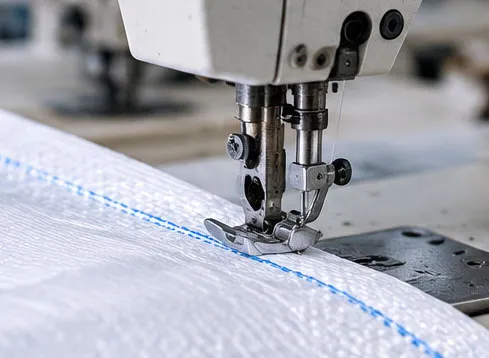
When comparing industrial sewing threads, buyers should review both breaking strength and elongation at break. Breaking strength indicates the force required to break the thread under specified test conditions, while elongation shows how much it stretches before failure. These values help assess thread suitability for different seams, but they should be interpreted together with the sewn seam’s construction and performance requirements.
Choosing the Right Size: Tex, Denier and Ticket Numbers
Thread size is where sourcing errors are common. Tex measures the mass in grams of 1,000 metres of thread, while denier measures grams per 9,000 metres. The conversion is straightforward: 1 Tex equals 9 denier. Tex is generally more useful when comparing finished industrial sewing threads, whereas denier is commonly used for filament yarn specifications. Ticket and V-size numbers are also used commercially, but their relationships with Tex can vary between manufacturers. For purchasing, specify the nominal Tex value and request the supplier’s corresponding size information.
For woven PP sacks and industrial sewing applications, Tex 70 to Tex 135 can serve as an initial reference range for certain seam types. However, FIBC body seams, lifting-loop attachments and other load-bearing areas may require different thread specifications depending on the bag design and applicable performance requirements. Buyers should match thread size to fabric construction, seam type, stitch density and machine capability. The supplier’s breaking-strength data and a sewn sample provide a more reliable basis for final selection than a nominal Tex value alone. For FIBC production, distinguish between body seams and lifting-loop attachment seams: these areas have different structural and load requirements, so the same thread size should not be used throughout the bag. A high thread breaking-strength rating alone does not guarantee adequate lifting-loop seam performance.
| Specification field | What to put on the order |
|---|---|
| Fibre and construction | Polyester, bonded continuous filament (not “polyester” alone) |
| Taille | Nominal Tex, with the V-size or ticket equivalence noted |
| Strength | Minimum or target breaking strength, test method and test conditions |
| Finish and treatment | Bonded finish, colour, lubrication requirements and UV-stabilised grade if needed |
| Package | Cone or spool format and length, matched to the machine |
| Documentation | Batch traceability and test record for the supplied lot |
A Buyer’s Checklist for Bonded Thread
- Confirm the construction is bonded continuous filament, not spun or twisted, in writing.
- Specify size in Tex and request the breaking strength with a named test method.
- Check thread tension and needle compatibility on the intended sewing machine.
- Ask whether a UV-stabilised grade is used for outdoor or transit exposure, and how it is documented.
- Match the cone or spool format to your sewing machines to avoid feed problems.
- Run a sewing trial on the actual bag fabric and seam, checking thread feeding, lint, skipped stitches, stitch consistency and finished seam strength.
- Request batch traceability so a seam problem can be traced to a thread lot.
Thread selection is one part of a reliable bag-sewing specification. For buyers sourcing sewing materials for PP woven sacks and FIBC production, SITONG’s polyester thread range et polypropylene thread range provide options for different sewing requirements. For a broader comparison of thread types, fabric compatibility and bag-closing methods, see our industrial sewing thread guide.
Match Thread to the Seam and Load
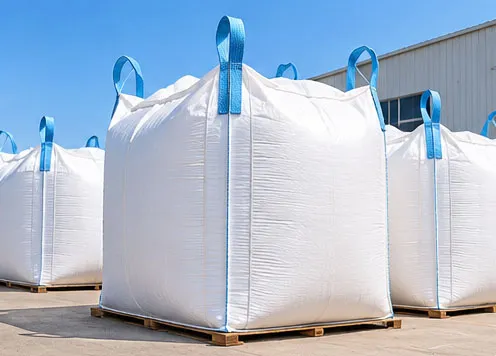
Bonded polyester thread is a practical option for woven bag closing and industrial sewing where consistent feeding, reduced filament separation and abrasion resistance are important. For buyers, the key is to specify more than just the material: confirm the bonded continuous-filament construction, nominal Tex size, breaking strength, finish and batch traceability. For PP woven sacks and FIBC, the final thread choice should also match the seam design, fabric construction and intended load. A production trial on the actual bag material is the most practical way to confirm sewing compatibility before placing a bulk order.
Questions fréquemment posées
No. Regular polyester may be spun or twisted filament. Bonded polyester uses continuous filaments held together by a resin coating, which reduces fraying and lint and improves consistency in high-speed industrial sewing.
Bonded polyester is generally preferred where UV and moisture stability matter, such as outdoor storage or humid transit. Bonded nylon offers high tensile strength and a softer hand but is less stable under prolonged sunlight and absorbs more moisture.
Depending on the fabric, seam and load, industrial buyers often start in the Tex 70 to Tex 135 range, with heavier sizes for load-bearing points. Confirm with a sewn trial and a supplied breaking-strength value rather than size alone.
Tex is a consistent international measure of thread mass per 1,000 metres, while ticket and V-size labels vary between manufacturers. Using Tex makes quotes and test reports comparable across suppliers.
Only where the finished product sees sustained sunlight, such as outdoor-stored bags or long transit exposure. Ask whether a UV-stabilised grade is available and how that property is documented.
Yes. Bonded polyester thread can be used for various FIBC sewing operations, including body seams and other industrial stitching applications. However, thread size and strength must match the bag’s construction, seam design and load requirements. Lifting-loop attachments require particular attention to seam engineering and finished-bag testing. Always confirm suitability through the relevant bag performance requirements rather than selecting thread by material or Tex size alone.