

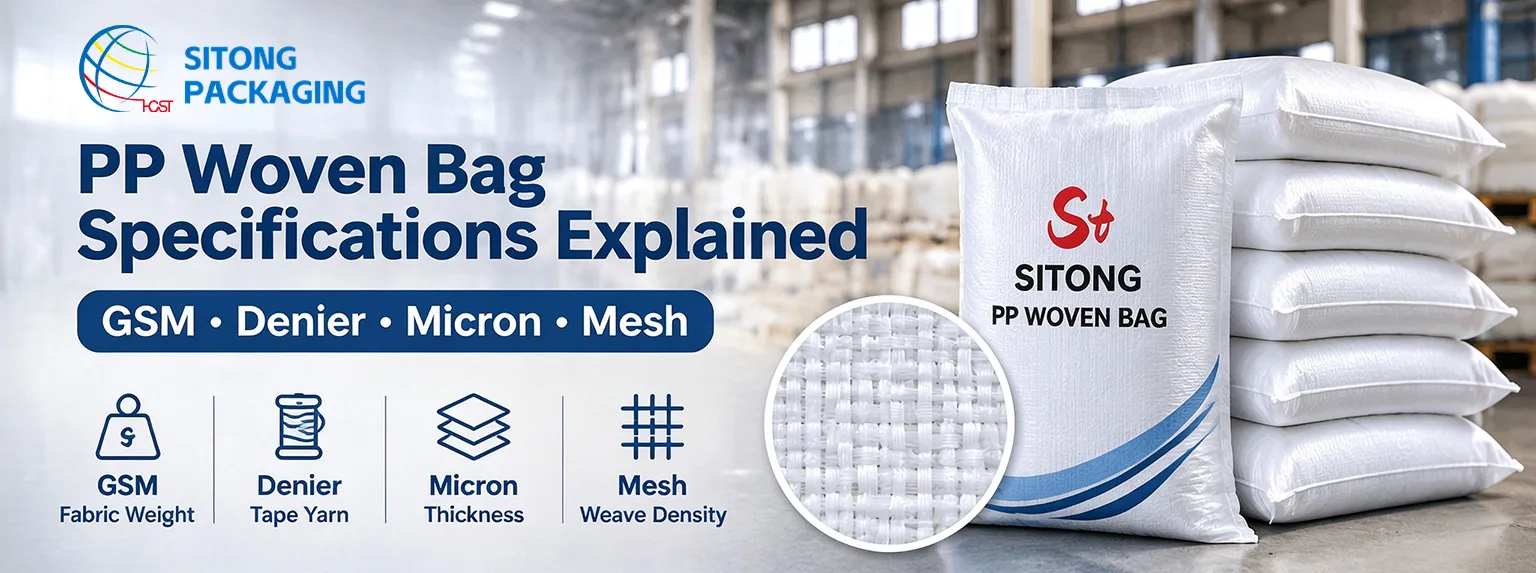
When sourcing PP woven bags, buyers often compare quotations based on fabric weight, tape denier, coating thickness and weave density. These specifications affect material consumption, bag construction and suitability for different applications, but no single figure tells the whole story.
Understanding how GSM, denier, micron and mesh relate to one another helps importers evaluate fabric quality, identify differences between suppliers and avoid paying for specifications that do not match their actual packaging requirements. This guide explains what each parameter means and what to confirm before placing an order.
Why PP Woven Bag Specifications Matter
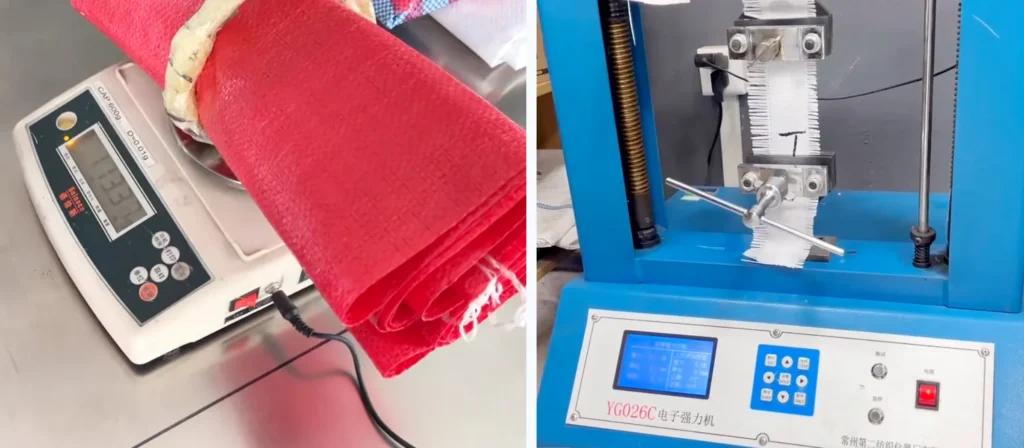
Two PP woven bags with the same GSM may have different tensile and tear performance because fabric weight alone does not describe the complete construction. Tape denier, tape width, weave density, resin quality and manufacturing conditions all contribute to the finished fabric’s properties.
For importers sourcing rice, fertilizer, animal feed or industrial packaging, comparing the complete specification is more useful than choosing a supplier based on GSM alone. The following parameters provide a practical starting point for evaluating fabric rolls and finished bags. For the broader picture of bag types and sourcing, see our woven polypropylene bags buyer’s guide, and for fabric rolls specifically, our PP woven fabric product page.
GSM — Grams per Square Metre
جي إس إم is the mass of the woven fabric per square metre. It is an important indicator of material consumption and helps buyers compare fabric constructions, but it does not directly determine tensile or tear strength.
The required GSM depends on bag size, filling weight, fabric construction, printing or lamination requirements and the conditions under which the bag will be handled.
| Specification consideration | What buyers should check |
|---|---|
| Lightweight PP woven fabric | Suitable GSM for smaller packs and applications with lower strength requirements |
| Standard PP woven sacks | Fabric weight matched to the intended filling weight and handling conditions |
| Heavy-duty PP woven fabric | Higher material weight where additional fabric strength or durability is required |
| Coated or laminated fabric | Whether the stated GSM refers to base fabric or the combined fabric and coating weight |
For accurate quotation comparisons, always confirm whether GSM refers to the uncoated base fabric or the finished laminated fabric. Suppliers should also clarify the measurement tolerance.
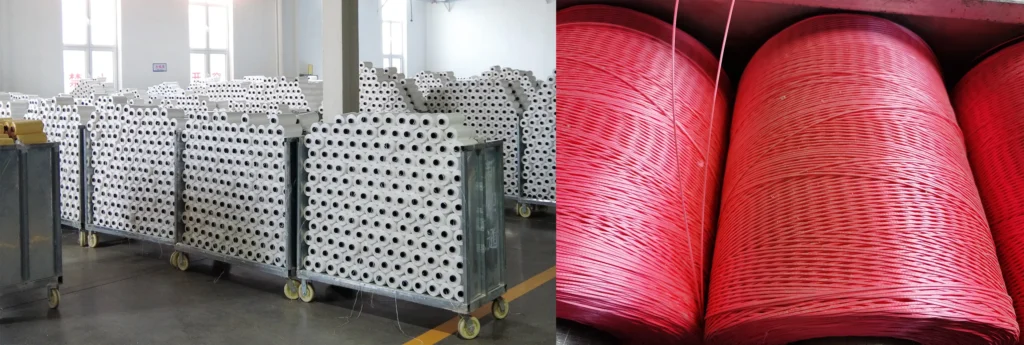
Denier — Tape Yarn Linear Mass
منكر is a unit of linear density used to describe the mass of a fibre or yarn per 9,000 metres. One denier equals one gram per 9,000 metres. For example, 900-denier PP tape has a mass of 900 grams per 9,000 metres.
In PP woven bags, denier helps describe the amount of material used in individual tapes. However, a higher denier does not automatically guarantee greater tensile strength. Tape width, thickness, resin properties and stretching conditions also influence performance.
When comparing quotations, buyers should confirm warp and weft denier separately, together with tape width and other relevant fabric specifications. This provides a clearer picture of the actual fabric construction than denier alone.
Micron — Thickness
Micron (μm) is a unit used to measure material thickness. In PP woven bag specifications, it may refer to the thickness of a PP tape, a PE coating layer or a BOPP film, depending on the product construction.
For laminated PP woven bags, buyers should clarify whether the quoted micron value refers to the BOPP film or the coating layer. These are different components and should not be treated as interchangeable specifications.
Coating and film thickness affect material consumption, surface properties and moisture protection. The appropriate specification depends on the product being packed, the required packaging performance and the intended printing method.
Mesh — Weave Density
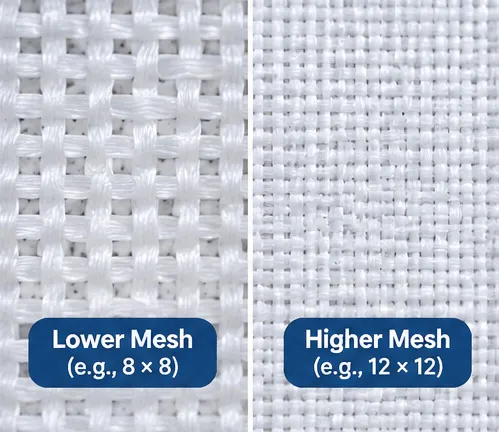
مش, also referred to as weave density, describes the number of tapes or yarns counted over a specified length in the warp and weft directions of woven fabric.
For example, a specification such as 10 × 10 should always be accompanied by its measurement unit, such as tapes per inch or per centimetre. Buyers should also confirm whether the two figures represent warp and weft counts respectively.
Weave density affects fabric structure, openings between tapes and material consumption. A tighter weave may help reduce the passage of fine particles, but sift resistance also depends on tape width, coating, liner construction and the characteristics of the packed material.
For consistent supplier comparisons, specify the counting unit and measurement method rather than relying on a mesh number alone. ASTM D3775 and ISO 7211-2 provide relevant references for determining thread density in woven fabrics, although the applicable testing method should be confirmed for the specific PP fabric.
Reading the Four Specifications Together
No single specification can fully describe a PP woven bag. GSM, denier, micron and mesh provide different information about the fabric and its construction. When reviewing quotations, buyers should consider them together.
| المعلمة | What it describes | ما للتأكيد |
|---|---|---|
| جي إس إم | Fabric weight per square metre | Base fabric GSM or finished laminated GSM |
| منكر | Linear mass of PP tape | Warp and weft denier, tape width |
| Micron | Material or film thickness | Whether it refers to PP tape, PE coating or BOPP film |
| مش | كثافة النسج | Warp and weft counts, measurement unit |
These parameters should be considered alongside bag dimensions, filling weight, seam construction, printing requirements and handling conditions. A complete specification makes it easier to identify differences between suppliers and reduces the risk of receiving bags that do not match the intended application.
Choosing Specifications by Material
The right PP woven bag specification depends on the product being packed, filling weight, storage conditions and handling method. Buyers should evaluate the complete construction rather than selecting GSM or denier based on the product category alone.
- Grain and food packaging — Consider fabric weight, weave density, printing requirements and whether PE coating or an inner liner is needed. Food-contact requirements should be confirmed separately according to the destination market and intended use.
- Fertilizer and chemical packaging — Evaluate moisture protection, powder retention, coating or liner requirements and seam performance. The packed material’s particle size and handling conditions also influence the choice of fabric construction.
- Construction and mining — Consider filling weight, abrasion, handling frequency, stacking conditions and outdoor exposure. Fabric weight, tape construction and UV stabilization should be selected according to the actual operating environment.
At SITONG, PP woven bag specifications can be discussed around the customer’s product, bag dimensions, filling requirements, printing and packaging conditions. For food packaging projects, applicable production-site certification and product compliance requirements should also be confirmed before ordering.
What Should Buyers Include in a PP Woven Bag Specification Sheet?
A clear specification sheet helps buyers obtain comparable quotations from different PP woven bag suppliers. Instead of requesting a price based only on GSM, include the following information:
| العنصر | Information to provide |
|---|---|
| أبعاد الحقيبة | Width, length and gusset, if applicable |
| Filling weight | Net product weight per bag |
| نسيج جي إس إم | Base fabric weight or finished laminated weight |
| Tape specifications | Warp and weft denier, where specified |
| كثافة النسج | Warp and weft counts with measurement units |
| التصفيح | PE coating or BOPP film requirements |
| الطباعة | Artwork, number of colors and printing requirements |
| البناء | Bottom stitching, hem, liner, valve or handle |
| التعبئة | Bale, bundle or pallet requirements |
| Order information | Order quantity, destination and expected delivery schedule |
Not every buyer needs to specify all technical parameters from the beginning. If you have an existing sample, product drawing or previous supplier specification, sharing it can help the manufacturer evaluate the construction and identify missing information before production.
For customized bag specifications and printing requirements, see our OEM & Custom service.
Why Two PP Woven Bag Quotations May Differ
Two suppliers may quote different prices for PP woven bags with the same dimensions and nominal GSM. The difference may come from tape denier, warp and weft density, coating weight, printing requirements or sewing construction.
Before comparing the unit prices, check whether both quotations refer to the same finished-bag specifications. Otherwise, a lower quotation may simply represent a different material construction rather than a more competitive manufacturing price.
At SITONG, buyers can discuss fabric weight, tape specifications, weave density, lamination and finished-bag construction as part of the same OEM project. Our production covers PP tape weaving, coating, cutting, printing and sewing, helping coordinate fabric requirements with the specifications of the finished bag.
الاستنتاج
GSM, denier, micron and mesh describe different aspects of PP woven fabric construction. Understanding how they work together helps buyers compare quotations more accurately and select packaging that matches their product and handling requirements.
When requesting a quotation, provide the intended filling weight, bag dimensions, application and any specific fabric or lamination requirements. If the exact specifications are not available, sharing a sample or reference bag can help the manufacturer assess the appropriate construction.
Explore SITONG’s الأكياس المنسوجة PP to learn more about available bag types and customization options.
الأسئلة المتداولة
No. GSM measures fabric weight, not strength by itself. Tape denier, weave density, resin properties and fabric construction also affect performance. The right GSM depends on the bag’s filling weight and handling requirements.
Multiply the total fabric area by GSM and divide by 1,000 to obtain the fabric weight in kilograms. Then account for coating, printing materials where applicable, hems, seams, thread and any inner liner. For accurate costing, confirm the finished bag weight separately.
There is no single standard denier for all PP woven bags. The required value depends on tape width, fabric weight, weave density and the intended application. Buyers should request warp and weft denier separately when comparing suppliers.
It describes the weave density in the two directions, but the measurement unit must also be stated. For example, 10 × 10 tapes per inch is different from 10 × 10 tapes per centimetre.
Micron measures thickness. In laminated PP woven bags, it commonly refers to the BOPP film or PE coating layer. Buyers should confirm which material the figure describes before comparing quotations.
Provide the bag dimensions, filling weight, intended product, GSM or fabric requirements, printing artwork, lamination or liner requirements, handle or valve details and packing method. If you do not have a complete technical specification, a sample or reference bag can help the manufacturer evaluate the required construction.